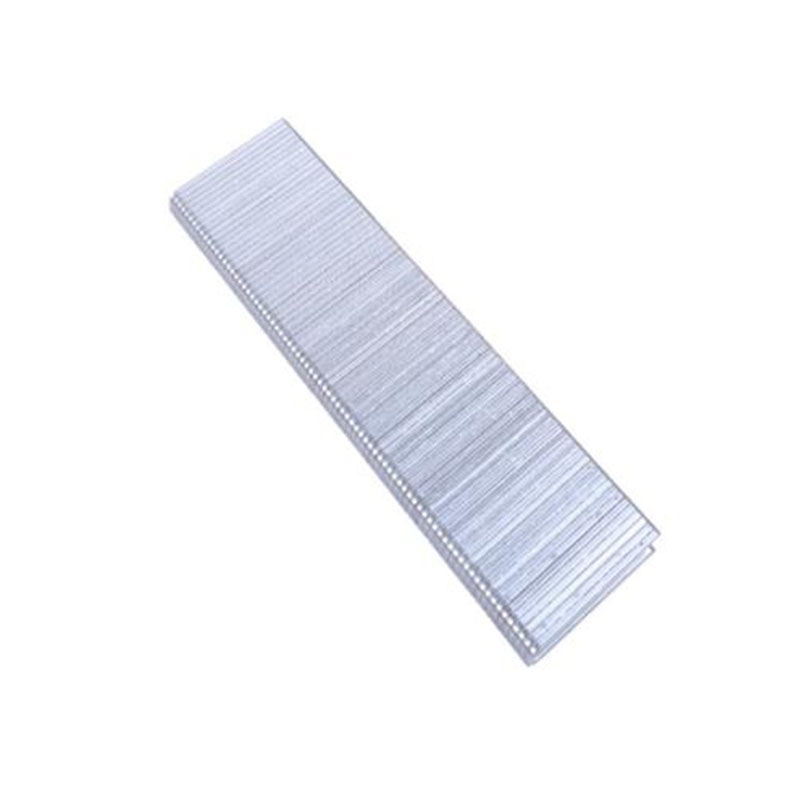
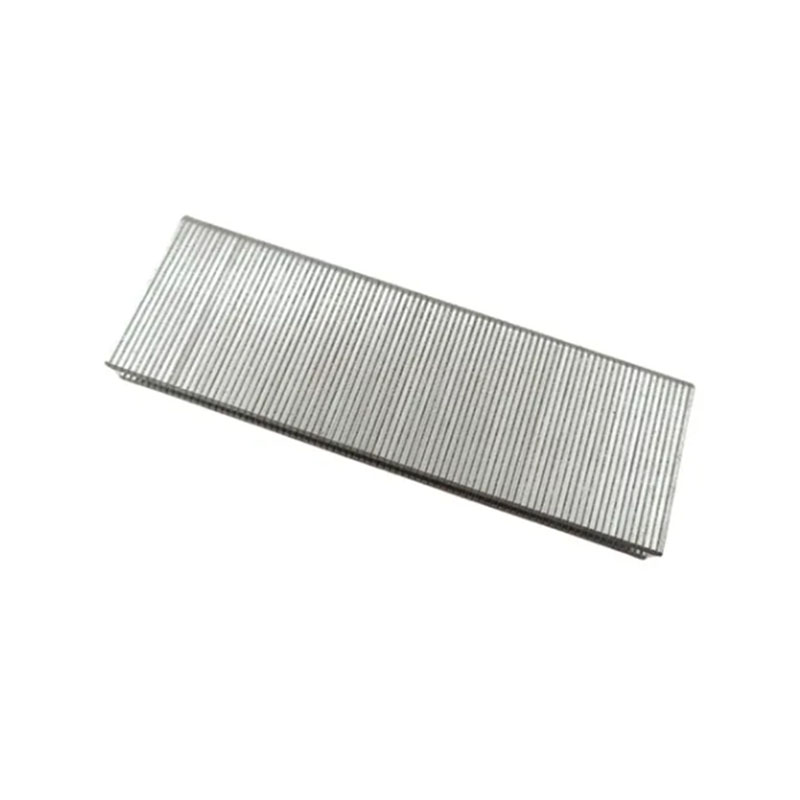
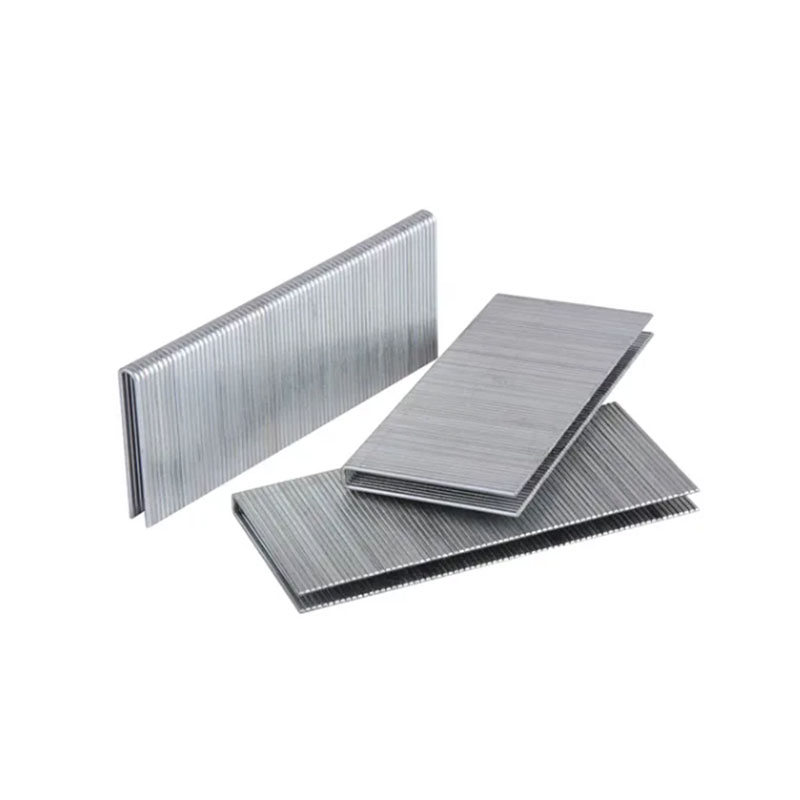
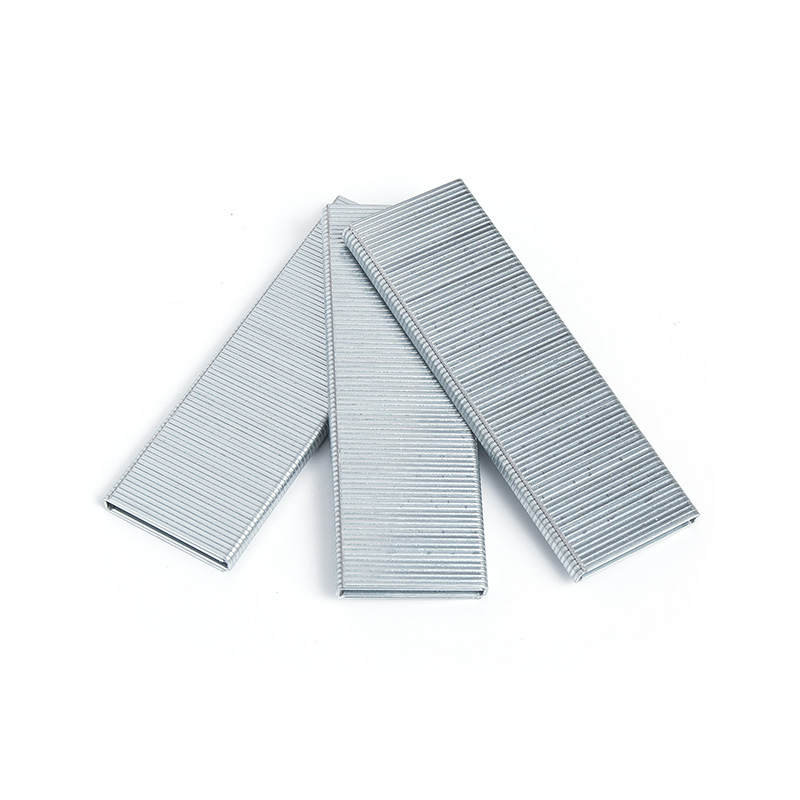
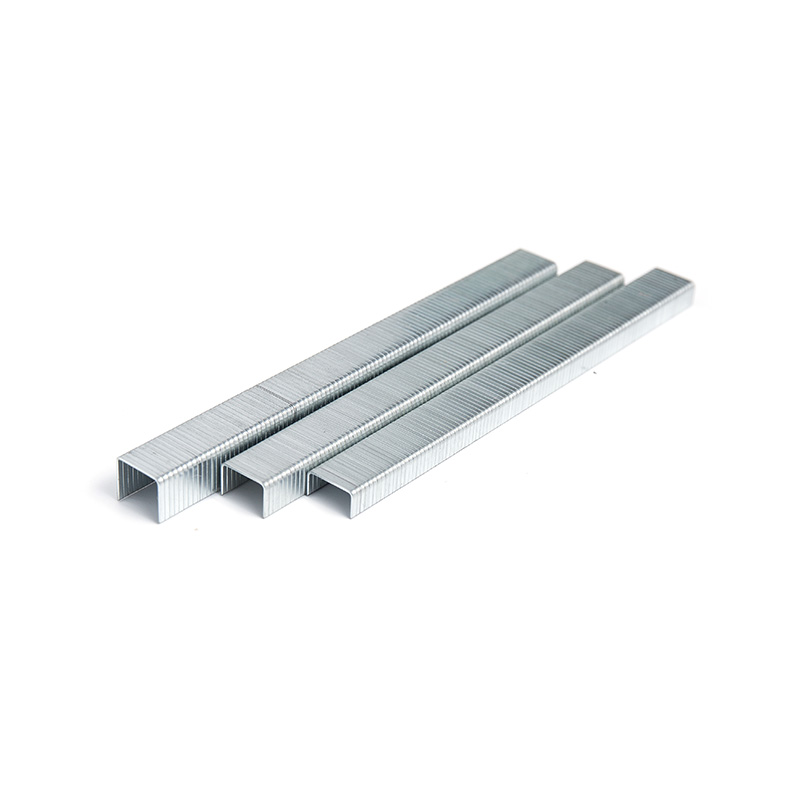
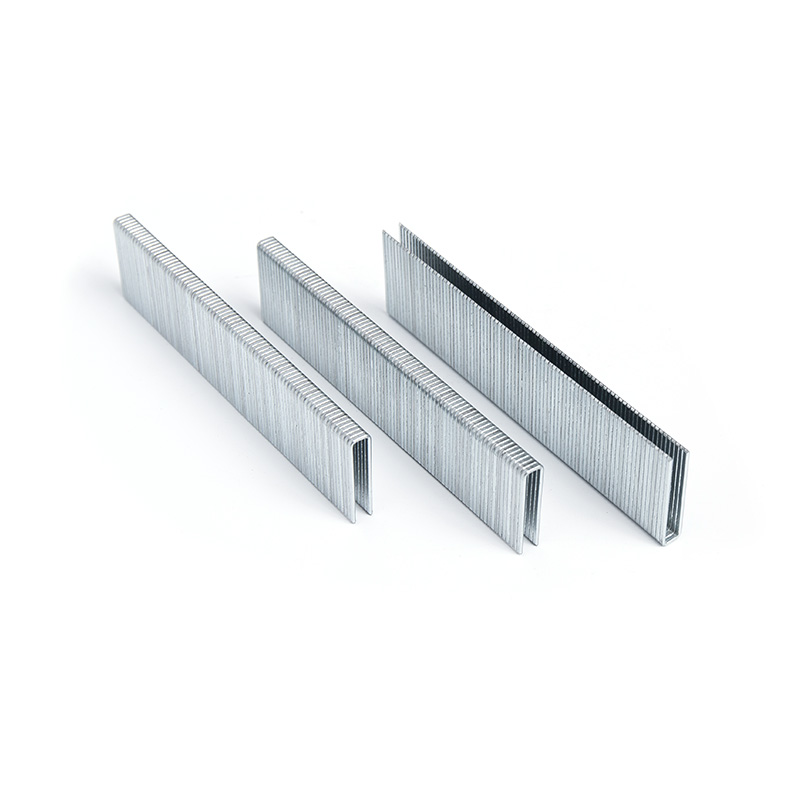
Meidum wire staples are used in applications such as Fascia and Soffits, Molding,
Cabinets, Trim, Case backs, Lattice, Paneling, Drawers, Spring Attachment-Upholstery,
Fencing, Floor Underlayment, Hardwood flooring, Furniture Frames, Roof & Wall Cedar
Shingles, Pallets and Pallet Repair, Vinyl/Metal Siding, Crate and Box Assembly,
Sheathing and many others.
Great for fascia and soffits, molding, cabinets, trim, casebacks, lattice,
paneling, drawers, upholstery and more.
Electrogalvanized finish helps resist corrosion and rust, recommended for interior use only.
Chisel Point.
The product is easy to use.
About Tianying
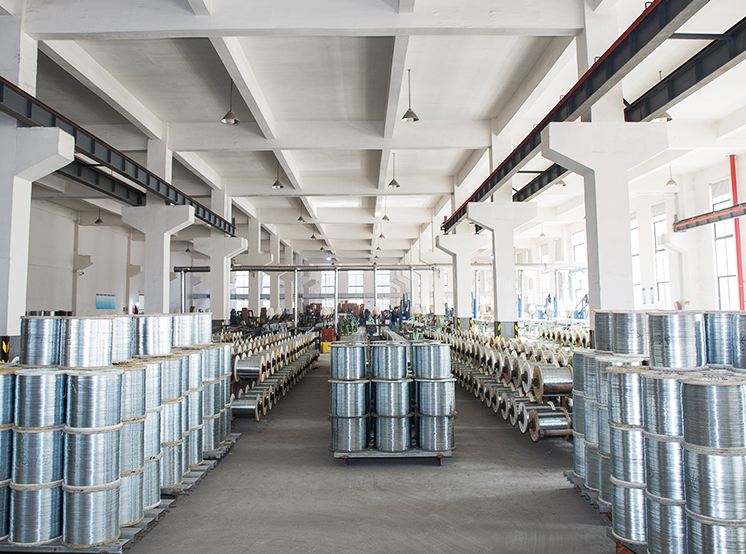
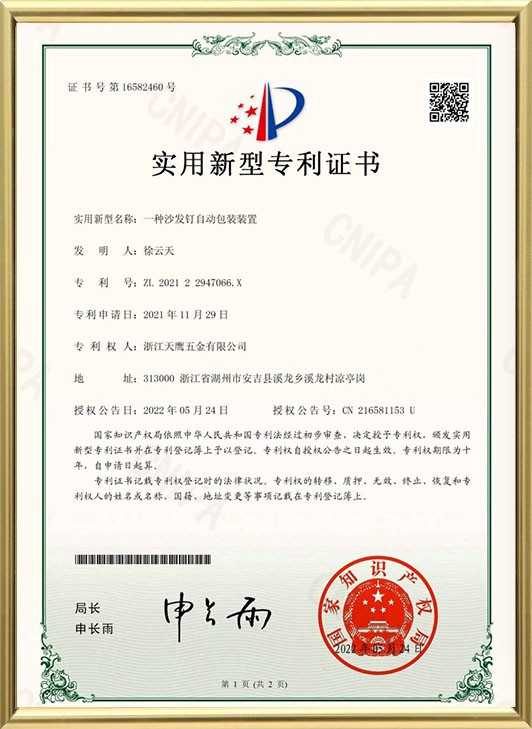
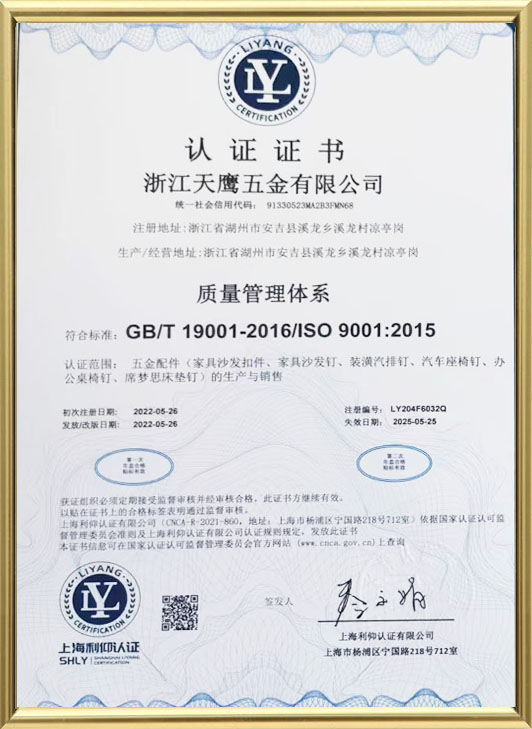
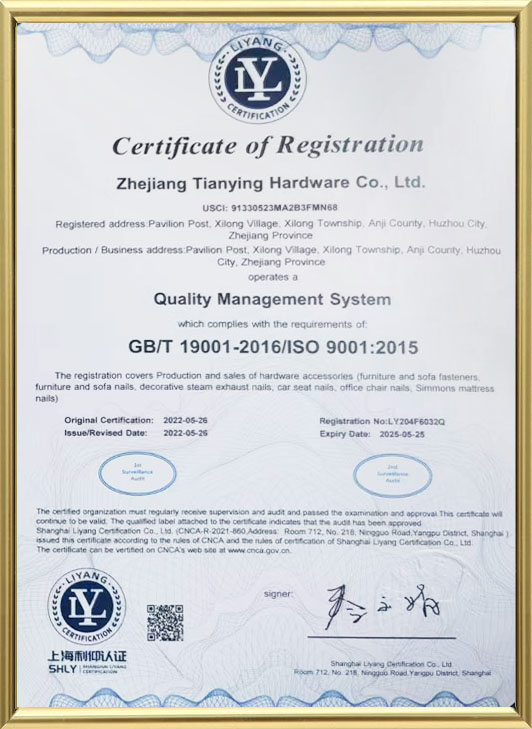
Zhejiang Tianying Hardware Co., Ltd. was established in 2017 (the original Hangzhou Tianying Gunners factory had a history of 21 years) and it is one of the earliest production enterprises in the nail industry. We are China Wholesale Medium Wire Staples, and Medium Wire Staples Manufacturers. Now our company is located in Anji, belongs to the Yangtze river delta economic zone, the traffic is very convenient. The company is a professional collective of research, design, production, and sales. Products ranging from industrial nails, pneumatic nails, straight gun nails, nails, bed net clip code nails, C nails, home nails, decoration wall nails to fiberboard nails. The company has self-management import and export rights, always adhering to the "quality of survival, quality of development, quality to benefit" policy, so that we dedicated to serving our customers. Welcome to visit us and negotiate business.



Every buyer remembers the shipment that went wrong: a pallet of screws that split a particleboard panel, or a drywall job where the heads stripped before the l...
Read More
Custom fastener hardware nails sit in a practical middle ground between a stock catalogue number and a brand-new invention. Most projects do not need something...
Read More
Few things stop a production line faster than running out of collated fasteners. If you build furniture frames, mattress spring units, sofas, crates or car sea...
Read More




 English
 русский
 Español