English
 русский
 Español

Content
- 1 What Defines a Finish Nail in Structural Terms
- 2 Material Grades: Carbon Steel, Stainless Steel, and Galvanized
- 3 Finish Nail Size Standards and Gauge Reference
- 4 Steel Finish Nails for Trim Work — Application Guidelines
- 5 Steel Finish Nails vs. Brad Nails — Which Should You Specify?
- 6 Bulk Purchasing and Wholesale Considerations
- 7 Frequently Asked Questions
- 7.1 Q1: What gauge are standard steel finish nails, and does gauge affect holding power?
- 7.2 Q2: Can I use galvanized steel finish nails with pressure-treated lumber?
- 7.3 Q3: What is the difference between 15-gauge and 16-gauge finish nailers for trim work?
- 7.4 Q4: How do I specify stainless steel finish nails for a hardwood flooring project near a coastal environment?
- 8 References
Specifying the correct fastener is not a minor decision in construction or millwork. The wrong nail can split a hardwood board, corrode behind cladding, or fail a pull-out test under load. Steel finish nails are among the most widely used fasteners in finish carpentry, trim installation, and flooring, yet they are frequently misused. This article provides an engineering-level overview of material grades, dimensional standards, and application logic to support informed procurement decisions.
What Defines a Finish Nail in Structural Terms
A finish nail is defined by a small, brad-type head — typically 2× to 2.5× the shank diameter — that can be countersunk below the surface and concealed with filler. This is its primary distinction from common nails, box nails, and sinkers, which are designed for structural framing rather than aesthetic surfaces.
Geometry and Head Design
The head of a finish nail is barrel-shaped or cupped, enabling a nail set to drive it below the wood surface without leaving a visible crater. Shank diameters range from 15 gauge (0.072 in / 1.83 mm) down to 23 gauge (0.025 in / 0.64 mm) for micro-pin nails. Standard finish nails fall between 15 and 16 gauge for most trim applications.
Shank Types and Holding Power
The shank geometry directly determines withdrawal resistance. Three types are common in the industry:
- Smooth shank — easiest to drive, lowest withdrawal resistance; suitable for temporary or low-load applications
- Ring shank — annular rings increase friction; withdrawal resistance can be 40–60% higher than a smooth shank of the same gauge
- Screw shank — helical thread provides maximum withdrawal resistance; used in hardwood flooring and dense substrates
Material Grades: Carbon Steel, Stainless Steel, and Galvanized
Material selection is driven by exposure conditions, substrate chemistry, and finish requirements. The three dominant material grades for steel finish nails are bright carbon steel, hot-dip galvanized steel, and stainless steel. Each carries a different corrosion resistance profile, cost point, and compatibility with treated lumber.
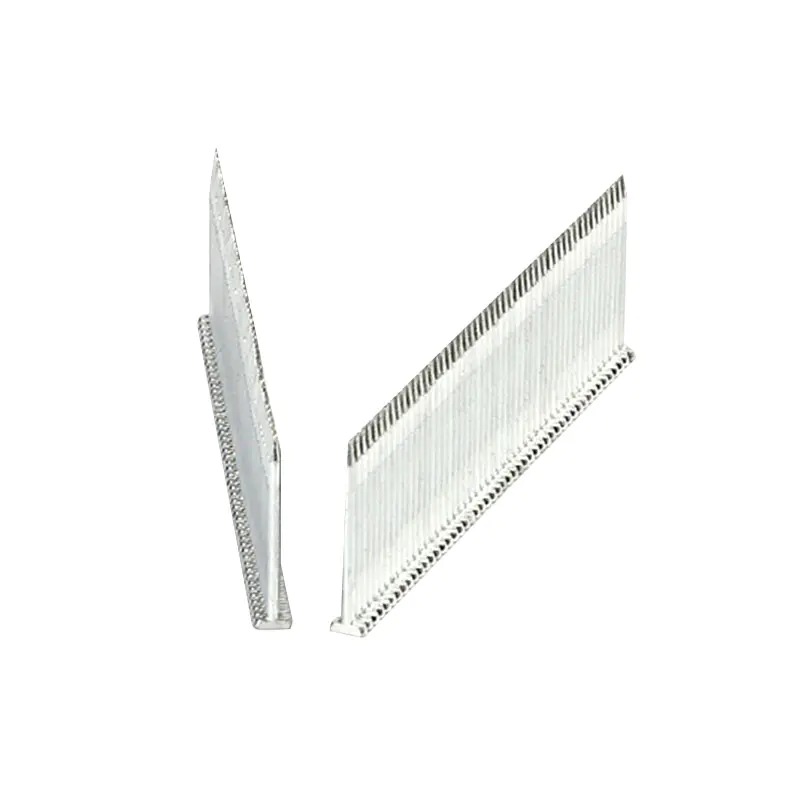
The table below summarizes key performance parameters across these three grades:
| Material Grade | Corrosion Resistance | Compatibility with ACQ/CA Treated Lumber | Typical Application | Relative Cost |
|---|---|---|---|---|
| Bright Carbon Steel | None — indoor dry use only | Not compatible | Interior trim, MDF molding | Low |
| Hot-Dip Galvanized (HDG) | Moderate to high (ASTM A153 Class D) | Compatible with most preservatives | Exterior siding, decking trim, and humid environments | Medium |
| Stainless Steel (Type 304/316) | Excellent; 316 resistant to chlorides | Fully compatible | Coastal installations, hardwood flooring, cedar, redwood | High |
Note: Electro-galvanized (EG) nails carry a significantly thinner zinc coating than HDG and are not recommended for exterior exposure or treated lumber contact. Always verify the galvanizing standard before procurement.
Finish Nail Size Standards and Gauge Reference
The penny system (d) is the legacy sizing convention for nails in North America. It correlates with nail length but does not directly specify gauge. Procurement teams and engineers often need to cross-reference penny size, gauge, and metric length simultaneously.
The following table provides a practical reference for the most common sizes of galvanized steel finish nails, sizes chart usage:
| Penny Size | Length (inches) | Length (mm) | Wire Gauge (typical) | Common Use |
|---|---|---|---|---|
| 4d | 1.5" | 38 mm | 15 ga | Thin casing, small molding |
| 6d | 2.0" | 51 mm | 15 ga | Base molding, window casing |
| 8d | 2.5" | 64 mm | 15 ga | Door casing, door stop, stair nosing |
| 10d | 3.0" | 76 mm | 15 ga | Heavy trim, thick crown molding |
| 16d | 3.5" | 89 mm | 14 ga | Large baseboards, exterior trim boards |
Steel Finish Nails for Trim Work — Application Guidelines
Correct nail selection for steel finish nails for trim work depends on substrate density, trim thickness, and whether the assembly will be painted or left natural. Below are the primary application categories with specific guidance.
Interior Trim and Molding
- For MDF baseboards (15–19 mm thick), a 15-gauge, 2.0"–2.5" finish nail penetrates the wall framing by at least 1.0", satisfying standard building code requirements for nail embedment.
- Crown molding requires nailing at both the ceiling line and the wall line; 15-gauge nails at 16" on-center intervals are the industry standard.d
- Hardwood trim (oak, maple) benefits from pre-drilling to prevent splitting, especially within 50 mm of an end gra. in
- Do not use bright carbon steel in bathrooms or kitchens with high ambient humidity; galvanized or stainless grades are required.red
Stainless Steel Finish Nails for Hardwood Flooring
Stainless steel finish nails for hardwood flooring are the preferred specification where tannin-rich woods such as oak, teak, or ipe are involved. Tannin reacts electrochemically with carbon steel, producing black staining that bleeds through surface finishes. Type 304 stainless steel eliminates this reaction in most interior environments. For coastal projects or installations near saltwater, Type 316 stainless provides additional chloride resistance.
- Recommended gauge for solid hardwood flooring: 15 or 16 gauge, 1.75"–2.0" length
- Cleat nails (L-shaped) and T-cleats are sub-categories of finish fasteners designed specifically for pneumatic floor nails. lers
- Drive angle for flooring nailers is typically 45°, which is different from straight finish nailers used for. trim
Steel Finish Nails vs. Brad Nails — Which Should You Specify?
The steel finish nails vs brad nails comparison is one of the most common specification questions in light construction and millwork. Both are finish-type fasteners, but they differ substantially in gauge, head design, and structural capacity.
The table below compares the two fastener types across the parameters most relevant to engineering and procurement decisions:
| Parameter | Finish Nail (15–16 ga) | Brad Nail (18 ga) |
|---|---|---|
| Wire gauge range | 14–16 ga | 18 ga |
| Shank diameter | 1.60–1.83 mm | 1.22 mm |
| Head diameter | ~2.5 mm (barrel head) | ~1.6 mm (headless/pin-type) |
| Withdrawal resistance | Higher — suitable for structural trim | Lower — suitable for lightweight molding |
| Splitting risk on thin stock | Moderate — not for stock under 12 mm | Low — safe on 6 mm stock |
| Typical nail gun | 15/16 ga finish nailer | 18 ga brad nailer |
| Best use case | Door casing, baseboards, crown molding | Thin panel beading, light trim, hobby work |
As a general rule, specify finish nails when the assembly must resist racking, impact, or door-slam vibration. Brad nails are adequate for tack-holding lightweight decorative elements where adhesive provides the primary bond.
Bulk Purchasing and Wholesale Considerations
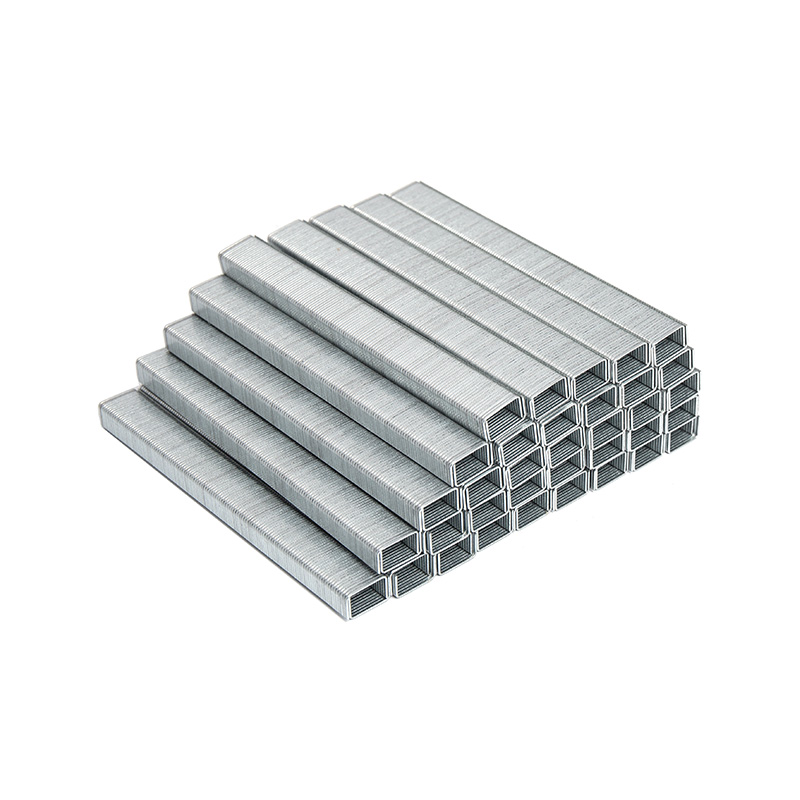
For contractors, distributors, and bulk steel finish nail wholesale supplier procurement teams, understanding packaging formats and minimum order quantities is essential for cost control and inventory management.
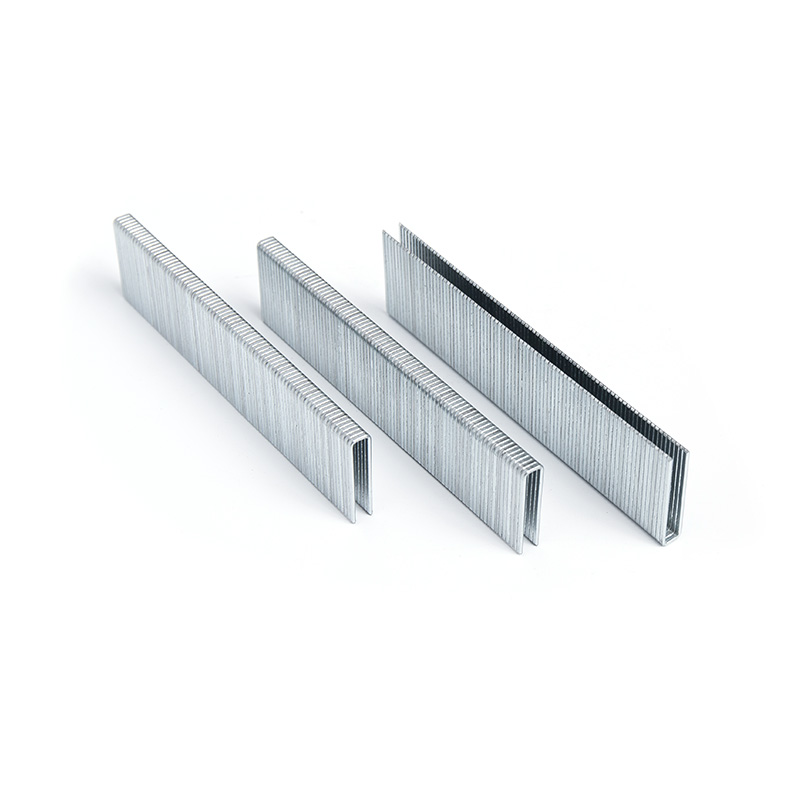
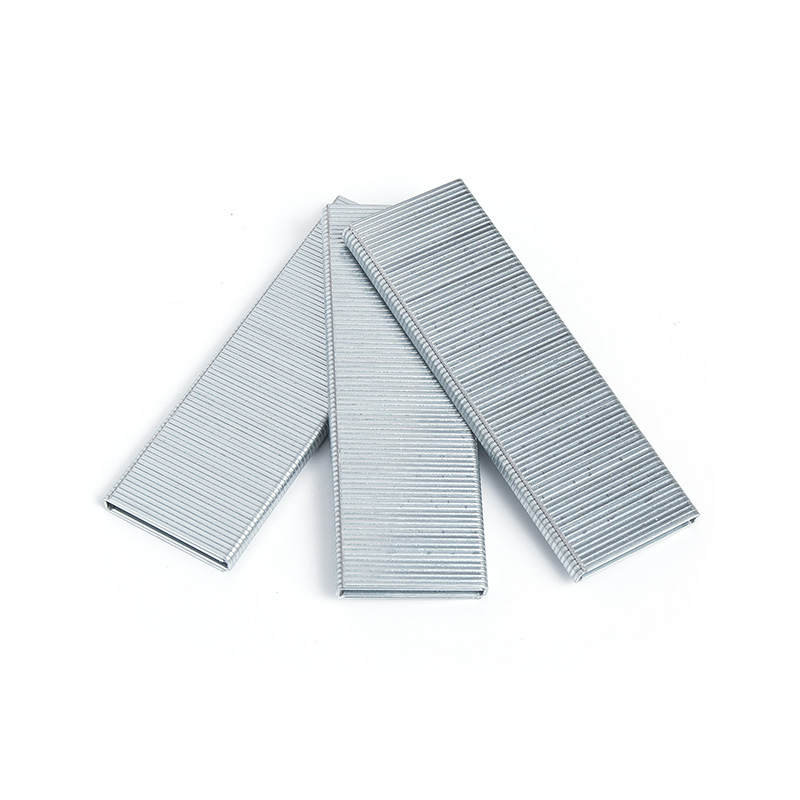
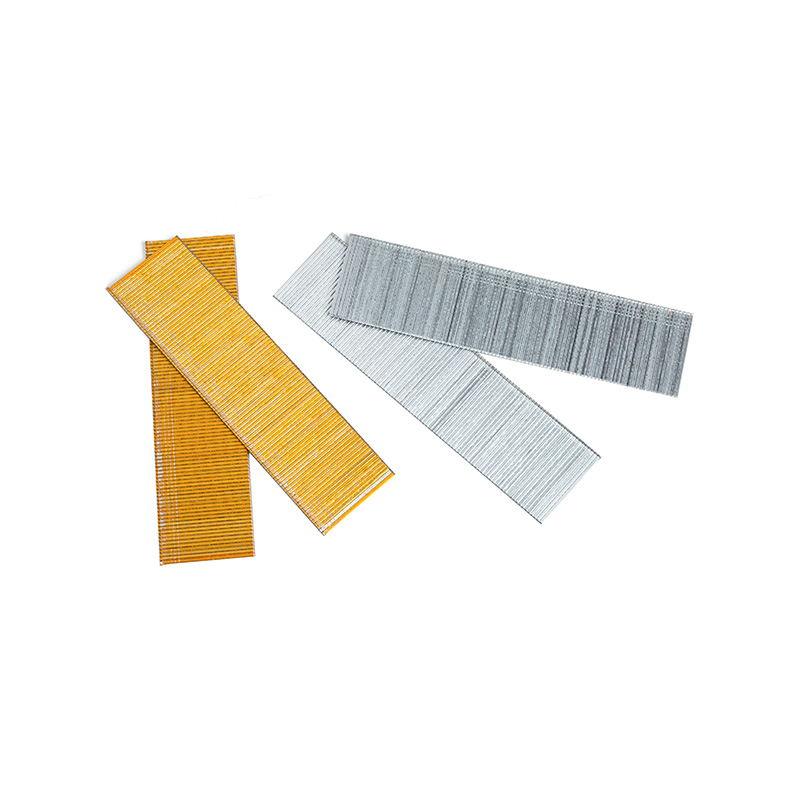
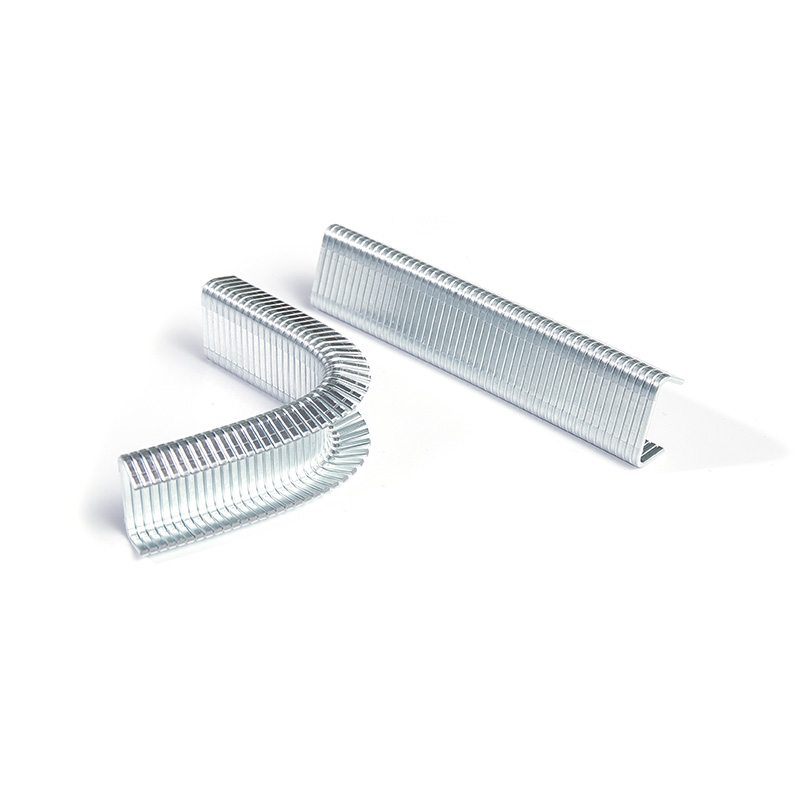
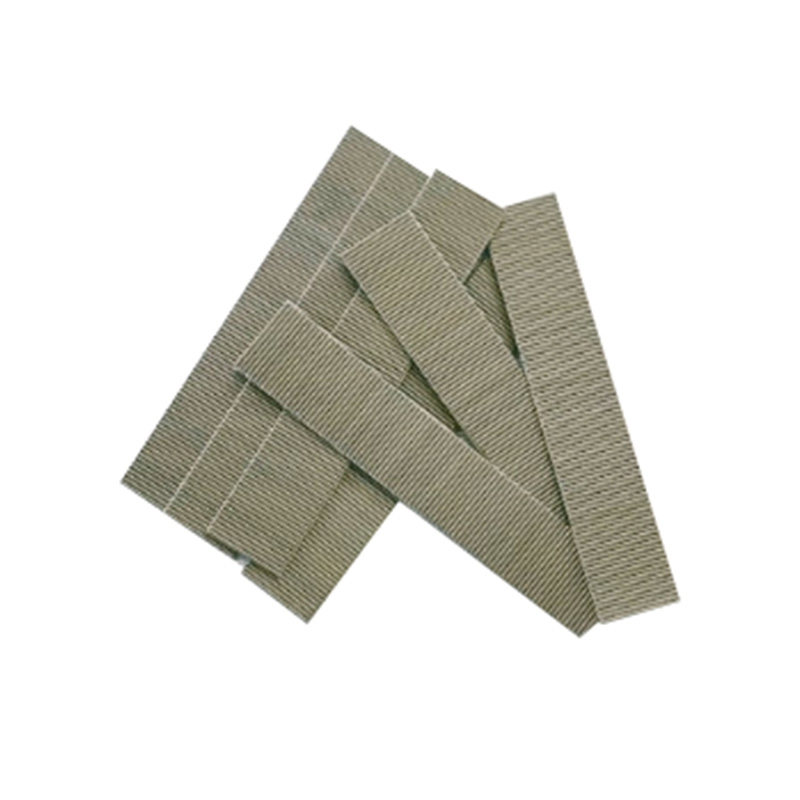
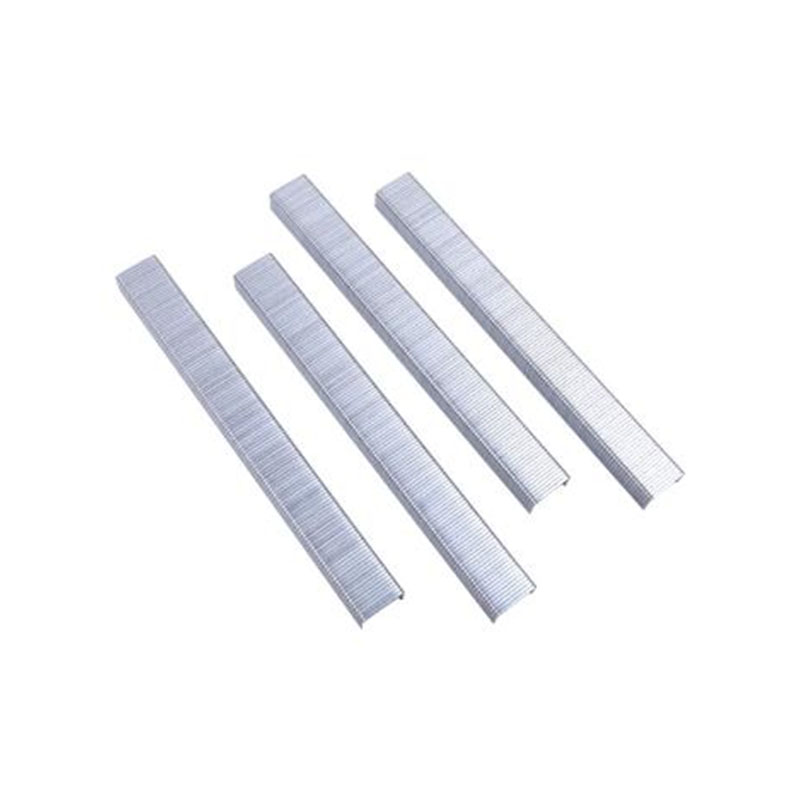
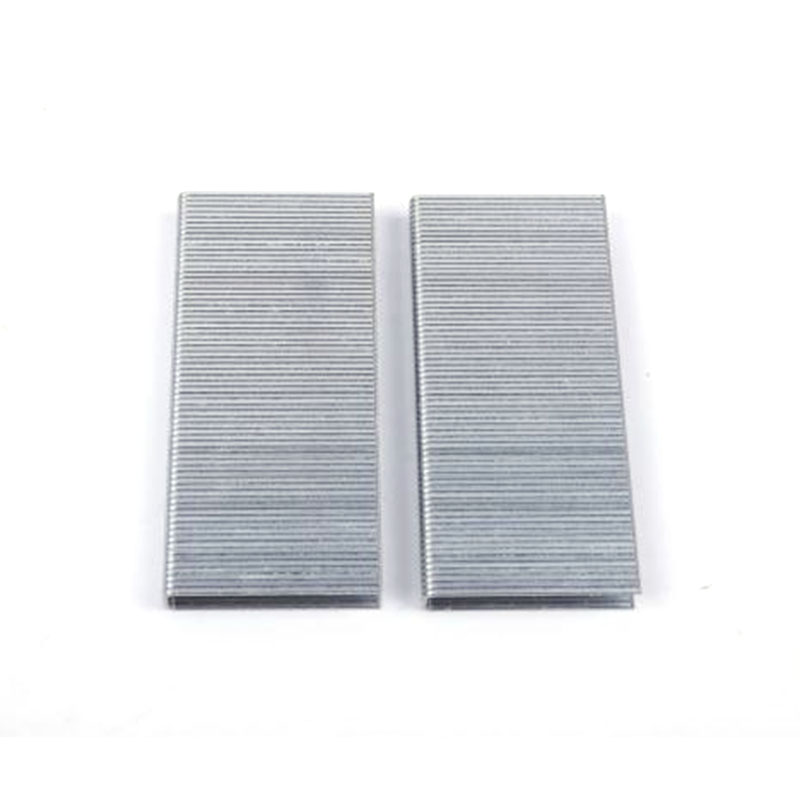
- Strip nails — collated at 34° or 16° angles in plastic or paper strips; typical count is 200 nails per strip, 5,000–10,000 per case
- Coil nails — used less commonly for finish applications; more typical for framing and roofing.
- Bulk loose nails — sold by weight (per pound or per kilogram) for hand-nailing operations; typically available in 1 lb, 5 lb, and 50 lb formats
- Galvanized finish nails for collated nailers must match the tool manufacturer's specified collation angle — mixing 16° and 34° strips will cause nailer jams and potential damage.e
- When ordering in bulk, request a mill certificate confirming zinc coating weight (ASTM A153) for galvanized products, or an alloy composition certificate for stainless grades.
Wholesale buyers should also verify that the galvanized steel finish nails sizes chart from the supplier aligns with ASTM F1667, the primary standard governing driven fasteners in North America. ISO 1051 provides an equivalent reference for metric markets.
Frequently Asked Questions
Q1: What gauge are standard steel finish nails, and does gauge affect holding power?
Standard steel finish nails are most commonly available in 15 and16-gaugee. Gauge is inversely proportional to diameter — a lower gauge number means a thicker shank. A 15-gauge nail has a shank diameter of approximately 1.83 mm, which provides meaningfully higher withdrawal resistance than an 18-gauge brad (1.22 mm). For structural trim work such as door casing or stair risers, 15-gauge is the recommended minimum. For lightweight decorative molding, 16 or 18-gauge is acceptable.
Q2: Can I use galvanized steel finish nails with pressure-treated lumber?
Yes, but with an important condition. Modern preservatives — including ACQ (Alkaline Copper Quaternary) and CA (Copper Azole) — are highly corrosive to carbon steel and electro-galvanized fasteners. Hot-dip galvanized nails meeting ASTM A153 Class D (minimum 1.0 oz/ft² zinc coating) are acceptable for most treated lumber applications per ICC and AWC guidelines. For direct contact with ACQ lumber in wet or exterior conditions, stainless steel Type 304 or 316 is the more conservative and durable specification.
Q3: What is the difference between 15-gauge and 16-gauge finish nailers for trim work?
The primary functional difference is the nail head profile. A 15-gauge finish nailer produces a slightly larger hole that requires more filler work before painting, but it holds heavier trim with greater reliability. A 16-gauge nailer leaves a smaller hole, which is advantageous on pre-finished or stained trim where filler color-matching is difficult. Both are suitable for steel finish nails for trim work; the choice often depends on the surface finish requirement rather than structural necessity.
Q4: How do I specify stainless steel finish nails for a hardwood flooring project near a coastal environment?
For coastal or high-humidity environments, specify Type 316 stainless steel rather than Type 304. Type 316 contains 2–3% molybdenum, which substantially improves resistance to chloride-induced pitting corrosion. For stainless steel finish nails for hardwood flooring in these environments, confirm that the fastener supplier can provide a material test report (MTR) showing alloy composition. The nail length should provide a minimum 1.0" embedment into the subfloor or nailer cleat, and the gauge should be 15 or 16 for solid hardwood planks 18 mm or thicker.
References
- ASTM International. ASTM F1667: Standard Specification for Driven Fasteners: Nails, Spikes, and Staples. ASTM International, West Conshohocken, PA.
- ASTM International. ASTM A153/A153M: Standard Specification for Zinc Coating (Hot-Dip) on Iron and Steel Hardware. ASTM International.
- American Wood Council (AWC). National Design Specification (NDS) for Wood Construction. AWC, Leesburg, VA, 2018 Edition.
- International Code Council (ICC). IRC Table R802.4.2: Fastener Requirements for Treated Lumber. ICC, Country Club Hills, IL.
- Forest Products Laboratory, USDA. Wood Handbook: Wood as an Engineering Material. General Technical Report FPL-GTR-282, 2021.
- ISO 1051:2016. Nails — General Requirements and Test Methods. International Organization for Standardization, Geneva.