English
 русский
 Español

Content
- 1 What Steel Galvanized Staples Are and How the Zinc Coating Protects Them
- 2 Where Steel Galvanized Staples Perform Best
- 3 Selection Criteria to Avoid Costly Mismatches
- 4 Comparing Galvanized, Stainless Steel, and Copper Staples
- 5 Practical Buying Considerations for Wholesale Buyers
- 6 How Tianying Hardware Supports Steel Galvanized Staple Projects
Steel galvanized staples are the workhorse of industrial fastening when you need dependable corrosion protection without paying stainless steel prices. The zinc coating gives plain carbon steel staples enough resistance to handle humid workshops, outdoor framing, and everyday furniture assembly. If you are sourcing staples for furniture, packaging, or light construction, understanding how the galvanized layer behaves should drive every buying decision.
What Steel Galvanized Staples Are and How the Zinc Coating Protects Them
Steel galvanized staples are made from carbon steel wire that has been coated with zinc. The zinc acts as a sacrificial anode. When moisture touches the staple, the zinc corrodes first, leaving the underlying steel protected. This is the same principle used in roofing nails, fence staples, and automotive fasteners.
The practical result is simple: a galvanized staple will outlast an uncoated steel staple in damp environments by a significant margin. For furniture manufacturers, this means fewer rust streaks appearing on upholstery and less failure during the first years of use. For packaging lines, it means cartons stay sealed even when stored in humid warehouses.
Two common zinc coating methods appear in the market:
- Electrogalvanized: The zinc layer is thin and smooth, usually between 5 and 15 microns. It offers good protection for indoor furniture and dry applications, while maintaining tight tolerances on fine wire staples.
- Hot-dip galvanized: The coating is thicker, often 30 microns or more, and has a rougher surface. This is preferred for heavy wire staples used outdoors, in roofing, or in structural framing where the staple may be exposed to rain and condensation.
For most buyers, the choice is not about whether to choose galvanized, but which zinc thickness fits the product life cycle. A fine wire staple for a sofa frame does not need a hot-dip coating. A heavy staple for a fence or a crate does.
Where Steel Galvanized Staples Perform Best
Galvanized staples are not universal, but they cover a wide range of industrial applications better than any single finish.
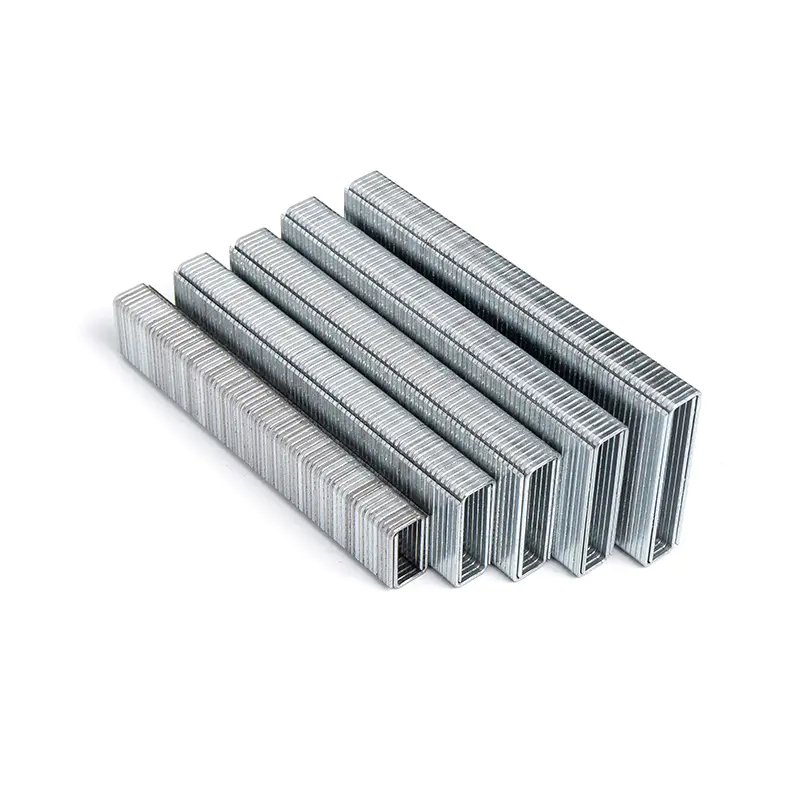
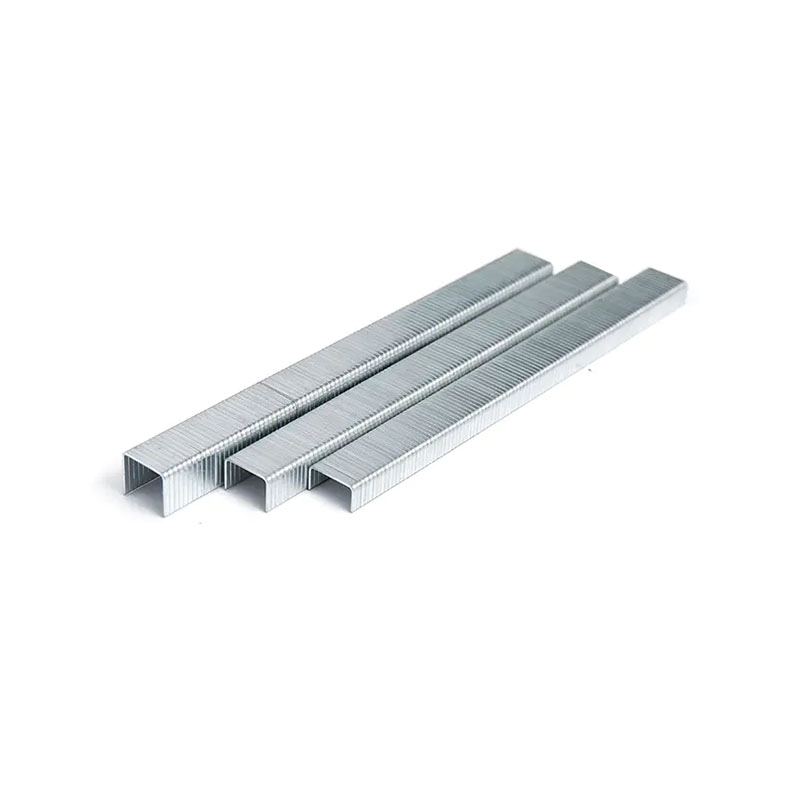
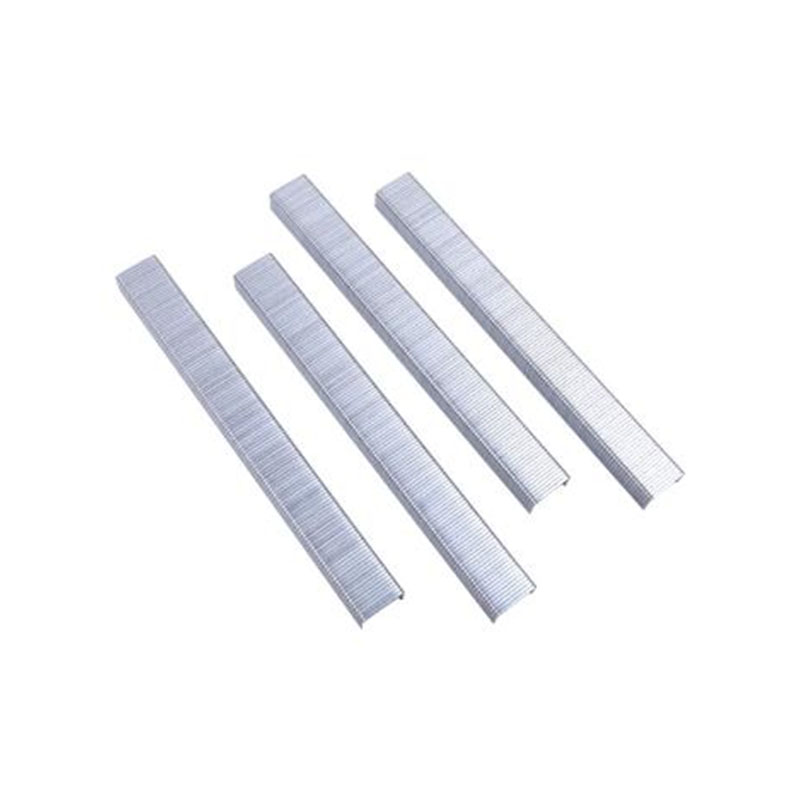
In furniture manufacturing, galvanized fine wire staples are used to attach fabric, foam, and webbing to wooden frames. The zinc layer prevents unsightly rust lines from appearing on light-colored fabrics after months of humidity. A typical example is the 10F series galvanized fine wire staple, which is engineered for furniture assembly and upholstery work. If you need a dependable product for this use, consider 10F series galvanized fine wire staples for furniture.
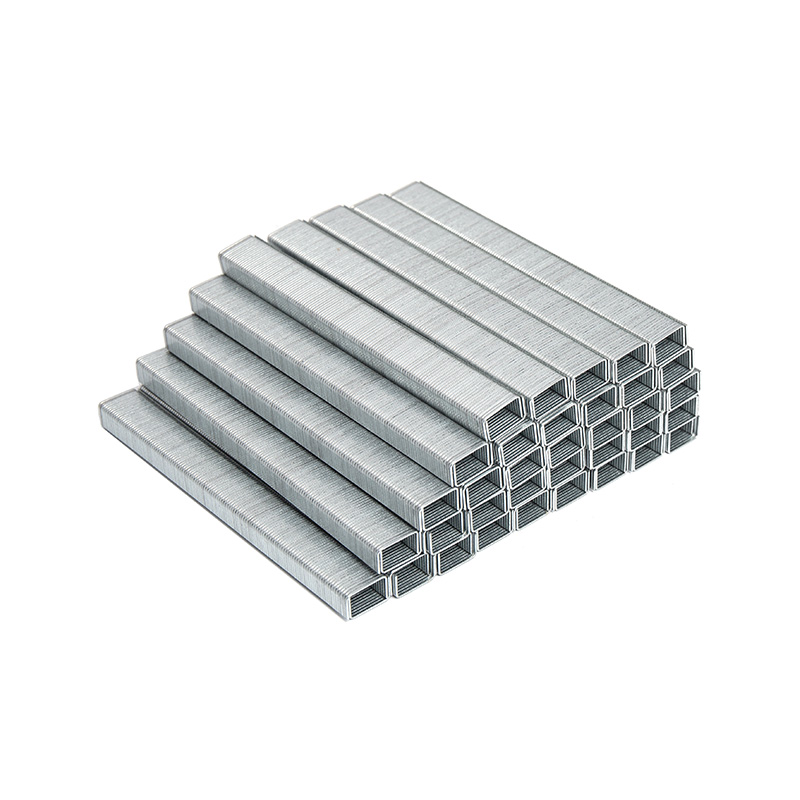 10F Series Galvanized Fine Wire Staples for Furniture UpholsteryThese thin-line galvanized staples resist corrosion and leave a discreet finish, making them ideal for attaching fabric and foam to wooden frames in furniture manufacturing.View Product →
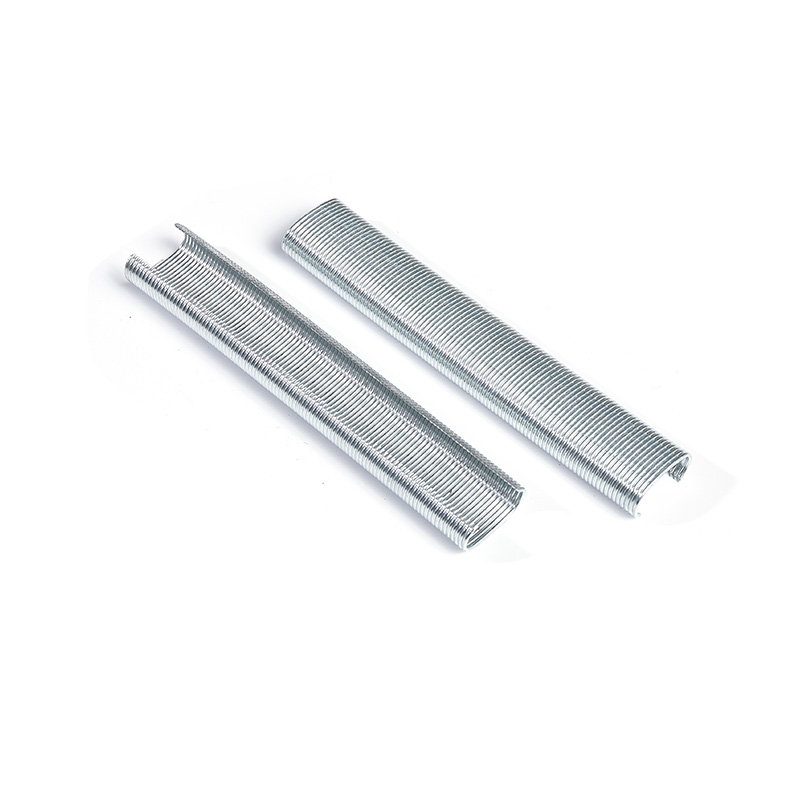
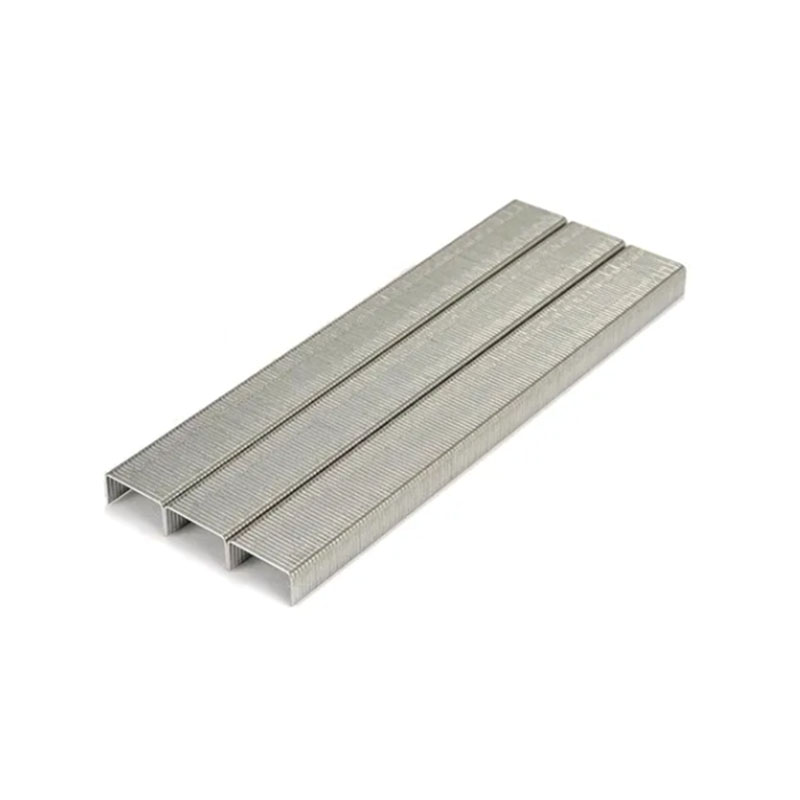
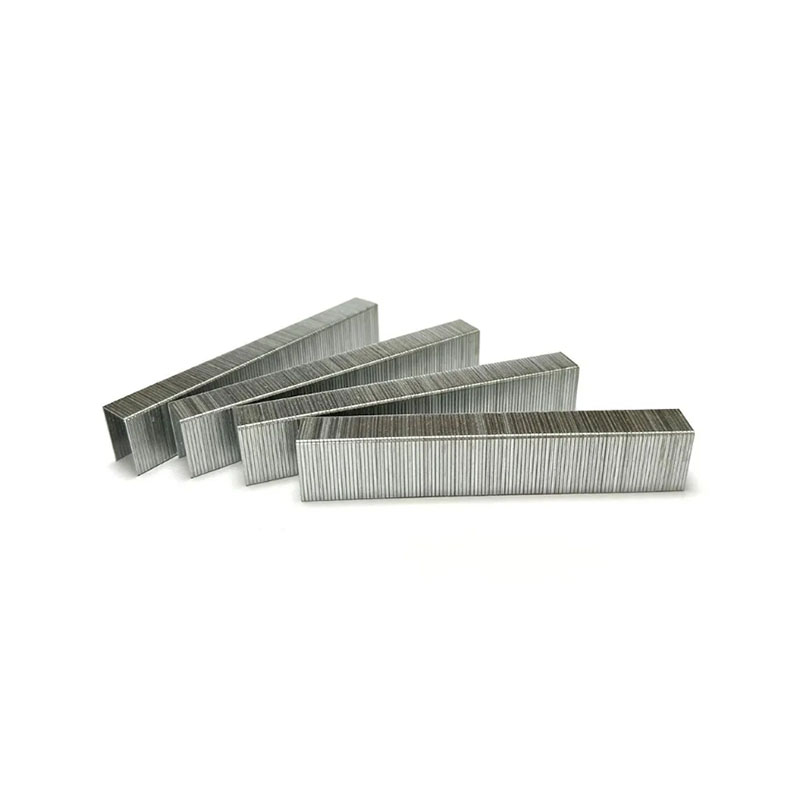
In roofing and outdoor wood structures, heavier galvanized staples hold shingle underlayment, insulation board, or wire mesh. These staples need a thicker zinc layer because they face rain and condensation for years. The P25 series galvanized heavy wire staple is built for this kind of exposure. It is a good fit for contractors who need a durable fastener that will not rust through the roof line. You can explore P25 series galvanized heavy wire staples for roofing and furniture when you are evaluating heavy-duty options.
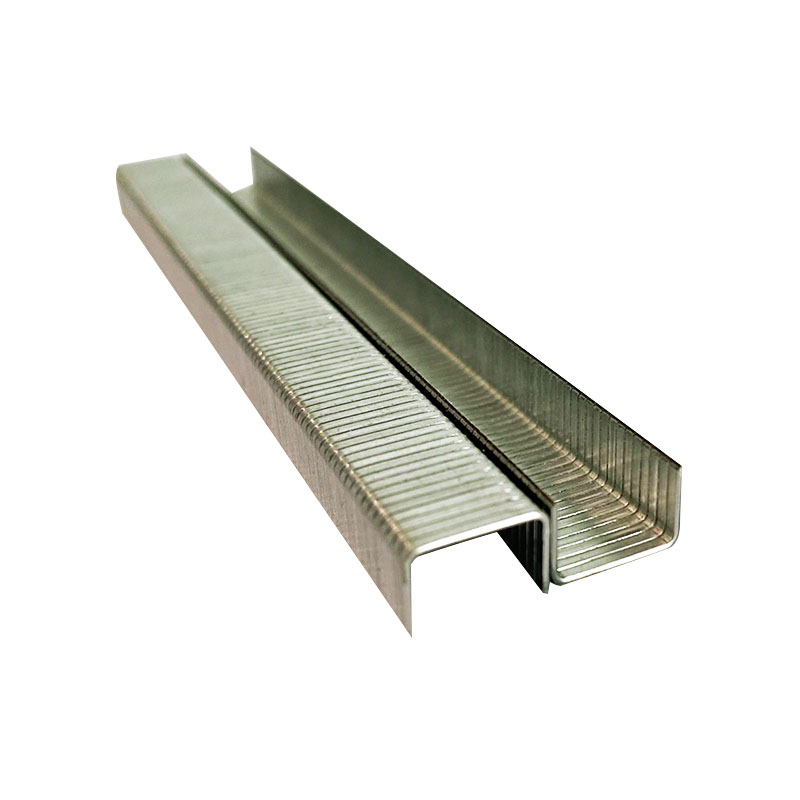 P25 Series Galvanized Heavy Wire Staples for Roofing and Outdoor UseEngineered with a thick galvanized coating, these heavy wire staples provide durable fastening for roofing underlayment and outdoor wood structures, resisting rust and moisture over years.View Product →
In packaging and carton sealing, galvanized carton staples protect the closed boxes from moisture during long supply-chain shipments. The staples also hold their shape better than uncoated staples when driven through thick corrugated board. A wet carton with a rusted staple is a quality failure no packaging manager wants.
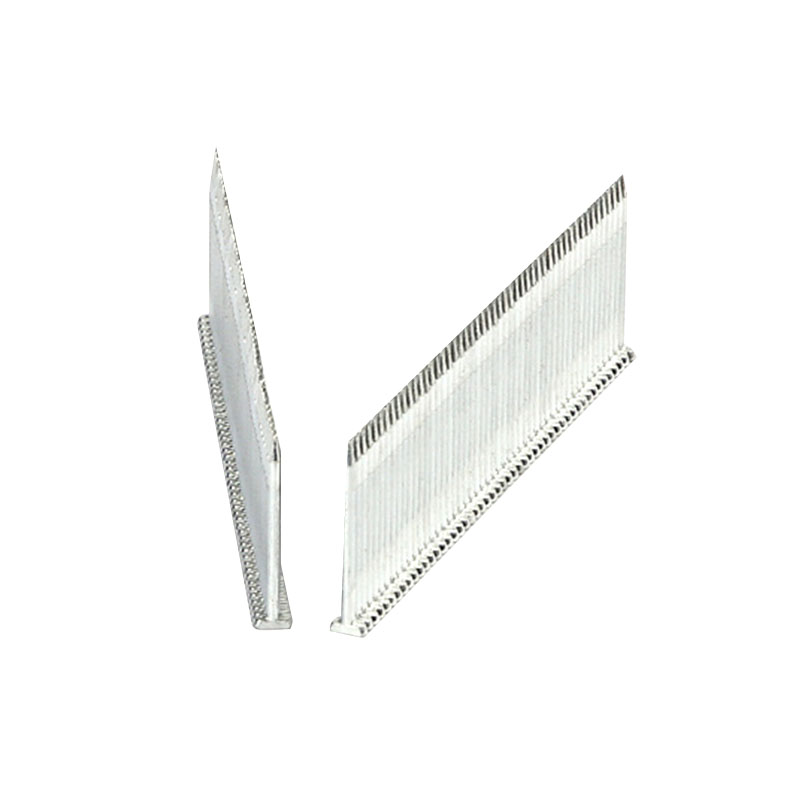
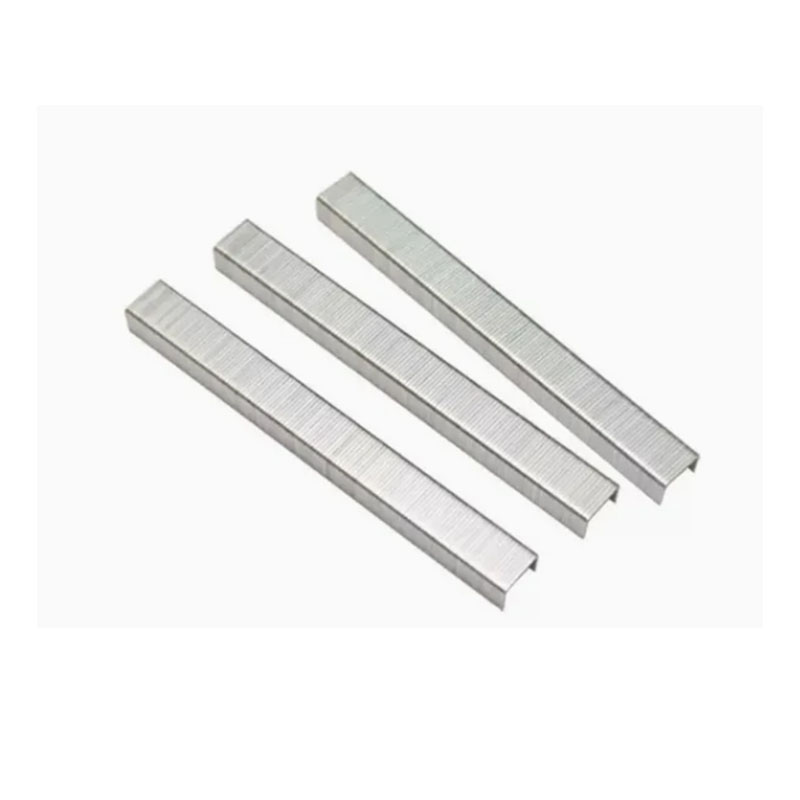
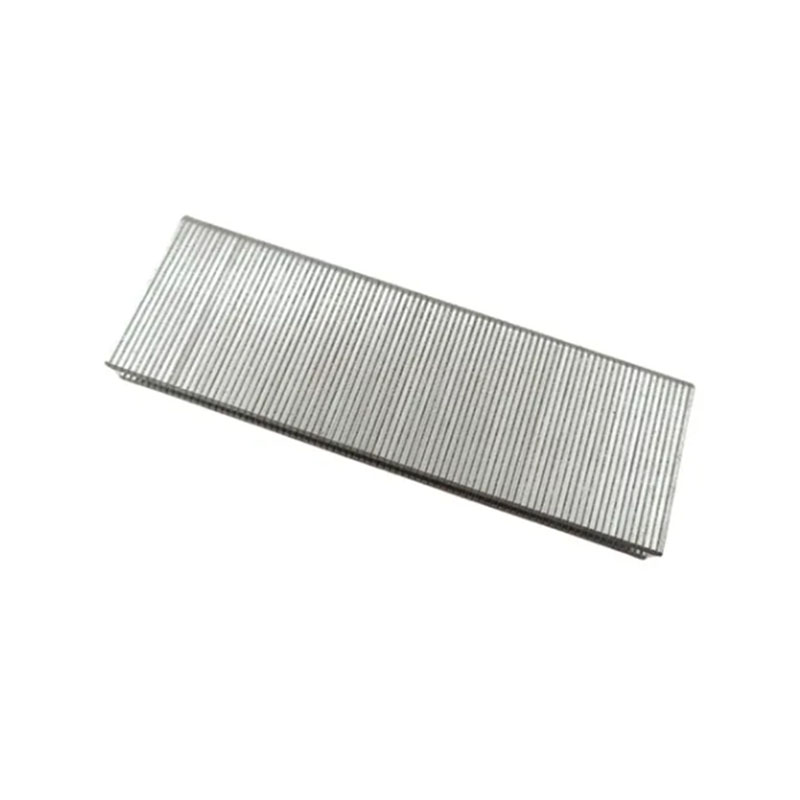
In bedding and upholstery, medium wire galvanized staples are common for securing spring clips and frame components. A staple that corrodes in a mattress frame creates noise and structural weakness over time. A galvanized coating gives the product a longer functional life. The 90 series galvanized midline wire staple addresses this with a balanced wire diameter and a rust-resistant finish. See 90 series galvanized midline wire staples for furniture for a furniture-oriented choice.
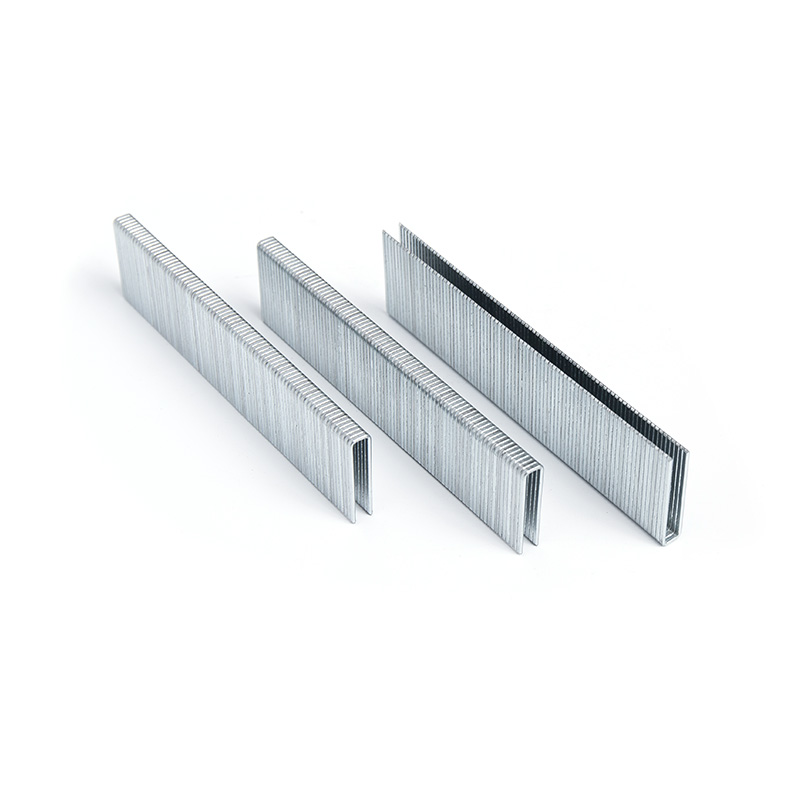 90 Series Galvanized Midline Wire Staples for Furniture AssemblyBalanced wire diameter and galvanized finish ensure a secure hold and long-lasting performance in bedding and upholstery, preventing corrosion that can cause structural weakness.View Product →
Selection Criteria to Avoid Costly Mismatches
Choosing the wrong staple costs more than the fastener itself. It can damage material, jam the tool, slow the production line, or cause a warranty claim. Use these criteria to narrow down the right galvanized staple.
| Wire Gauge | Typical Crown Width | Typical Length Range | Best Fit Applications |
|---|---|---|---|
| 20GA / 21GA / 22GA | 3/16" – 1/2" | 1/4" – 5/8" | Fine furniture, upholstery, thin trim, fabric fixing |
| 18GA | 1/4" – 1/2" | 1/2" – 1" | Furniture frames, cabinet assembly, mattress components |
| 15GA / 16GA / 17GA | 1/2" – 1" | 5/8" – 2" | Roofing, crating, fencing, heavy wood framing |
Beyond the wire gauge, check the crown width and staple length against your intended material. A staple that is too long can pierce through the back of a finished panel. A staple that is too short will not hold the material firmly. The wire gauge also determines how much driving force your pneumatic tool needs. If you use a 22GA staple in a tool designed for 18GA fasteners, you will experience misfires and frequent jams.
Galvanized coating thickness matters for outdoor applications. When you buy from a supplier, ask whether the staples are electrogalvanized or hot-dip galvanized. For enclosed furniture, electrogalvanized is usually sufficient. For any exterior exposure, hot-dip is the safer bet.
Comparing Galvanized, Stainless Steel, and Copper Staples
Stainless steel staples provide superior corrosion resistance, especially in marine environments or chemical exposure. But they cost roughly two to three times more than galvanized staples. Copper staples offer excellent corrosion resistance and non-sparking properties, but copper is softer and more expensive than both. Galvanized steel hits the cost-performance sweet spot.
If your product is destined for a coastal area or a pharmaceutical cleanroom, stainless steel is justified. For furniture, cartons, and most construction applications, galvanized staples deliver the protection you need at a sensible price.
Practical Buying Considerations for Wholesale Buyers
When you are sourcing galvanized staples in volume, focus on consistency. A reputable manufacturer will maintain tight wire diameter tolerances and a uniform zinc layer. Inconsistent coating thickness can lead to uneven driving depth and premature rust in patches.
Also consider how the staples are collated. For pneumatic tools, the strip or roll configuration must match your tool. Misaligned collation is one of the most common causes of tool jams in production environments. Check whether the staples satisfy the original tool brand's specifications.
For a deeper walkthrough on types and selection, read the steel galvanized staples types, uses, and selection guide. It covers the same decision points from a supplier point of view and can help you compare your existing choice against the full range.
Another useful resource is the ultimate guide to steel galvanized staples applications, benefits, and selection, where you can see real-world scenarios and product-specific detail. Both guides are written for buyers who need practical answers, not marketing fluff.
How Tianying Hardware Supports Steel Galvanized Staple Projects
Zhejiang Tianying Hardware has been producing industrial nails and staples for more than two decades, starting from a pneumatic gun nail factory in Hangzhou and later establishing a dedicated manufacturing base in Anji, Zhejiang. Their product range covers fine wire, medium wire, and heavy wire staples, all available in galvanized finishes. The company maintains self-operated import and export rights, which means the production line supports global wholesale buyers directly.
For a buyer evaluating a new staple supplier, the key is whether the manufacturer can supply the exact gauge, crown, and coating your production needs. Tianying's product catalog includes 20GA to 15GA options, many of which are galvanized. This breadth means you can consolidate multiple staple types from a single supplier, reducing procurement complexity.
If you are currently sourcing staples for furniture, packaging, or roofing, the safest approach is to start with a small trial order that matches your most common staple size. Test it on your existing tools and measure failure rates, rust development, and tool jamming. Then expand the order once consistency is proven.
Steel galvanized staples remain one of the most practical fastening choices for manufacturing and assembly operations. By understanding how the zinc coating works, matching the gauge and coating to the environment, and sourcing from a manufacturer with proven production experience, you can reduce long-term costs and increase product reliability.