English
 русский
 Español

Content
The Core Difference: Wire Gauge Defines the Staple
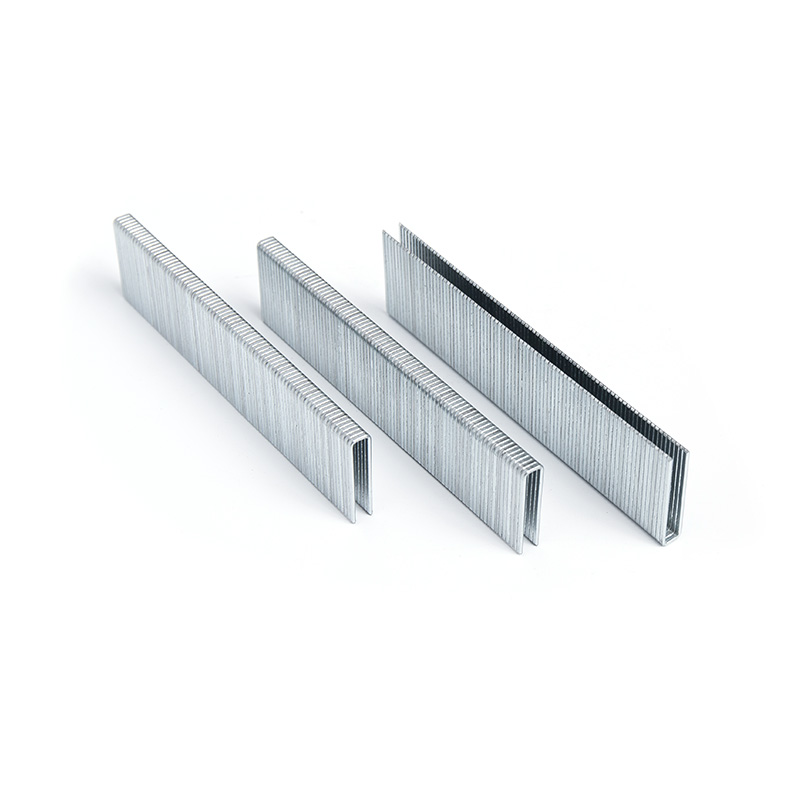
The difference between fine wire and heavy wire staples is the diameter of the wire itself. Fine wire staples are typically made from wire that is 0.5 mm to 0.7 mm thick, corresponding to 23 to 21 gauge. Heavy wire staples use wire from roughly 1.0 mm to 1.6 mm, or 18 to 15 gauge. This difference changes everything: penetration, holding power, and the damage the staple does to the material. A fine wire staple slips between threads in fabric almost invisibly. A heavy wire staple punches through with force that can tear delicate cloth or split thin wood.
When you ask fine wire staples vs heavy wire staples, the answer is not that one is better. They are for different jobs. The rule is simple: match the staple gauge to the weakest material in your stack. If you are fastening fabric to a hardwood frame, the fabric is the weakest material, so choose a fine wire staple that will not damage it. If you are fastening two pieces of thick plywood where the wood itself is the load-bearing component, choose a heavy wire staple that will not bend or snap under stress.
Fine Wire vs Heavy Wire Staples: A Direct Comparison
Understanding what is the difference between fine wire and heavy wire staples in practical terms helps you choose the right fastener before you load the gun. The table below breaks down the key characteristics.
| Characteristic | Fine Wire Staples | Heavy Wire Staples |
|---|---|---|
| Wire gauge | 23 to 20 gauge (0.5–0.9 mm) | 18 to 15 gauge (1.0–1.6 mm) |
| Penetration through fabric | Cuts between threads, minimal damage | Can cut or tear delicate fabric |
| Holding power | Moderate — for light to medium loads | High — for structural and heavy loads |
| Risk of splitting thin wood | Very low | Moderate to high |
| Best used on | Fabric, upholstery, thin veneers, trim | Thick wood, subfloors, sheathing, heavy insulation |
When to Use Fine Wire Staples
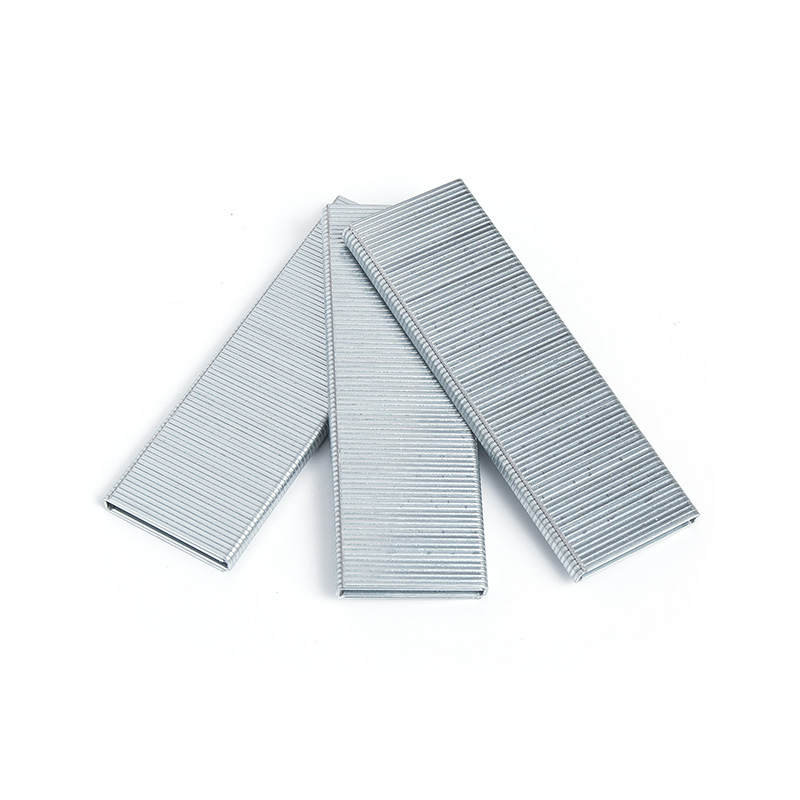
You should reach for fine wire staples for delicate materials whenever the surface of the material must not be marred by the fastener. The most common question — when to use fine wire staples — is answered by looking at the job: if you are attaching fabric to a chair frame, stretching canvas over a wooden stretcher, or securing thin plywood backing to a cabinet, fine wire staples are the correct choice. Their narrow legs enter the substrate with minimal displacement, and the narrow crown disappears into the weave of the fabric or the corner of the joint.
For fine wire staples for delicate materials, the gauge and length work together. A 22-gauge, 6 mm staple holds lightweight cotton onto a thin plywood panel without piercing through. A 20-gauge, 10 mm staple secures upholstery fabric over foam and into a hardwood frame. The holding power per staple is lower than a heavy wire equivalent, but you compensate with closer spacing — typically 15 to 25 mm apart for fabric under tension. The result is a clean, nearly invisible fastening that does not tear the material.
When to Use Heavy Wire Staples
Choosing when to use heavy wire staples is straightforward: the material must be thick enough to accept the staple without cracking, and the joint must carry a load that would bend a fine wire staple. Heavy wire staples for thick materials are the standard for roof underlayment, house wrap, heavy carpet underpadding, and subfloor installation. A 16-gauge, 25 mm heavy wire staple driven into a floor joist holds down plywood sheathing under foot traffic without pulling out. A fine wire staple of the same length would buckle on impact with dense wood.
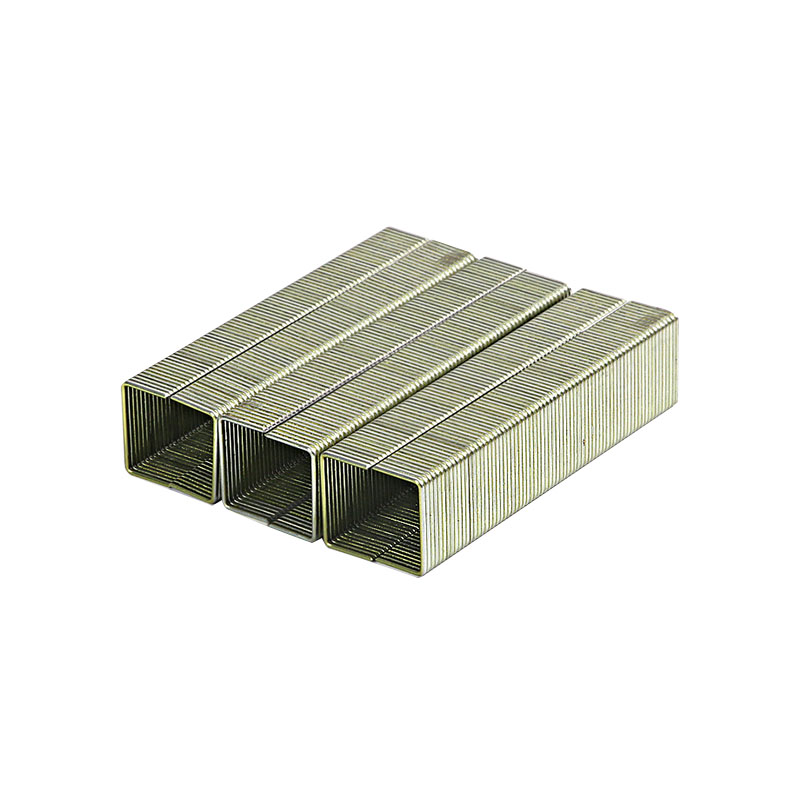
The question what type of staples are best for heavy duty applications leads directly to heavy wire staples with a wide crown, typically 10 mm or wider. The wider crown distributes the load over a larger area, preventing the staple from pulling through material like roofing felt or heavy cardboard. In construction, 15-gauge staples with a 12 mm crown fasten 12 mm OSB sheathing. In packaging, heavy wire staples close corrugated cartons that must survive stacking and transport. Any application where the staple itself will bear structural stress demands the thicker shank of a heavy wire.
Which Staples Are Best for Upholstery?
For most upholstery work, which staples are best for upholstery is answered by fine wire staples. The fabric and padding are the weakest elements, and the staple must not cut the threads or create an opening that grows with tension. A 21-gauge, 10 mm fine wire staple with a narrow crown of 6 to 8 mm is the workhorse of upholstery shops. It penetrates fabric, passes through up to 12 mm of foam, and sinks securely into a hardwood frame without splitting. The fine wire enters between the threads rather than severing them, preserving the weave's integrity.
There is an exception. When attaching thick webbing or securing a heavy dust cover to the underside of a large sofa, a slightly heavier staple may be needed — but still within the fine wire range. Moving up to a 20-gauge staple with a 14 mm leg can provide extra holding power for thick, multi-layer sections. However, a true heavy wire staple of 18 gauge or thicker is rarely used in furniture upholstery because it creates unsightly holes and splits thin trim. The question how to choose between fine wire and heavy wire staples for upholstery almost always settles on fine wire, with adjustments to leg length and staple spacing rather than a switch to a thicker gauge.
A Practical Checklist for Choosing the Right Staple
When you decide how to choose between fine wire and heavy wire staples, work through these four checks:
- Identify the softest material in the stack. If it is fabric, thin veneer, or plastic sheeting, start with a fine wire staple to prevent tearing. If the stack is all wood or heavy board, a heavy wire staple is safe.
- Determine the required holding force. A staple holding stretched fabric needs moderate force; closer spacing solves most issues. A staple holding a floor panel against foot traffic needs high individual strength — go heavy wire.
- Check substrate thickness. Heavy wire staples split thin materials. If the substrate is under 10 mm, fine wire is almost mandatory unless the material is soft like foam board.
- Consider appearance. If the staple will be visible or covered only by a light coat of paint, a fine wire narrow crown leaves a smaller hole and is easier to hide. Heavy wire staples demand filling or remain part of an industrial aesthetic.
In a well-stocked workshop, both fine wire and heavy wire staples have their place. The key is not loyalty to one type but understanding what is the difference between fine wire and heavy wire staples well enough to choose the right one in seconds. When in doubt, test on scrap: if the staple tears the surface or splits the substrate, switch to a finer gauge. If it bends before sinking fully, move up to a heavier wire.