English
 русский
 Español

Content
- 1 Begin with Staple Size Selection: Leg Length and Crown Width
- 2 Select the Correct Wire Gauge for the Required Holding Strength
- 3 Choose the Right Staple Material: Galvanized vs. Stainless Steel
- 4 Match the Staple to the Tool: Pneumatic, Electric, and Manual Staplers
- 5 Fine Wire vs. Medium Wire Staples: When Appearance and Holding Power Intersect
- 6 Assess All Factors Affecting Staple Holding Strength
- 7 Apply the Selection Guide to Specific Industrial and Manufacturing Environments
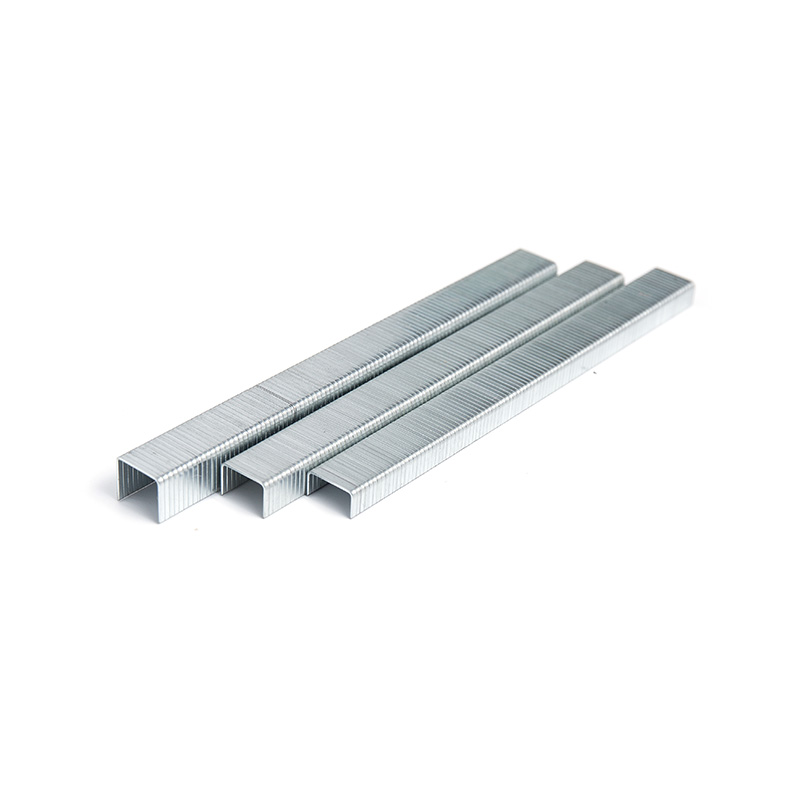
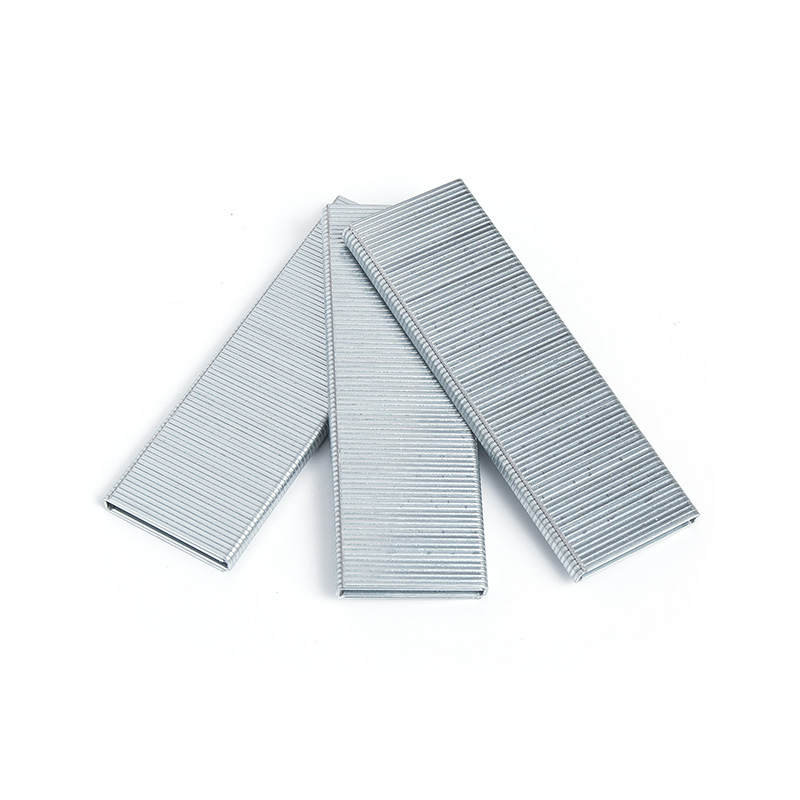
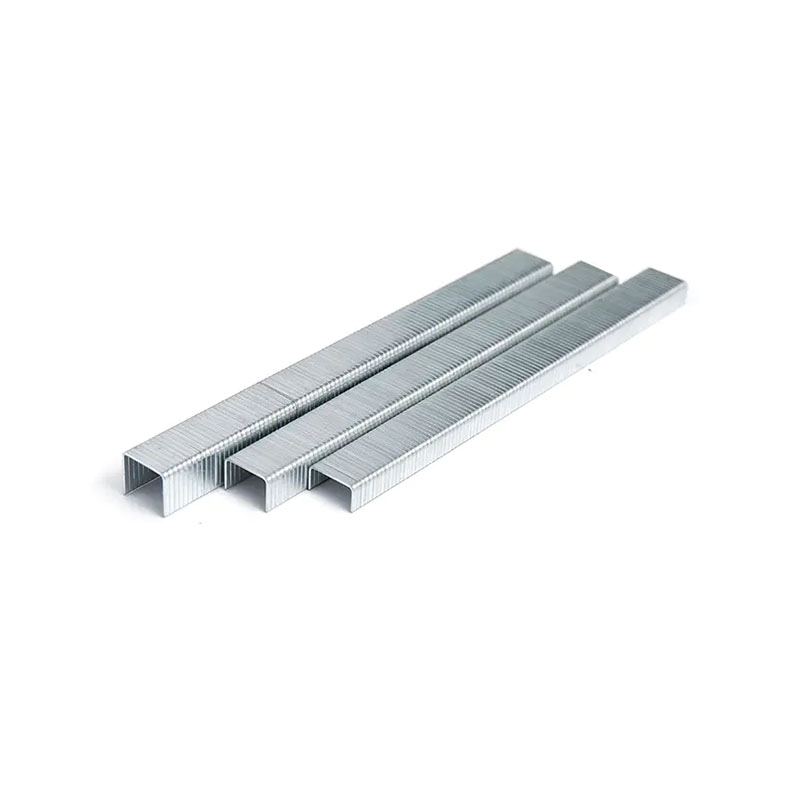
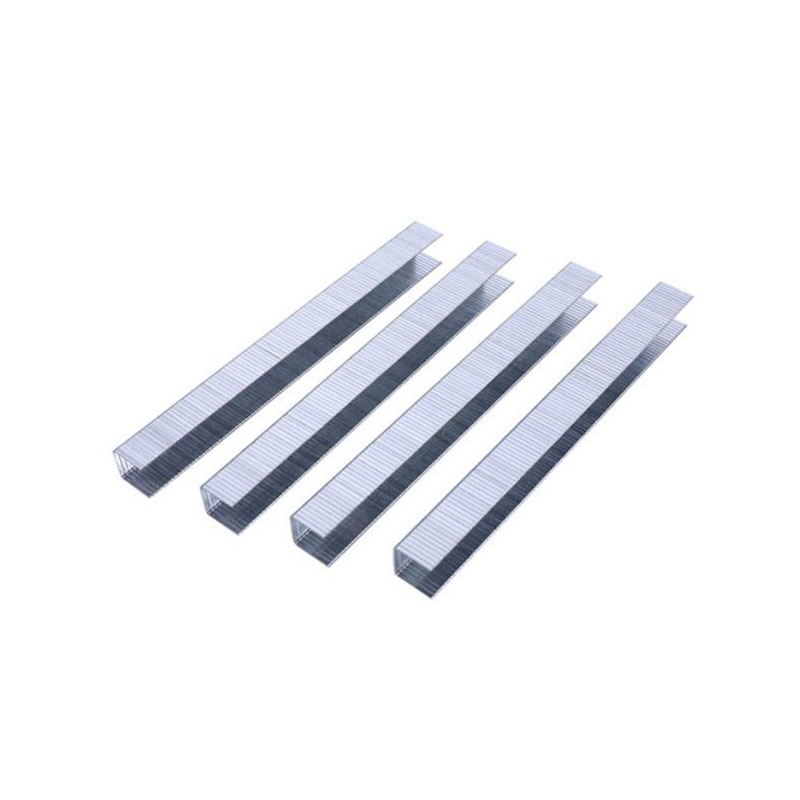
Choosing the right galvanized staples is a precision decision that affects joint strength, material integrity, and the finished appearance of a project. A staple that is too short or too thin will fail to hold, while one that is too large can split the workpiece or jam the tool. This galvanized staples selection guide translates application requirements into a clear set of specifications: wire gauge, crown width, leg length, and material choice between galvanized and stainless steel. Whether you are fastening upholstery fabric, assembling furniture frames, or securing roofing underlayment on a commercial project, the following criteria will help you select a staple that delivers maximum holding power and long-term corrosion resistance without damaging the substrate.
Begin with Staple Size Selection: Leg Length and Crown Width
The most immediate staple size selection guide decision involves two dimensions: leg length and crown width. These dimensions dictate how deeply the staple penetrates and how broadly it distributes its clamping force. A common mistake is choosing a leg length simply based on the total thickness of the materials being fastened. In practice, the leg must be long enough to pass through the top layer, fully embed in the base material, and clinch or hold securely. A reliable rule is that the leg length should be 2.5 to 3 times the thickness of the material being fastened. For example, fastening a 6 mm plywood panel to a 12 mm frame requires a leg length of at least 18–20 mm to ensure the staple tip anchors deeply enough in the frame member without protruding.
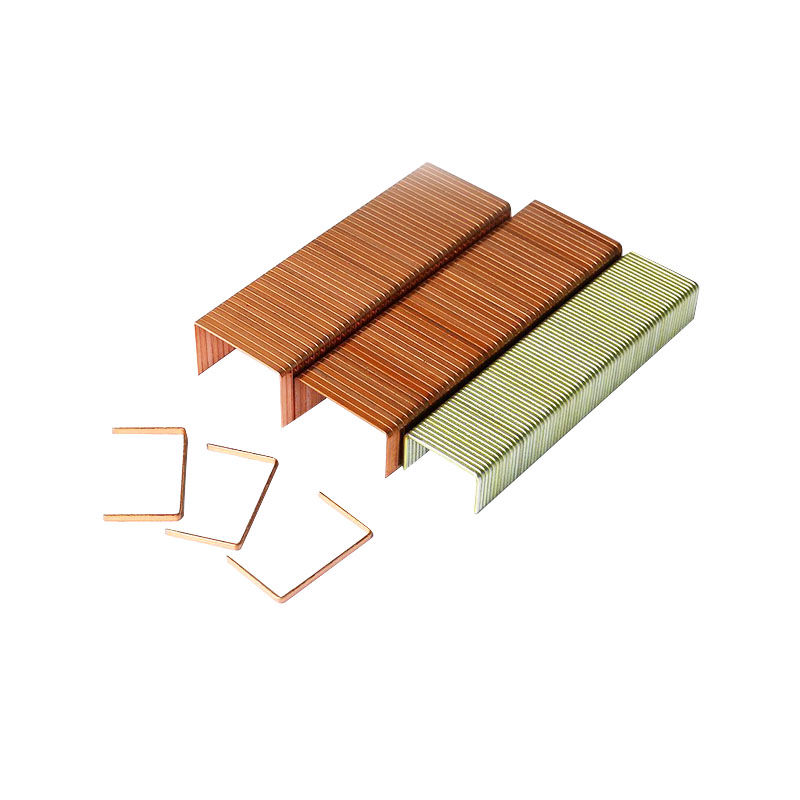
Crown width, the horizontal top of the staple, determines how the holding force is distributed. A narrow crown—typically 3/16 inch or 1/4 inch—concentrates pressure in a small area, which is ideal for fine finishing work where the staple head must be discreet, such as upholstery and trim. A wide crown—1/2 inch or 1 inch—spreads the load over a larger surface, reducing the risk of tearing through thin or fragile materials like roofing felt or housewrap. For general furniture manufacturing, a medium crown of 3/8 inch provides a good balance between holding power and minimal visual impact. The table below summarizes the recommended staple dimensions for common material thicknesses.
| Material Thickness (Fastened Layer) | Recommended Leg Length | Typical Crown Width | Example Application |
|---|---|---|---|
| Up to 3 mm (fabric, thin plastic) | 6–10 mm | 3/16" – 1/4" | Upholstery fabric to wood frame |
| 3–6 mm (thin plywood, paneling) | 12–18 mm | 1/4" – 3/8" | Cabinet backs, drawer bottoms |
| 6–12 mm (plywood, MDF, solid wood) | 18–30 mm | 3/8" – 1/2" | Furniture frame assembly |
| Over 12 mm (sheathing, subfloor, construction) | 30–50 mm | 1/2" – 1" | Roofing, sheathing, heavy framing |
When determining staple length and crown size, always consider whether the staple will be clinched (the legs curl outward on the underside) or driven flush. For clinching, a slightly longer leg is required to allow the point to exit and fold over. For blind fastening into a solid substrate, the leg should not protrude at all, and it must be short enough to prevent the tip from breaking through the back surface.
Select the Correct Wire Gauge for the Required Holding Strength
Wire gauge determines the staple's thickness and, consequently, its shear strength and bending resistance. As explained in staple dimension guides, the higher the gauge number, the thinner the wire. For heavy-duty applications, a lower gauge number (thicker wire) is essential. A heavy duty galvanized staples choice typically begins at 16 gauge and, for pallet or heavy construction work, drops to 14 gauge. However, heavier wire is not always better. In materials that are brittle or thin, a thick staple can cause splitting, and the larger hole may be cosmetically unacceptable. The selection must balance holding strength with material preservation.
- Fine wire (20–22 gauge): Minimal hole size, ideal for upholstery and delicate trim where the staple must be nearly invisible and the substrate is thin. Holding strength is lower, but sufficient when many staples are placed close together.
- Medium wire (18 gauge): A versatile choice for furniture frames, cabinet assembly, and general workshop use. It provides a significant increase in shear strength over fine wire while still being compatible with most hand and electric staplers.
- Heavy wire (14–16 gauge): Required for structural connections, roofing underlayment, sheathing, and pallet repair. These staples are typically driven by pneumatic staplers with sufficient power to embed the thick wire. For galvanized staples for industrial applications, 16-gauge is the minimum for reliable, long-term fastening under load.
A key factors affecting staple holding strength is the wire gauge combined with the crown width and the point type. Divergent points, where the legs are slightly angled outward, significantly increase pull-out resistance in wood because the legs follow curved paths that lock the staple into the grain. For applications subject to vibration or varying loads, choosing a divergent point staple of an appropriate gauge can eliminate the need for adhesives or additional fasteners.
Choose the Right Staple Material: Galvanized vs. Stainless Steel
The decision of galvanized staples vs stainless steel staples is primarily about the risk of corrosion in the intended environment and the required lifespan. Galvanized staples, with their zinc coating, provide excellent protection for indoor applications and many outdoor uses where the staple is not continuously submerged or exposed to salt spray. They are the cost-effective standard for furniture, upholstery, construction, and roofing. The zinc sacrifices itself to protect the steel core, and a hot-dip galvanized coating of 15–25 microns will last for decades in a non-marine exterior environment.
Stainless steel staples, made from 304 or 316 stainless steel, offer a higher level of corrosion resistance and are necessary in marine environments, outdoor furniture exposed to coastal salt, chemical plants, and food processing facilities. Stainless steel staples are inherently corrosion-resistant throughout their cross-section, whereas a galvanized staple that is deeply scratched will eventually rust at the scratch. However, stainless steel is more expensive and typically softer than hardened galvanized steel, so driving into dense hardwoods may require a slightly heavier gauge to avoid bending. For galvanized staples for furniture manufacturing, galvanized staples are almost always sufficient and represent the optimal balance of cost, strength, and corrosion resistance. Unless the furniture is designed for permanent outdoor exposure in a coastal setting, galvanized staples will not rust and will not stain the surrounding wood or fabric.
Match the Staple to the Tool: Pneumatic, Electric, and Manual Staplers
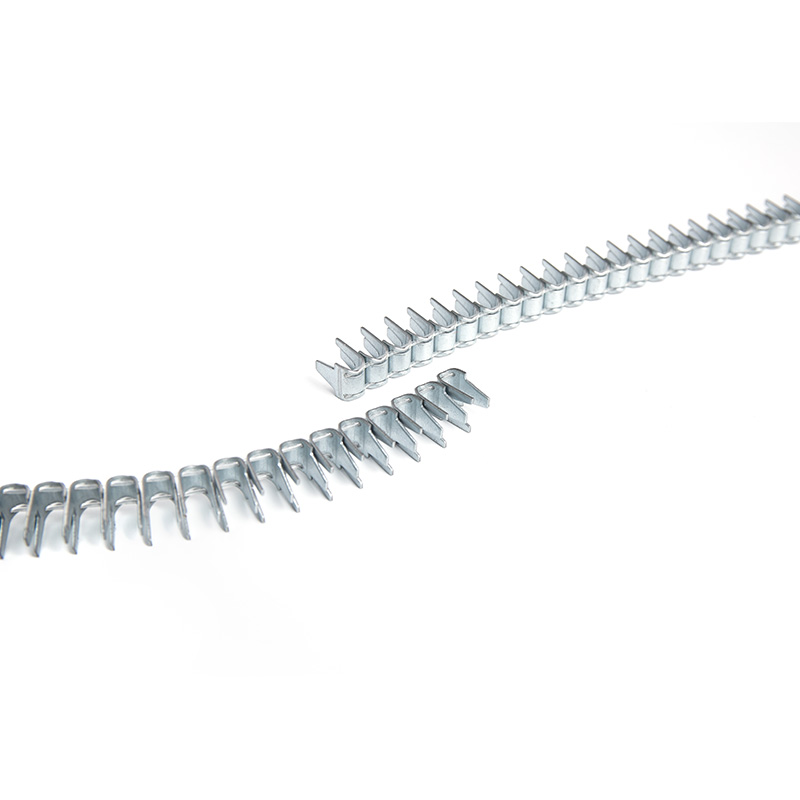
Staple selection is only effective if the staple is compatible with the tool being used. Different staplers accept specific staple series, which are defined by the wire gauge, crown width, and the collation method (how the staples are joined together in a strip). Before ordering galvanized staples for pneumatic staplers, check the stapler's model plate for the required staple series—such as 71-series, 80-series, or 90-series—and confirm the compatible gauge and crown range. Using a staple with an incorrect crown width will cause jams, while a staple with a heavier gauge than the tool is rated for can damage the driver blade.
Pneumatic staplers are the standard in galvanized staples for industrial applications because they can drive thousands of staples per day without operator fatigue and can handle heavy-gauge wire staples that manual staplers cannot. They require a stable compressed air supply and regular lubrication, but they deliver consistent driving depth and speed. Electric staplers offer portability and are well-suited for on-site work, though their driving power is typically limited to 18-gauge medium wire staples. Manual staplers are still common for upholstery and light workshop use, and they require the operator to match their physical strength to the staple gauge. In any production environment, the use of glue-collated staples is recommended over paper-collated; the glue bond is more durable in humid conditions and leaves no residue that could affect finishing.
Fine Wire vs. Medium Wire Staples: When Appearance and Holding Power Intersect
The comparison of fine wire vs medium wire staples is a direct trade-off between the visibility of the staple head and the strength of the joint. Fine wire staples (20–22 gauge) have thin legs that leave a very small entry hole, making them the first choice for visible areas on upholstered furniture, picture frames, and decorative trim. They are almost invisible once the fabric pile is brushed over them. However, their holding power is limited, and they are not suitable for joints that bear weight or endure stress. In sofa construction, for example, fine wire staples attach the fabric cover but not the frame; the frame itself is fastened with medium or heavy wire staples that can withstand the dynamic loads of sitting and moving.
Medium wire staples (18 gauge) bridge the gap. They are strong enough for many structural furniture joints, such as attaching a plywood back panel to a hardwood frame, yet their hole size is still small enough that it can be filled or hidden with a small amount of wood filler or paint. For galvanized staples for furniture manufacturing, the most efficient workflow uses 18-gauge medium wire staples for the majority of structural assembly, reserving fine wire staples for final fabric attachment and trim work. This dual approach minimizes both the number of fasteners used and the rework needed to conceal them. In the galvanized staples selection guide, understanding this division between aesthetic and structural roles allows you to stock only the necessary staple sizes and avoid the waste of using an oversized staple where it is not required.
Assess All Factors Affecting Staple Holding Strength
The ultimate goal of choosing a galvanized staple is to achieve a joint that holds securely for the life of the product. A comprehensive understanding of factors affecting staple holding strength goes beyond gauge and length to include material density, grain direction, and environmental conditions. In hardwoods with dense grain, a staple must overcome more resistance, and a slightly heavier gauge or a divergent point may be needed to achieve full penetration without buckling. In softwoods, the same staple may drive too deep, so a shallower depth setting or a shorter leg length is required to avoid the crown embedding below the surface. The moisture content of the wood also plays a role; staples driven into very dry wood will hold less effectively as the wood expands with humidity changes, so clinching or using a slightly longer leg provides a safety margin against seasonal movement.
For heavy duty galvanized staples used in construction, the holding strength is also affected by the type of tool used. A pneumatic stapler with adjustable depth control and adequate air pressure will consistently set the staple to the correct depth, whereas a manual stapler or an underpowered electric tool may leave the staple proud, reducing its effective embedment and shear capacity. In production environments, regular testing of a sample joint to failure provides the most reliable data on whether the selected staple achieves the required strength. By controlling each variable—gauge, crown, leg length, point type, substrate material, and tool setting—the selected staple becomes a predictable, engineered component rather than a guess.
Apply the Selection Guide to Specific Industrial and Manufacturing Environments
In galvanized staples for industrial applications, production speed, reliability, and unit cost become as important as the staple's physical properties. Industrial environments such as furniture factories, pallet manufacturing, and packaging lines require staples that feed reliably through automatic stapling heads without jamming and that consistently achieve the designed depth without adjustment. For these settings, a 16- or 18-gauge galvanized staple with a flat or divergent point is the standard, selected after testing the specific combination of tool and material. The galvanized coating must be thick enough to provide in-process corrosion protection—even a few days of exposure in an unheated warehouse can cause plain steel staples to develop surface rust that gums up stapling machines.
For manufacturers exporting assembled furniture or components, the requirement that staples not bleed rust stains onto visible surfaces makes galvanized staples a mandatory specification. A galvanized staples for furniture manufacturing standard should include a minimum zinc coating thickness—such as 5 microns for indoor furniture and 15 microns for outdoor furniture—and a requirement that the staple series be maintained consistently to allow the use of calibrated, dedicated stapling tools across production lines. By integrating the selection factors—staple dimensions, material, corrosion resistance, tool compatibility, and holding strength requirements—into a single documented specification, operations can reduce fastener-related defects to near zero and keep their assembly lines running with minimal downtime.