English
 русский
 Español

Content
- 1 What Are Galvanized Staples and Why Choose Them?
- 2 Staple Wire Gauge Explained: The Backbone of Staple Strength
- 3 Staple Crown and Leg Length Guide: The Dimensions That Determine Fit
- 4 Galvanized Staples Types and Their Targeted Applications
- 5 Key Application Areas: Roofing, Carton Sealing, and More
- 6 Matching the Staple to the Tool and the Material
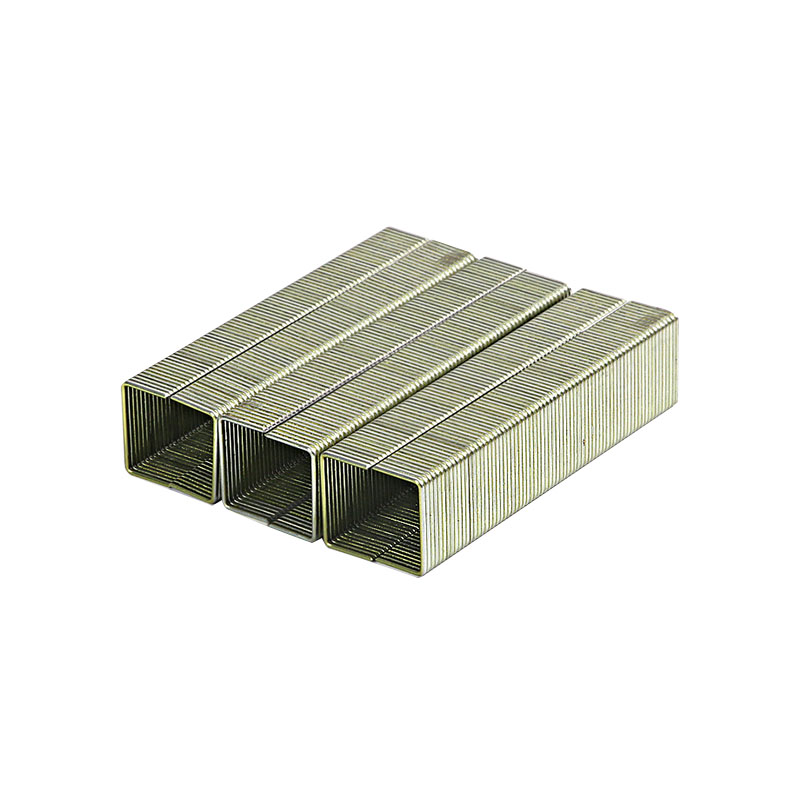
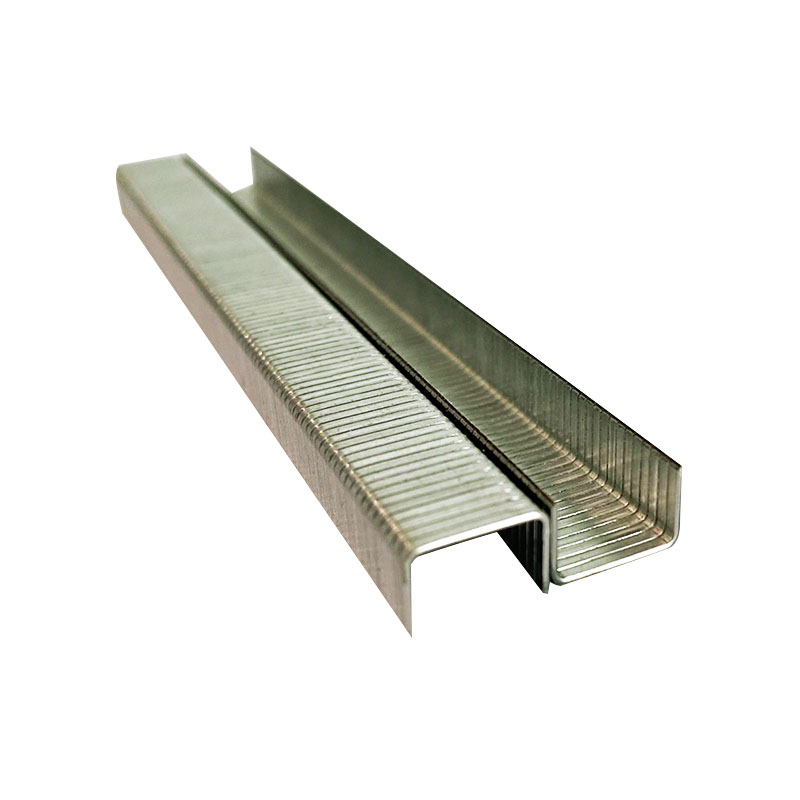
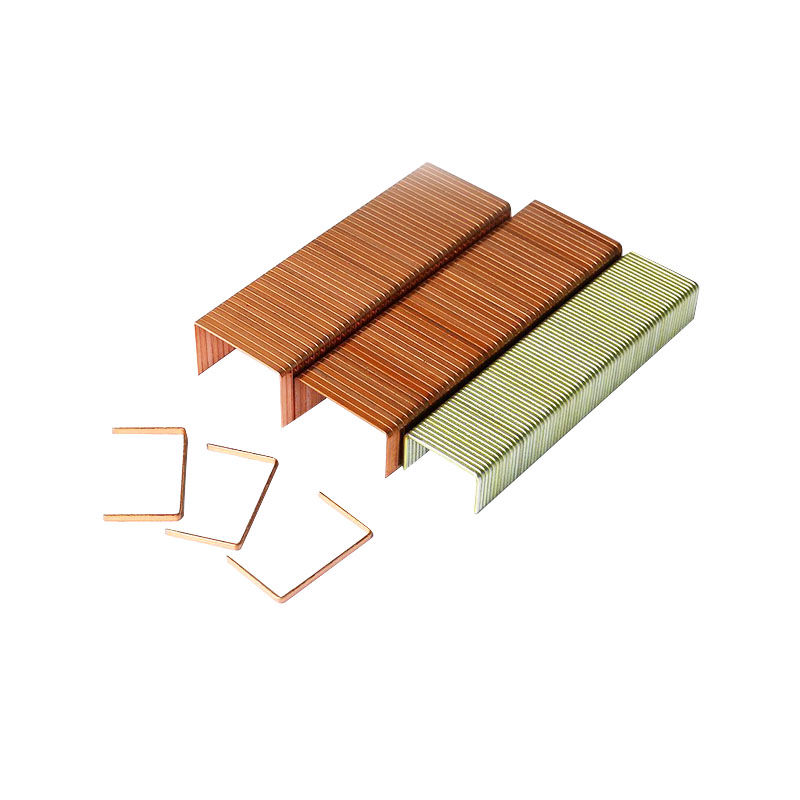
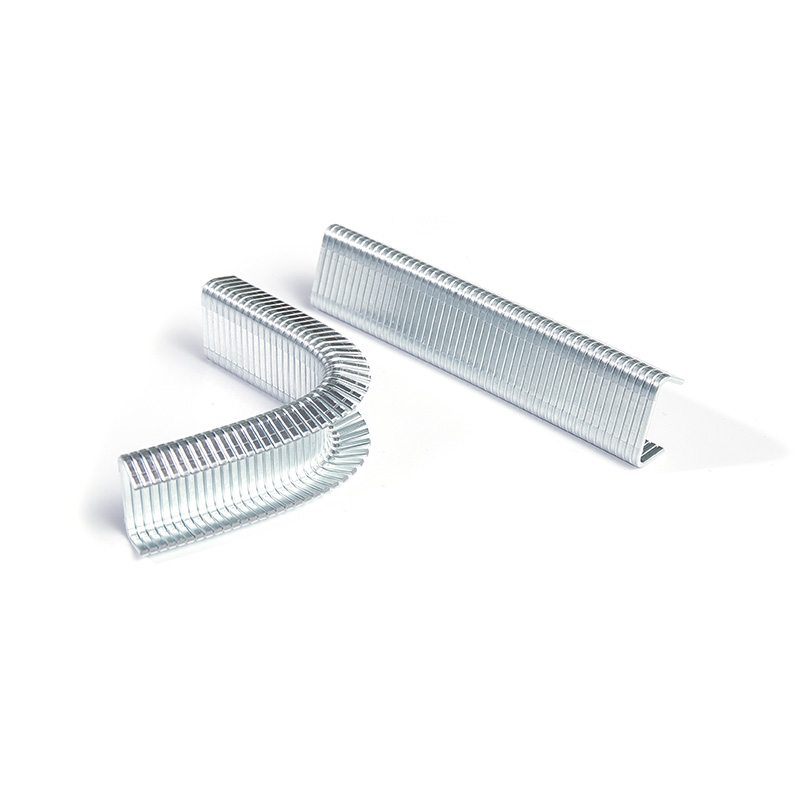
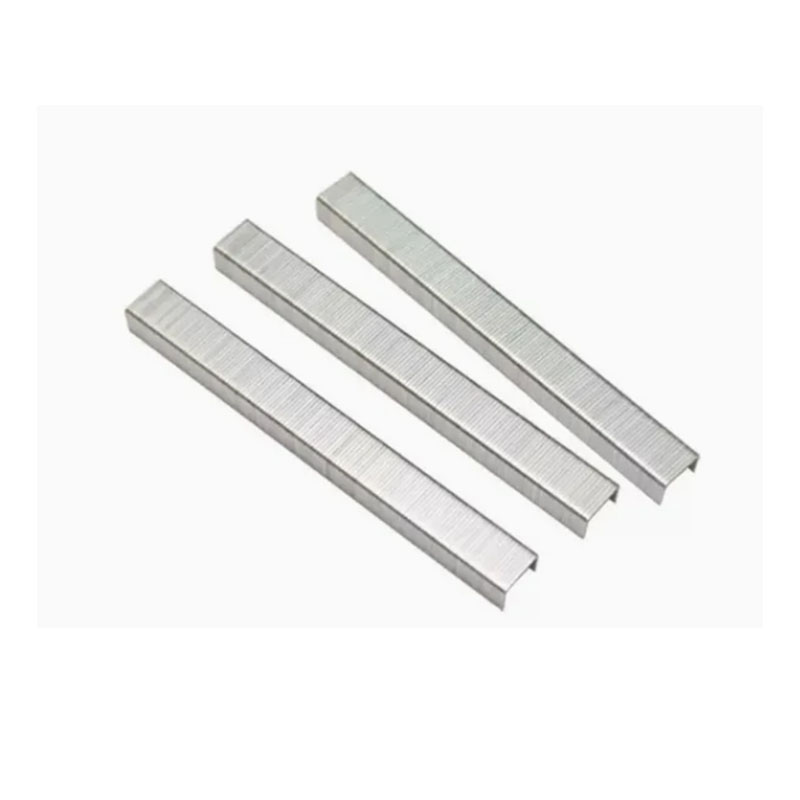
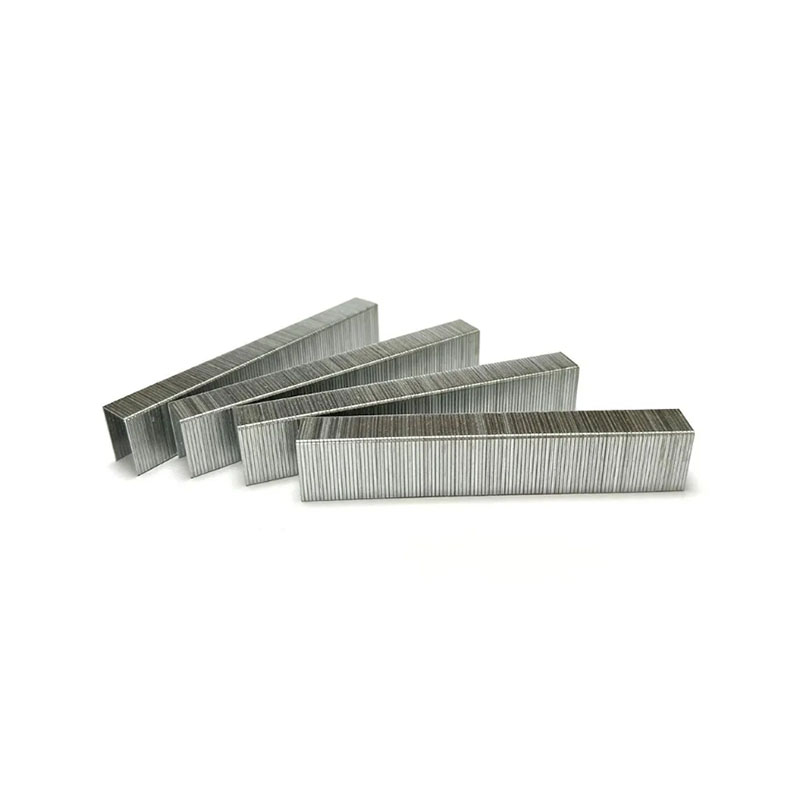
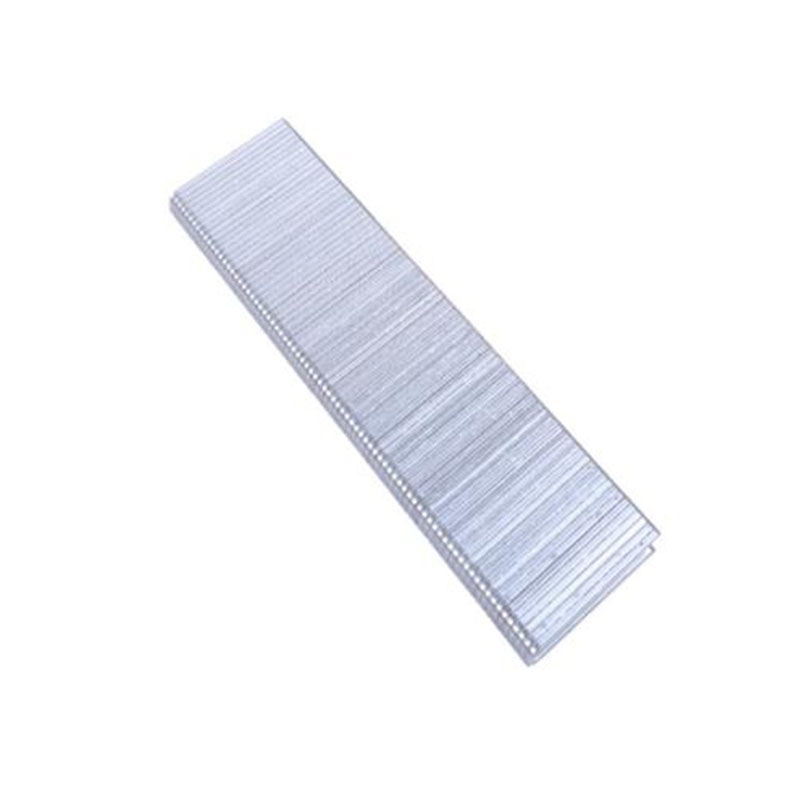
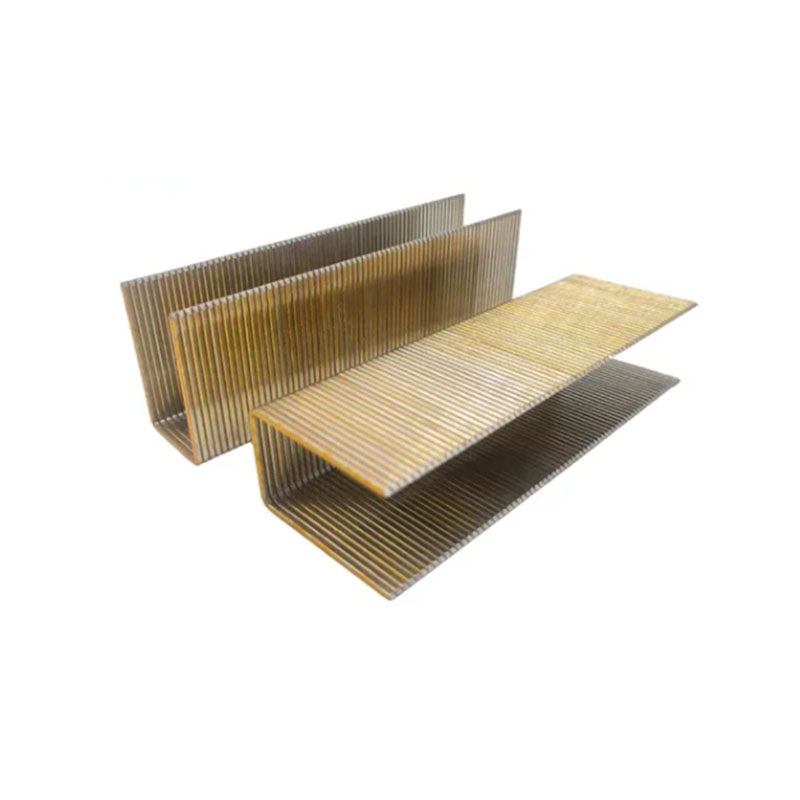
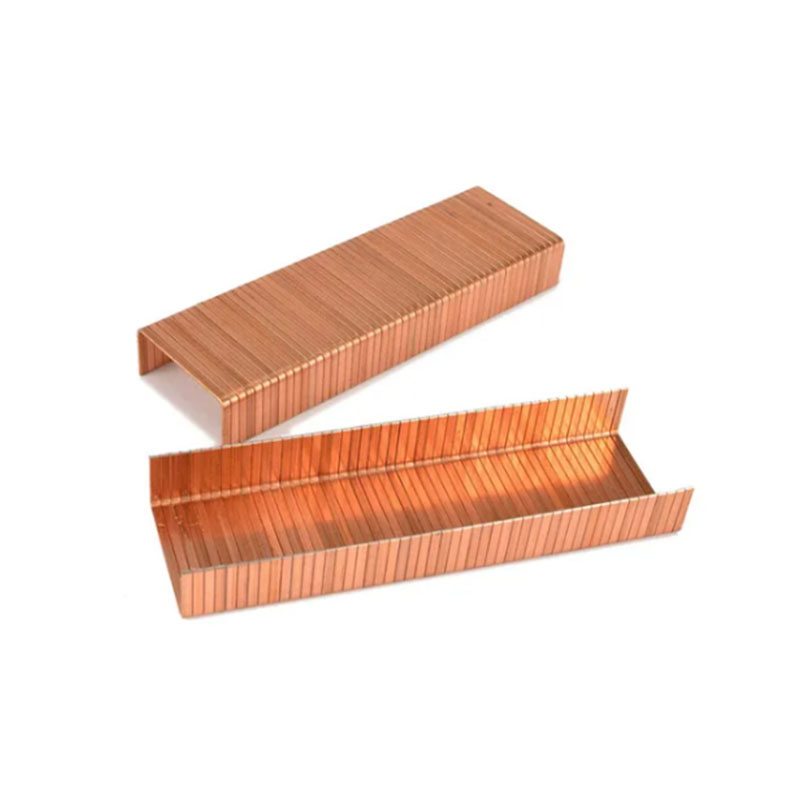
Steel galvanized staples are U-shaped metal fasteners formed from steel wire that has been coated with a layer of zinc to resist rust and corrosion. They are driven into wood, plastic, or corrugated board by manual, electric, or pneumatic staplers to join materials quickly and securely. The galvanizing process is what separates these staples from plain steel varieties: by creating a protective zinc barrier, the staples can be used outdoors on roofing felt, in damp workshops for furniture assembly, or on corrugated cartons that may be exposed to humidity without the staples rusting and staining the surrounding material. From the fine wire staples for upholstery that hold delicate fabric to the heavy wire staples for construction that fasten sheathing to framing, the selection of the correct staple depends on three interrelated specifications: wire gauge, crown width, and leg length. Understanding how these dimensions interact with the workpiece material is the key to achieving a strong, durable fastening without splitting the substrate or jamming the tool.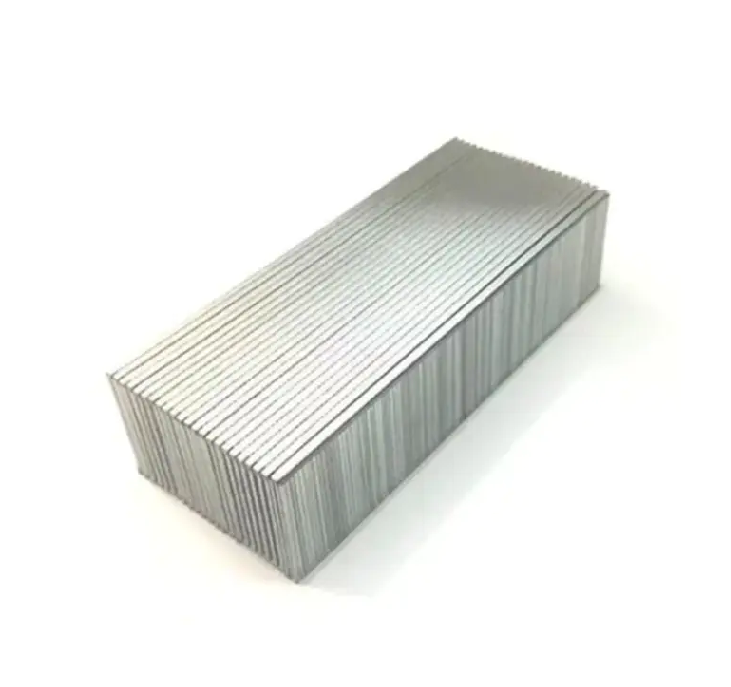
What Are Galvanized Staples and Why Choose Them?
What are galvanized staples at the material level? They begin as coils of low-carbon steel wire, which are formed into the familiar U-shape on high-speed staple machines. After forming, the staples are electro-galvanized or hot-dip galvanized to apply a zinc coating. Electro-galvanizing produces a thin, smooth, and uniform coating typically 3–5 microns thick, which is adequate for indoor furniture and carton sealing applications. Hot-dip galvanizing deposits a thicker layer, often 15–25 microns, with a slightly rougher surface that provides superior corrosion protection in exterior environments such as roofing and fence construction. The zinc acts as a sacrificial anode: if the coating is scratched, the surrounding zinc corrodes preferentially, protecting the underlying steel from rust. This is why galvanized staples for roofing and other outdoor applications are specified as galvanized rather than plain steel—they maintain their structural integrity and appearance even after years of rain, snow, and UV exposure.
Galvanized staples also offer a better grip in some materials than stainless steel staples, because the slightly textured zinc surface increases friction when driven into wood fibers. Compared to plain steel staples, they eliminate the risk of rust bleeding that can leave unsightly orange stains on upholstery fabric, wooden furniture frames, or retail carton packaging. For manufacturers who export goods in ocean containers, where humidity can reach saturation levels, switching from plain to galvanized staples is often the single change that eliminates customer complaints about rusted fasteners on arrival.
Staple Wire Gauge Explained: The Backbone of Staple Strength
Staple wire gauge explained simply: gauge is a measurement of the wire's diameter, and a larger gauge number indicates a thinner wire. This inverse relationship can be confusing—a 20-gauge staple wire is substantially thicker and stronger than a 22-gauge wire. The gauge directly determines the staple's holding power and the size of the hole it leaves in the workpiece. Selecting the wrong gauge leads to either insufficient holding strength or splitting of the material.
| Wire Gauge | Approx. Diameter (mm) | Strength Category | Example Use |
|---|---|---|---|
| 22 | 0.64 | Fine wire | Upholstery, delicate trim |
| 20 | 0.81 | Fine to medium wire | Light furniture, cabinet backs, paneling |
| 18 | 1.02 | Medium wire | Furniture frames, general construction |
| 16 | 1.29 | Medium to heavy wire | Roofing underlayment, subflooring |
| 14 | 1.63 | Heavy wire | Heavy construction, pallets, fencing |
In general, galvanized wire staples range from 22-gauge fine wire to 14-gauge heavy wire, covering the full spectrum from light crafts to structural applications. When in doubt, it is safer to select a slightly thicker gauge for extra holding power, provided it does not split the substrate. A 20-gauge staple provides a good balance for general-purpose workshop use, while a 16-gauge staple is the minimum recommended for any exterior application where wind uplift or material movement is a factor.
Staple Crown and Leg Length Guide: The Dimensions That Determine Fit
A staple crown and leg length guide is essential because these two dimensions define whether the staple will bridge the intended materials and anchor securely. The crown is the horizontal top of the staple; the legs are the two vertical prongs that penetrate the workpiece. The crown width must be wide enough to span the materials being fastened without cutting into them, but not so wide that it protrudes or fails to grip. The leg length must be sufficient to penetrate both layers and clinch or embed to a depth that provides full holding strength.
- Crown width: Common crown widths are 3/16 inch (4.8 mm), 1/4 inch (6.4 mm), 3/8 inch (9.5 mm), 1/2 inch (12.7 mm), and 1 inch (25.4 mm). Narrow crowns are used for fine finishing work and upholstery, while wide crowns distribute pressure over a larger area and are used for roofing felt, housewrap, and carton sealing where tear-out resistance is needed.
- Leg length: Leg lengths range from as short as 1/4 inch (6 mm) for thin upholstery fabrics to over 2 inches (50 mm) for heavy construction sheathing. A good rule is that the leg length should be roughly 2.5 to 3 times the thickness of the material being fastened to the base material, ensuring at least two-thirds of the leg is embedded in the substrate. For fastening two pieces of 12 mm plywood together, a leg length of at least 30–35 mm is recommended.
Galvanized staples are often specified with a divergent point design—where the two legs are slightly angled outward—to improve clinching when driven into wood. This causes the legs to follow a curved path and resist pull-out forces much more effectively than straight-leg staples. For applications like galvanized staples for roofing, where the staple must hold down felt paper against wind uplift for years, a divergent point and a wide crown combine to provide the necessary resistance without the need for an adhesive bond.
Galvanized Staples Types and Their Targeted Applications
The galvanized staples types are most practically categorized by wire gauge and crown width, which together determine the staple's primary use case. The table below maps the common categories to their applications and provides guidance on choosing the right staple for the material.
| Staple Type | Typical Gauge | Crown Width | Primary Applications |
|---|---|---|---|
| Fine Wire Staples | 20–22 | 3/16" – 1/4" | Upholstery, window treatments, canvas stretching, trim installation |
| Medium Wire Staples | 18 | 1/4" – 1/2" | Furniture frame assembly, cabinet backs, paneling, drawer bottoms |
| Heavy Wire Staples | 14–16 | 1/2" – 1" | Roofing felt, housewrap, insulation, sheathing, subflooring, construction fencing |
Fine wire staples for upholstery are essential for attaching fabric to wooden frames. They are typically 20 or 22 gauge with a narrow crown of 1/4 inch or less, leaving a minimal hole that is easily hidden. The thin wire reduces the risk of tearing delicate fabrics like silk or linen. Medium wire staples for furniture use 18-gauge wire and a slightly wider crown to secure cabinet backs, drawer bottoms, and furniture dust covers, where the staple must hold structural weight but remain relatively inconspicuous. Heavy wire staples for construction are driven by powerful pneumatic or electric staplers into framing lumber and sheathing, where their thick 16- or 14-gauge wire and wide crown provide the shear strength needed to meet building code requirements for structural fastening.
Key Application Areas: Roofing, Carton Sealing, and More
The range of galvanized staples applications extends into specialized roles where corrosion resistance and specific dimensions are critical. Galvanized staples for roofing are used to fasten roofing felt, synthetic underlayment, and insulation boards to the roof deck. They are typically 16-gauge with a wide 1-inch crown and a leg length of 1 to 1-1/2 inches, providing a broad bearing surface that prevents the staple from tearing through the felt when the shingles above it are nailed down. The galvanized coating ensures that the staple does not rust through and cause a leak path over the roof's 20- to 30-year life.
Galvanized staples for carton sealing are an often-overlooked application where staples close the top and bottom flaps of corrugated boxes. These staples, commonly 18-gauge with a 1/2-inch crown, provide a tamper-evident, strong closure that can be applied faster than tape and does not fail in high humidity or cold temperatures, as adhesive tapes sometimes do. Industrial carton staplers drive these staples through multiple layers of double-wall corrugated board, and the galvanized finish prevents the staples from rusting during ocean freight or storage in unheated warehouses. Other galvanized wire staples are produced in a wide range of leg lengths and crown widths for specialized uses: deep-throat upholstery staples for attaching fabric around thick padding, narrow-crown staples for trim installation, and long-leg staples for securing landscaping fabric to wooden stakes. The common requirement across all these applications is that the galvanizing protects the staple from its environment, maintaining both appearance and holding power.
Matching the Staple to the Tool and the Material
A final practical consideration is ensuring that the staple you select is compatible with your stapler. Different manufacturers produce staples in distinct series codes that refer to specific crown widths, wire gauges, and glue or paper collation methods. For example, a staple series like 71-series or 18-gauge narrow crown defines a particular set of dimensions. Before ordering galvanized staples types, verify the staple series code stamped on the stapler body or listed in the manual. Using a staple with the wrong crown width can cause jams, while a staple with an incorrect wire gauge can damage the driver blade or fail to penetrate the material. The collation type—whether the staples are held together with glue or paper tape—must also match the tool's magazine. In high-volume production, glue-collated staples are preferred because they leave no paper residue and are more durable in humid conditions. By cross-referencing the staple series with the required gauge, crown, and leg length from the application tables above, you can consistently select steel galvanized staples that produce a clean, strong fastening without tool damage or material failure.