English
 русский
 Español

Content
- 1 Gauge and Wire Diameter Specifications for Furniture Frames
- 2 Galvanized Versus Stainless Steel Heavy Duty Furniture Staples
- 3 Crown Width and Its Effect on Joint Stability
- 4 Chisel Point Geometry and Driving Performance
- 5 Leg Length Selection Based on Material Thickness
- 6 Staple Gun Compatibility and Tool Requirements
- 7 Collation Types and Their Impact on Workflow
- 8 Hardwood Frame Assembly Best Practices
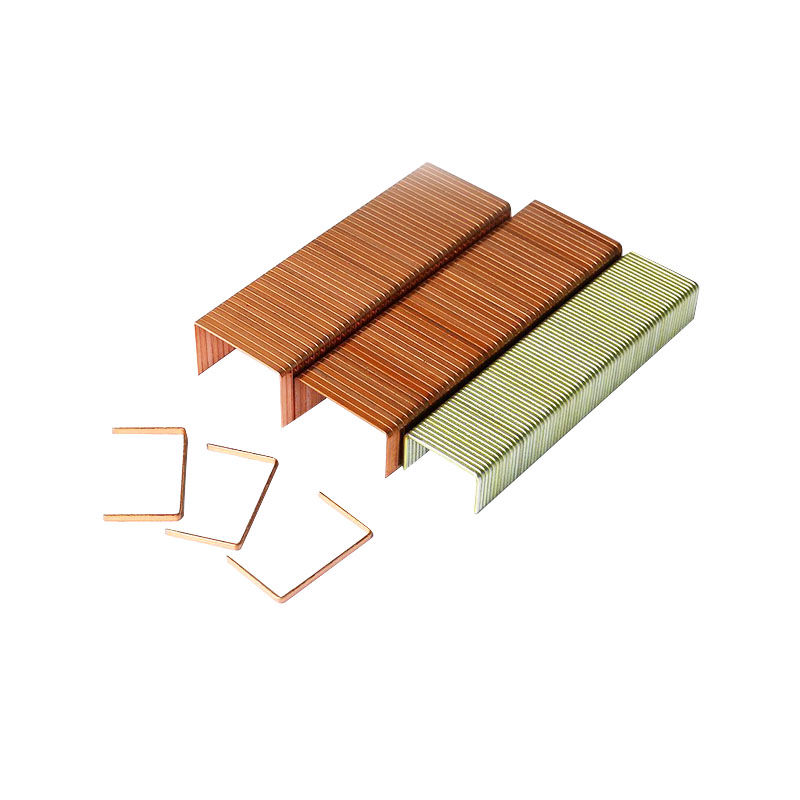
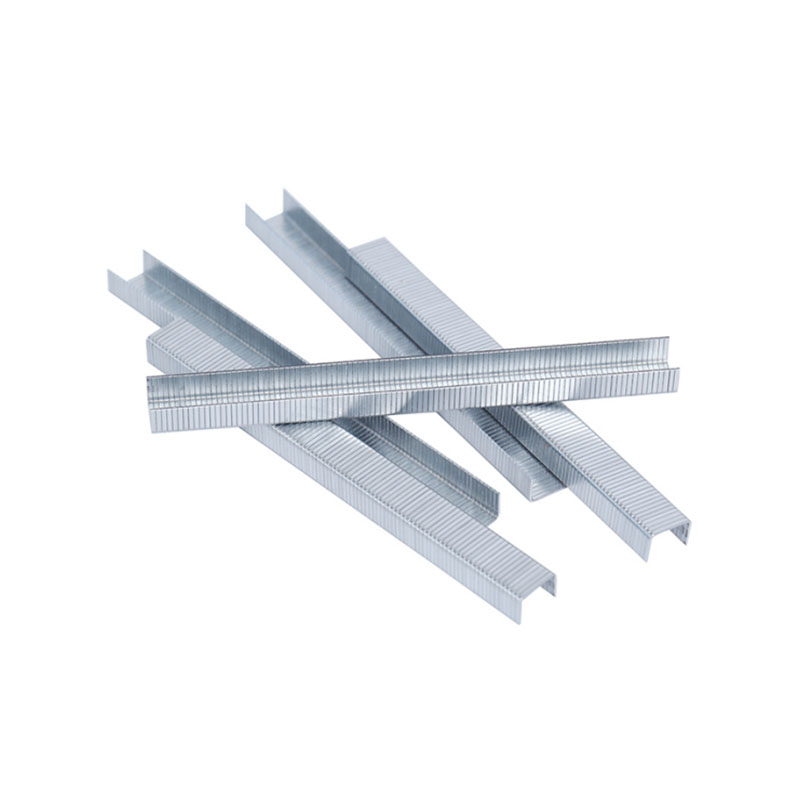
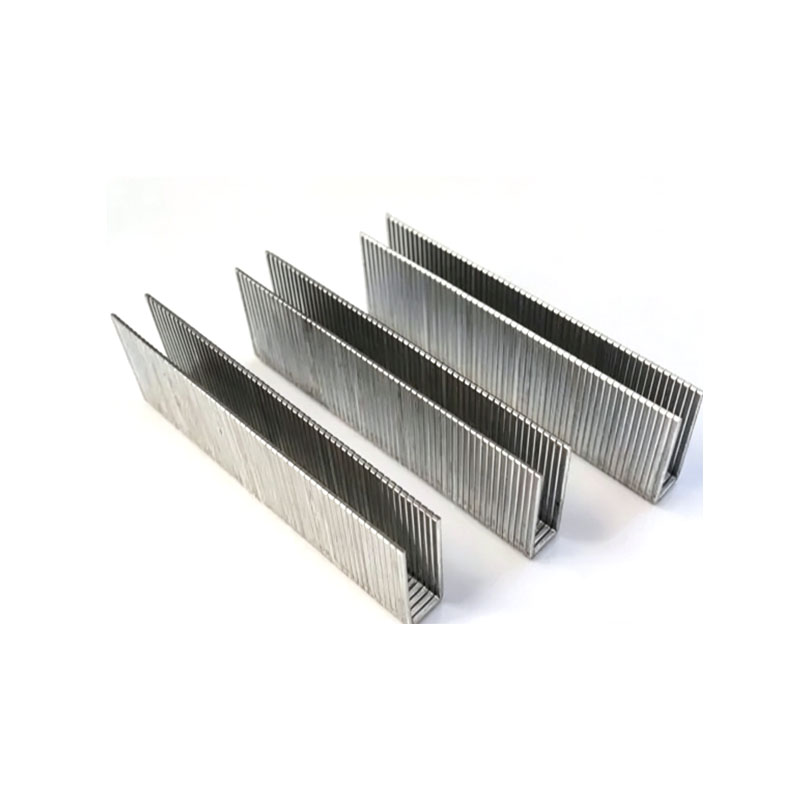
The most reliable heavy duty furniture staples for hardwood frame construction are 16-gauge galvanized steel staples with a 15/16-inch crown and a chisel point. This specification provides a pull-out resistance of over 50 pounds per leg in oak, sufficient to hold chair rails and sofa frames together through decades of use, while the galvanized coating prevents rust in indoor environments and the chisel point penetrates dense wood without splitting the grain.
Gauge and Wire Diameter Specifications for Furniture Frames
The gauge of heavy duty furniture staples directly controls holding power and penetration. In the staple industry, a smaller gauge number indicates thicker wire. The table below maps the standard gauges used in furniture manufacturing to their physical dimensions and primary applications.
| Gauge | Wire Diameter (inch) | Crown Width | Typical Furniture Use |
|---|---|---|---|
| 15 | 0.072 | 15/16 inch | Hardwood chair frames, bed frames |
| 15.5 | 0.067 | 15/16 inch | Sofa frames, heavy case goods |
| 16 | 0.063 | 15/16 inch | General furniture frame assembly |
| 17 | 0.055 | 10.6 mm | Medium-duty frame joints, plywood |
For hardwood species like oak and maple, 15-gauge or 16-gauge heavy duty furniture staples are essential. The thicker wire resists bending during driving and maintains its hold under the shear forces generated when a chair is dragged across a floor or a sofa frame bears weight off-center. A 15-gauge staple has a wire diameter of 0.072 inches, making it the strongest option in the heavy wire category, while 17-gauge staples are better suited for medium-duty applications such as attaching plywood panels to softwood frames.
Galvanized Versus Stainless Steel Heavy Duty Furniture Staples
The finish on heavy duty furniture staples determines where they can be used without rust compromising the joint. The two primary finishes serve distinct environments.
- Electro-galvanized staples receive a zinc coating that provides moderate rust resistance. These heavy duty furniture staples are the standard choice for indoor furniture that will never be exposed to rain or high humidity. The zinc layer prevents surface rust for over 10 years under normal indoor conditions, and the lower cost makes them economical for high-volume production.
- Stainless steel staples made from A2-304 alloy offer superior corrosion resistance and must be used where the base material itself has inherent corrosive characteristics, such as green oak or pressure-treated lumber. Stainless heavy duty furniture staples maintain structural integrity in outdoor furniture and in coastal environments with a moderate salt atmosphere, where galvanized staples would begin to show red rust within 12 to 18 months.
Hot-dipped galvanized staples represent a middle ground, with a thicker zinc layer than electro-galvanized variants. They are specified for furniture that will be used in covered outdoor spaces such as screened porches, where occasional moisture exposure is expected but direct rain is unlikely. For permanent outdoor installation, however, only stainless heavy duty furniture staples provide the corrosion resistance needed to prevent joint failure over a product lifetime of 15 years or more.
Crown Width and Its Effect on Joint Stability
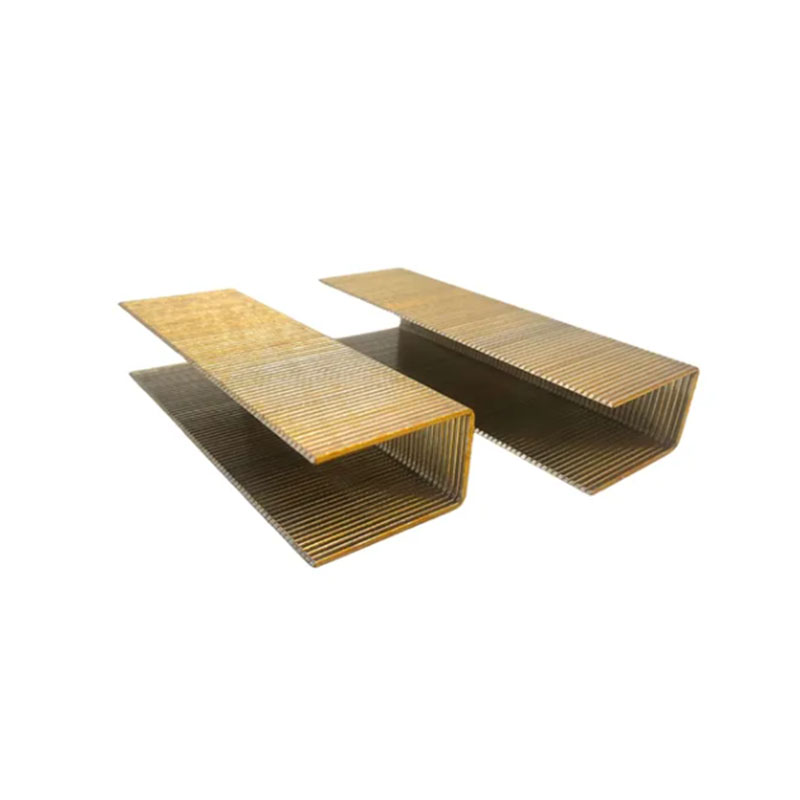
The crown is the horizontal bridge connecting the two legs of heavy duty furniture staples. A wider crown distributes clamping pressure across a larger surface area, which is critical when fastening softer woods or plywood. The standard wide crown for furniture work is 15/16 inch (23.2 mm), and it is the most versatile option for joining hardwood rails to legs and attaching corner blocks.
A narrower crown of 10.6 mm, found on 17-gauge series staples, provides a more discreet fastening point and is preferred for visible areas or when the staple must sit flush against a thin edge without overhang. However, the reduced crown width concentrates the clamping force over a smaller area, making it less suitable for soft or brittle materials. For heavy duty furniture staples used in structural frame joints, the 15/16-inch wide crown remains the industry standard because it maximizes the staple's resistance to pull-through under load.
Chisel Point Geometry and Driving Performance
The point type on heavy duty furniture staples significantly affects penetration and the quality of the finished joint. Chisel points are the preferred choice for furniture manufacturing. The chisel tip is formed by cutting the wire at an angle, creating a sharp leading edge that slices through wood fibers rather than crushing them. This design keeps the two legs parallel as they penetrate, preventing the staple from wandering and ensuring maximum contact between the staple leg and the wood along its entire length.
Divergent point staples, in contrast, are designed so the legs twist outward during driving, creating a clinching effect inside the material. This geometry is useful for certain packaging and crating applications but is generally avoided in fine furniture because the unpredictable leg path can cause splitting, especially near the ends of hardwood pieces. For consistent, clean penetration in oak, maple, and birch, heavy duty furniture staples with a chisel point and a leg length of 3/4 inch to 1-1/2 inches deliver reliable results without cracking the wood.
Leg Length Selection Based on Material Thickness
The leg length of heavy duty furniture staples must be chosen so the staple penetrates deep enough to achieve full holding power without piercing through the visible face of the workpiece. The rule for furniture assembly is that the staple leg should penetrate into the base material by approximately three-quarters of its total length. For a typical chair rail joint where the top piece is 3/4 inch thick and the base piece is hardwood, a staple leg length of 1-1/4 inch to 1-1/2 inch provides adequate embedment.
Available leg lengths for heavy duty furniture staples range from 5/8 inch to 2 inches. Shorter lengths from 5/8 inch to 7/8 inch are used for attaching thin plywood panels and upholstery tack strips. Mid-range lengths from 1 inch to 1-1/4 inch handle most frame assembly tasks. The longest staples, at 1-3/4 inch to 2 inches, are reserved for joining thick hardwood components such as bed frame rails and oversized chair legs where maximum holding power is required. Staples longer than 2 inches are rarely used in furniture because the thick wire gauge combined with extreme length increases the risk of bending during driving.
Staple Gun Compatibility and Tool Requirements
Not all staple guns can drive heavy duty furniture staples. The thick wire of 15-gauge and 16-gauge staples requires a tool with sufficient driving force. Three tool types are compatible, each suited to different production volumes.
- Manual heavy-duty staple guns such as those compatible with Arrow T50 staples can drive 16-gauge staples up to 9/16 inch in length into softwood. They are adequate for small repair jobs and occasional furniture assembly but lack the force and consistency for production work.
- Pneumatic staple guns are the professional standard for heavy duty furniture staples. Models compatible with the 16-gauge 15/16-inch crown format include the ATRO 16 WC, BeA 140, FASCO ATW, and PREBENA WT series. These tools operate at 70 to 100 psi and can drive staples up to 2 inches in length into hardwood without jamming.
- Electric staple guns fill the middle ground, providing consistent driving force for medium-duty production without the need for an air compressor. They are limited to 16-gauge staples up to approximately 1-1/2 inches in length.
Crown width compatibility is non-negotiable. A stapler designed for a 15/16-inch crown cannot accept a 10.6 mm crown staple, and attempting to force an incompatible staple will cause jams and damage the driver blade. Before purchasing heavy duty furniture staples, verify the tool's crown specification and maximum gauge capacity against the staple dimensions.
Collation Types and Their Impact on Workflow
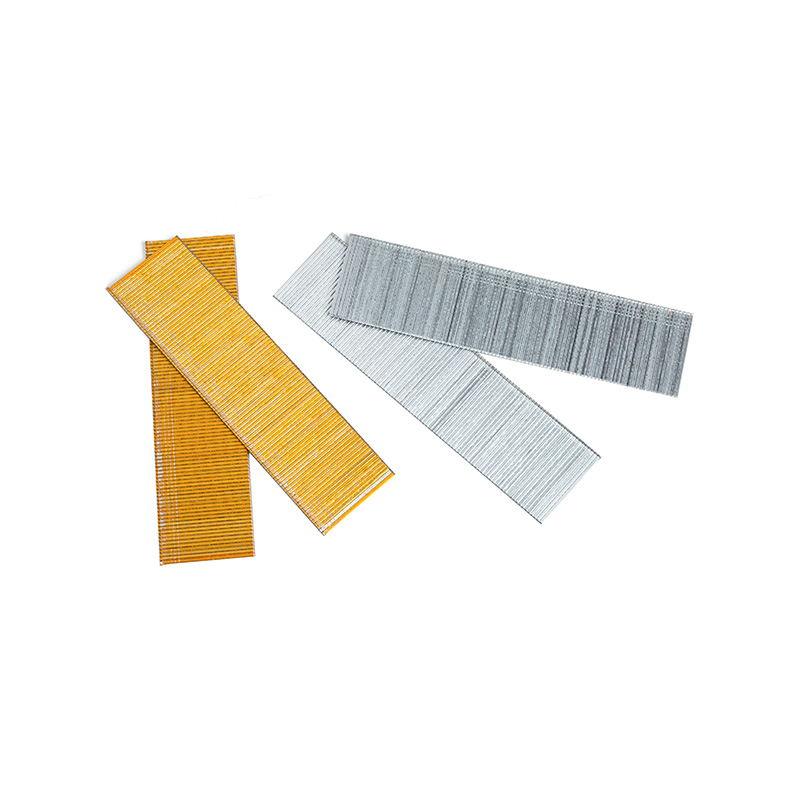
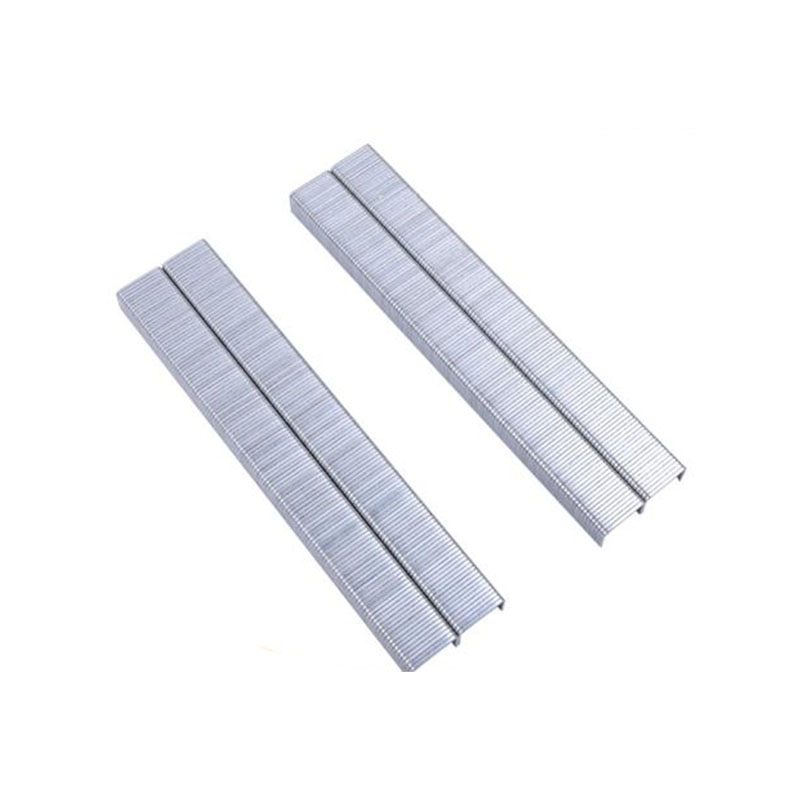
Heavy duty furniture staples are collated into strips for rapid loading into pneumatic and electric staplers. Two collation methods are commonly used. Glue-collated staples are bonded together with a thin layer of adhesive that holds the staples in a rigid strip. When the stapler drives a staple, the adhesive bond breaks cleanly. Glue collation is preferred in furniture manufacturing because it leaves no residue on the tool and does not introduce plastic waste into the workspace.
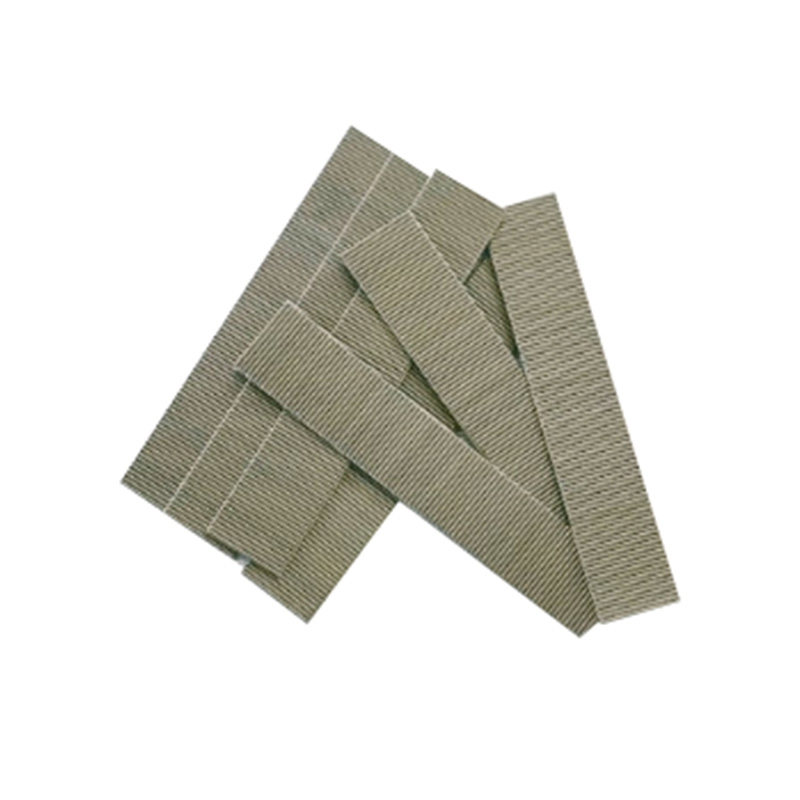
Paper-collated staples use a paper tape to hold the strip together. This method is less common for heavy wire staples because the paper can tear during loading and cause misfeeds. For high-volume production of furniture frames, glue-collated heavy duty furniture staples in boxes of 10,000 pieces per carton are the standard purchase quantity, with each stick containing approximately 70 to 75 staples depending on leg length.
Hardwood Frame Assembly Best Practices
Proper technique when using heavy duty furniture staples in hardwood distinguishes a durable joint from one that will squeak and loosen within a few years. The following practices are based on decades of production experience in furniture factories.
- Apply wood glue to both mating surfaces before stapling. The glue provides the primary bond, while heavy duty furniture staples act as internal clamps that hold the joint tight while the glue cures.
- Space staples no more than 3 inches apart along the joint. Closer spacing on high-stress areas such as the top rail of a chair back prevents the joint from opening under leaning pressure.
- Avoid driving staples within 1/2 inch of the end of a hardwood board. The dense end grain combined with the staple's thickness creates a high risk of splitting. Offset the staple location toward the center of the board.
- For corner blocks, use heavy duty furniture staples with a minimum leg length of 1 inch and drive at least two staples per face of the block to secure it against racking forces.