English
 русский
 Español

Content
- 1 Why the Type of Air Gun Nail Matters More Than You Think
- 2 Understanding Gauge: The First Number to Check
- 3 Collation Type: Matching the Nail Strip to Your Gun
- 4 Head Style: Sinker, Clipped, or Full Round?
- 5 Shank Type: Smooth, Ring, or Screw?
- 6 Coating and Material: Matching the Environment
- 7 Quick Selection Guide: Match Your Job to the Right Nail
Why the Type of Air Gun Nail Matters More Than You Think
Walk into any fastener supplier and you'll find dozens of air gun nail variants — different gauges, collation angles, head styles, coatings, and lengths — all sold under the same broad category. Pick the wrong type and you'll either split your lumber, struggle with a gun that jams every third shot, or end up with a fastener that pulls out under load. Matching the nail to the application is the single most impactful decision in pneumatic nailing.
This guide breaks down the main categories of air gun nails by their design characteristics and tells you exactly which scenarios each one is built for — so you can make the right call before the compressor even turns on.
Understanding Gauge: The First Number to Check
Nail gauge refers to wire diameter — and counterintuitively, lower gauge numbers mean thicker nails. This directly affects holding power, risk of wood splitting, and which nailer the nails are compatible with.
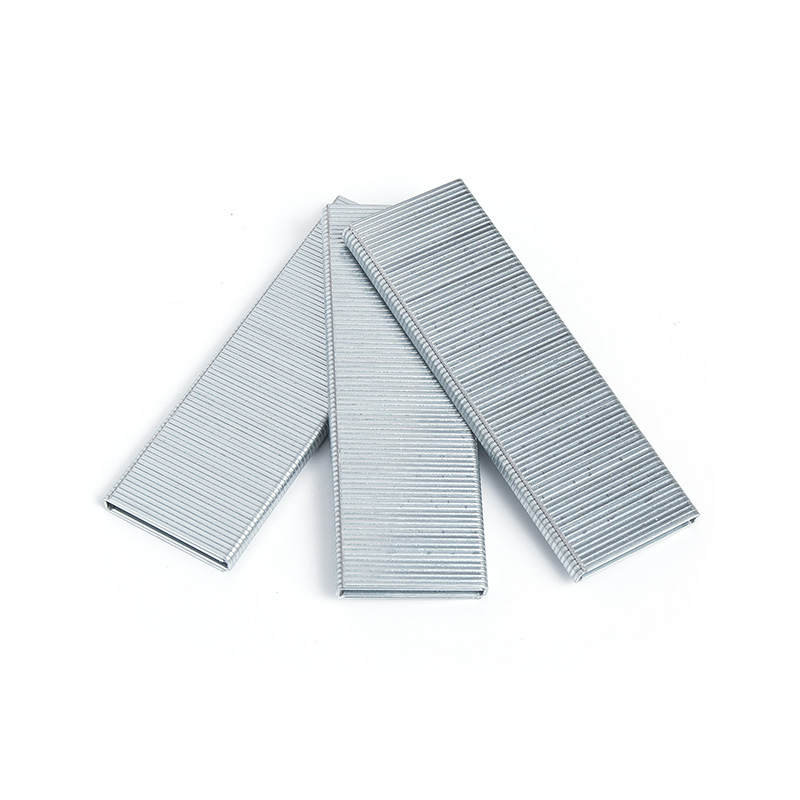
- 15–16 gauge (finish nailers): Medium-diameter nails with small heads. Strong enough for door casings, baseboards, crown molding, and cabinet face frames. Leaves a small hole that's easy to fill. The 15-gauge has slightly more shear strength; the 16-gauge is the more common choice for general trim work.
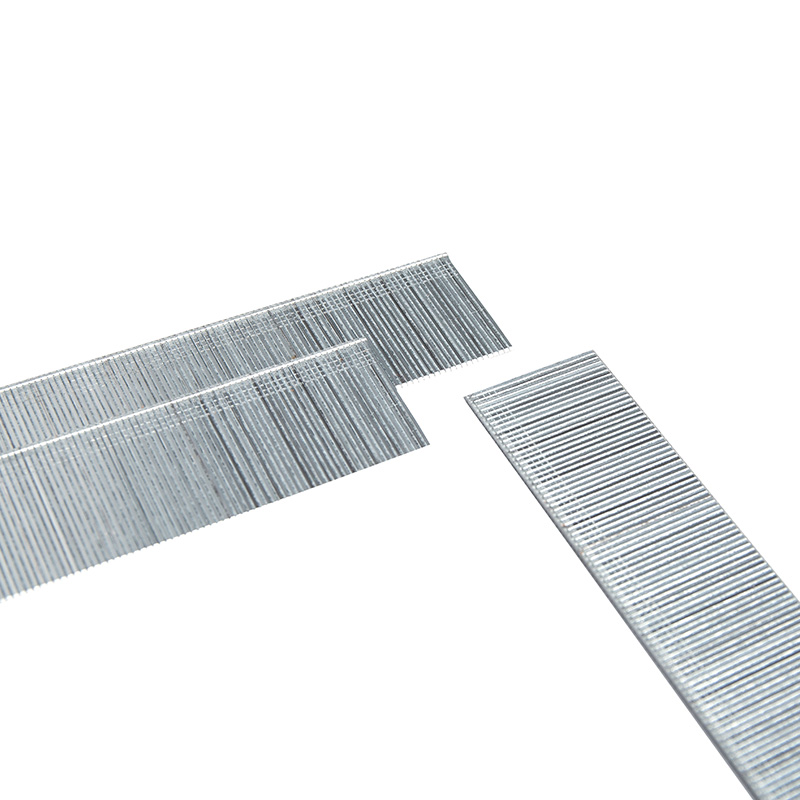
- 18 gauge (brad nailers): Thin wire nails that nearly disappear into the wood surface. Ideal for thin stock, delicate moldings, and attaching lightweight panels where splitting would be a real risk with thicker nails. Not suitable where structural holding power is needed.
- 21–22 gauge (pin nailers): Headless nails that leave virtually no visible mark. Used for temporarily holding pieces during glue-up, attaching paper-thin veneers, or securing delicate trim on high-end millwork. Holding strength is minimal — these rely on adhesive to do the real work.
- Framing nails (0.113″–0.148″ diameter / 10–16d commons): Full-shank nails for structural applications. Used in framing nailers for wall plates, joists, sheathing, and LVL beams. Not described by gauge but by diameter and penny weight (d) or "D" size.
If you're working with hardwoods like oak or maple, bias toward thinner gauges or pre-drill — thicker nails driven at full pneumatic pressure will crack tight-grained species along the fiber line.
Collation Type: Matching the Nail Strip to Your Gun
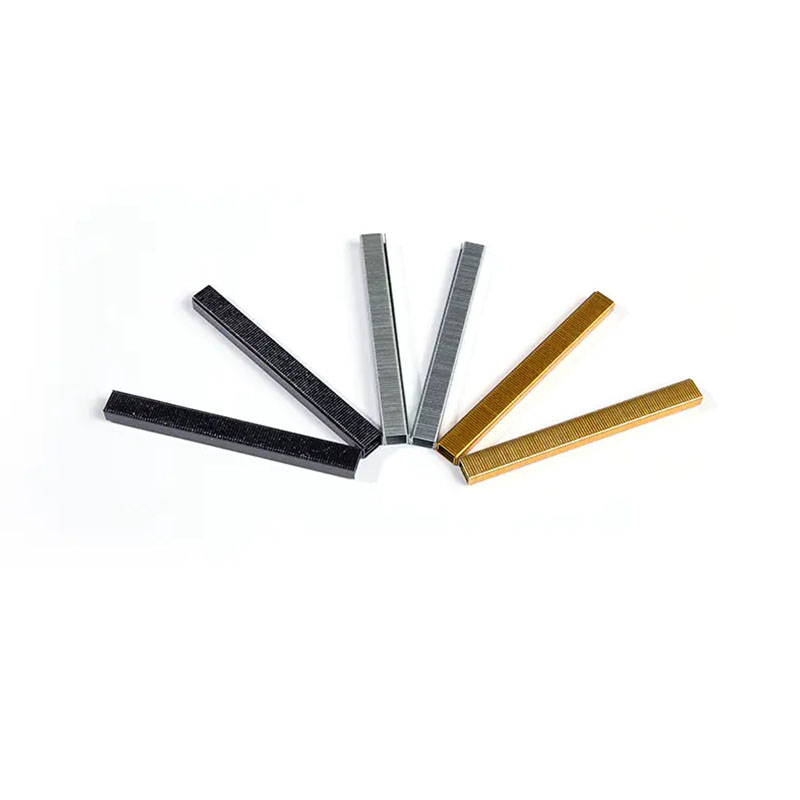
Air gun nails are pre-assembled into strips or coils held together by collation material. The collation angle and strip style must match your nailer's magazine — this is non-negotiable. Forcing the wrong strip into a nailer causes misfires, jams, and premature wear on the driver blade.
Plastic Collation
Plastic-collated strips (typically 20–22° angle for framing nails) are the dominant format in North America for framing nailers. The plastic tabs shear off cleanly on firing. They tolerate moisture well, which makes them suitable for outdoor framing or wet lumber conditions. The residual plastic fragments are inert but can be a nuisance in finish-critical applications.
Paper Tape Collation
Paper tape collation (28–30° angle) is preferred by many finish carpenters and production framers because the tape disintegrates completely on firing, leaving no fragments in the work. It's the go-to choice for engineered lumber (LVL, I-joists) where plastic fragments in a bearing surface are unacceptable, and for any job where the work will be painted and nail head areas inspected closely.
Wire Weld Collation
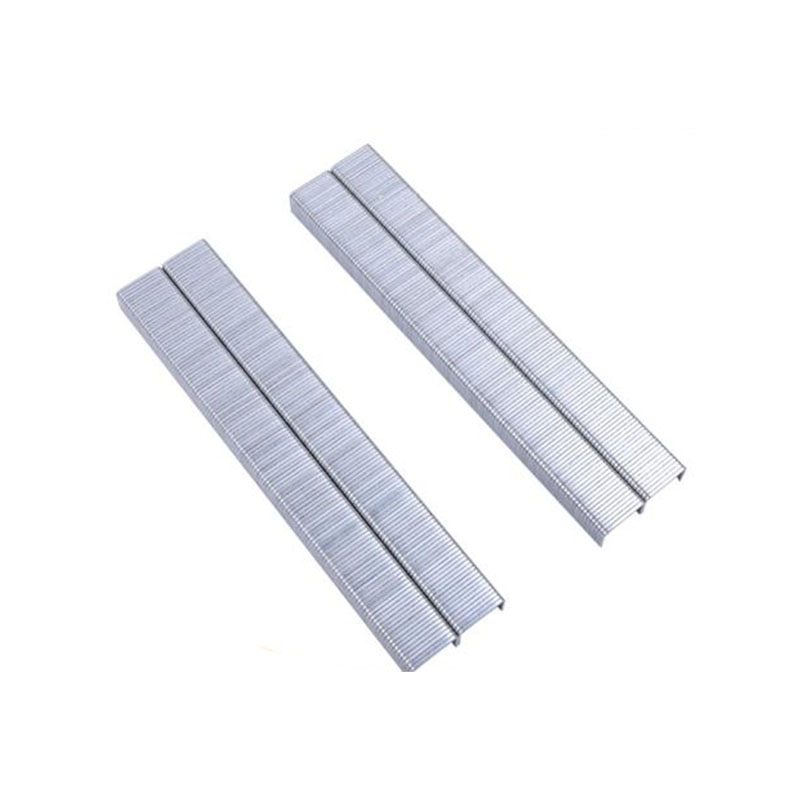
Wire-welded strips (15° angle, flat head) hold nails in a straight row between two parallel wires. Common in industrial pallet manufacturing and high-volume production framing. The strips are rigid and feed reliably even in dusty, high-rate environments. Not interchangeable with angled magazine nailers.
Coil Collation
Coil nailers hold 200–350 nails in a circular magazine — dramatically reducing reload frequency. This makes coil-collated nails the preferred format for roofing, sheathing, and any production application where stopping to reload represents a measurable productivity cost. The tradeoff is a heavier, bulkier gun.
| Collation Type | Typical Angle | Best For | Avoid When |
|---|---|---|---|
| Plastic Strip | 20–22° | Framing, wet lumber | Exposed finish surfaces |
| Paper Tape | 28–30° | Engineered lumber, finish framing | Wet or humid storage conditions |
| Wire Weld | 15° | Industrial/pallet production | Angled magazine nailers |
| Coil | N/A (circular) | Roofing, high-volume sheathing | Tight access areas |
Head Style: Sinker, Clipped, or Full Round?
The nail head geometry affects both holding strength and code compliance — a detail that matters on any permitted structural project.
- Full round head (FRH): Maximum bearing area, maximum withdrawal resistance. Required by many building codes for shear wall sheathing and hurricane tie connections. Always the safe choice for structural framing where code inspection is involved.
- Clipped head (offset head): A portion of the head is removed to allow nails to nest more densely in the magazine strip, enabling higher-capacity magazines. Holding strength is slightly reduced but acceptable for most non-shear-wall framing. Prohibited in some jurisdictions for seismic and wind-load sheathing — always check local code before specifying.
- D-head (offset D shape): A compromise between FRH and clipped — larger bearing surface than a fully clipped head while still allowing reasonably dense magazine loading. Common in European framing nailers.
- Brad / finish heads: Very small heads designed to be countersunk and filled. Not relevant for structural applications; chosen entirely for aesthetics in trim and millwork.
Shank Type: Smooth, Ring, or Screw?
The nail shank profile is the most underappreciated variable in fastener selection. It directly determines withdrawal resistance — how much force it takes to pull the nail back out after driving.
- Smooth shank: Easy to drive, easiest to pull. Adequate for temporary work, interior non-structural applications, and any situation where you might need to disassemble the connection. Lower withdrawal resistance than deformed shanks.
- Ring shank (annular ring): Circumferential rings along the shank dramatically increase withdrawal resistance — typically 2–3× higher than smooth shank of the same diameter and length. Ideal for decking, subfloor installation, roofing, and treated lumber applications where seasonal wood movement or moisture cycling would gradually back out a smooth nail. Also specified for many engineered wood panel attachments.
- Screw shank (spiral shank): Helical flutes cause the nail to rotate slightly as it's driven, creating a screw-like engagement in the wood fibers. Offers similar or slightly better withdrawal resistance than ring shank in some wood species, with somewhat less tendency to cause face splitting. Common in hardwood flooring, pallet manufacturing, and palletized goods applications.
For subfloor and decking specifically, ring or screw shank nails are strongly preferred over smooth shank — they largely eliminate the squeaking caused by nail shanks loosening in their pilot channels as the wood seasons.
Coating and Material: Matching the Environment
Nail coatings affect both corrosion resistance and driving performance. Specifying the wrong coating in corrosive environments leads to premature rust staining and joint failure; over-specifying adds unnecessary cost.
- Bright (uncoated): Bare steel with no corrosion protection. Suitable for interior dry applications only. The lowest cost option and the default for interior framing and trim.
- Vinyl/cement coated: A thin polymer coating that acts as a lubricant during driving (reducing driving force required) and then grips the wood fibers as it heats up, increasing initial withdrawal resistance. Common for framing nails; the most widely used coating category overall.
- Hot-dip galvanized (HDG): Thick zinc coating applied by immersion. Required for all exterior applications and any contact with pressure-treated (ACQ or CA) lumber, which is highly corrosive to plain steel. The zinc layer is thick enough to survive extended outdoor exposure. Note: HDG nails are slightly harder to drive due to surface texture — nailer pressure settings may need adjustment.
- Electrogalvanized (EG): Thinner zinc coating applied electrolytically. More corrosion-resistant than bright steel but not equivalent to HDG. Acceptable for some semi-exposed applications but should not be used in direct contact with treated lumber or in coastal environments.
- Stainless steel (304 or 316): The highest corrosion resistance available. Mandatory for cedar, redwood, and tropical hardwood decking (which are acidic and highly corrosive to zinc coatings), and strongly recommended for oceanfront or marine construction. 316 grade offers superior chloride resistance over 304 for saltwater environments.
Quick Selection Guide: Match Your Job to the Right Nail
If you're short on time, use this application-to-specification shortcut to narrow down the right air gun nail for common jobs:
- Interior structural framing: 3–3.5″ 0.131″ diameter, full round head, vinyl coated, plastic or paper collation at the angle your gun requires.
- Shear wall sheathing (code-required): Full round head only, confirm gauge and length with your local shear wall schedule — clipped head nails are not acceptable here.
- Subfloor / OSB decking: 2–2.5″ ring shank, HDG if over treated framing, smooth or vinyl coated for interior over standard lumber.
- Exterior decking over treated framing: Ring shank, hot-dip galvanized or stainless steel; avoid electrogalvanized or bright entirely.
- Interior trim and moldings: 15 or 16 gauge, 1.5–2.5″, bright or vinyl coated, angled finish nailer strip.
- Thin or delicate hardwood trim: 18 gauge brad, 1–2″, bright; step down to 23 gauge pin nailer if splitting remains a concern.
- Roofing felt / shingles: 1.75″ coil roofing nails, hot-dip galvanized, 11 gauge with wide flat head (plastic cap nails in high-wind zones).
- Cedar or redwood siding/decking: Stainless steel 304 minimum; HDG will stain these species even if it doesn't fail structurally.