English
 русский
 Español

Content
What Furniture Brad Staples Are and Why Gauge Selection Matters
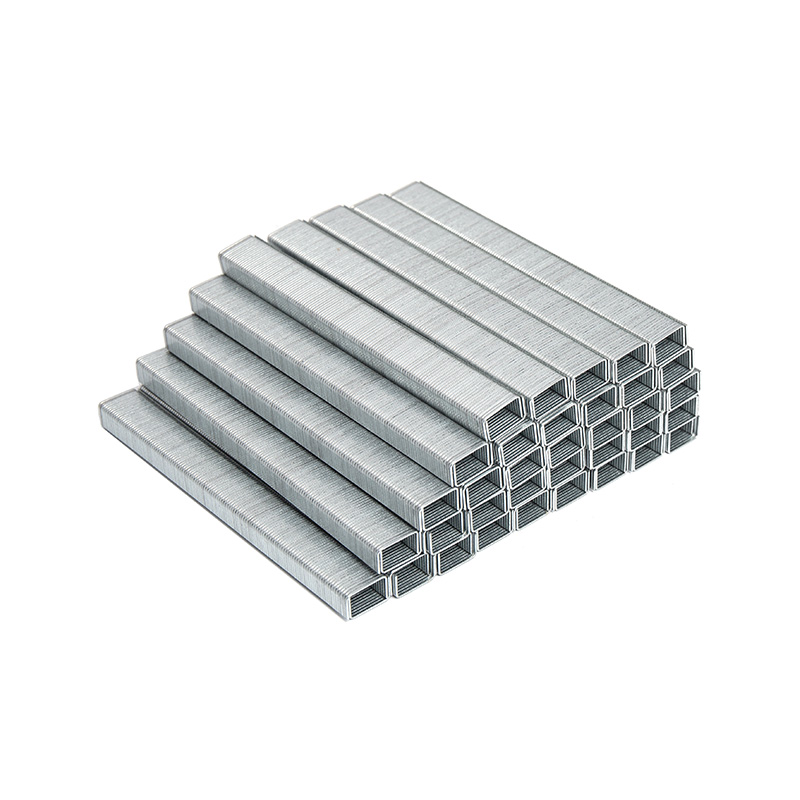
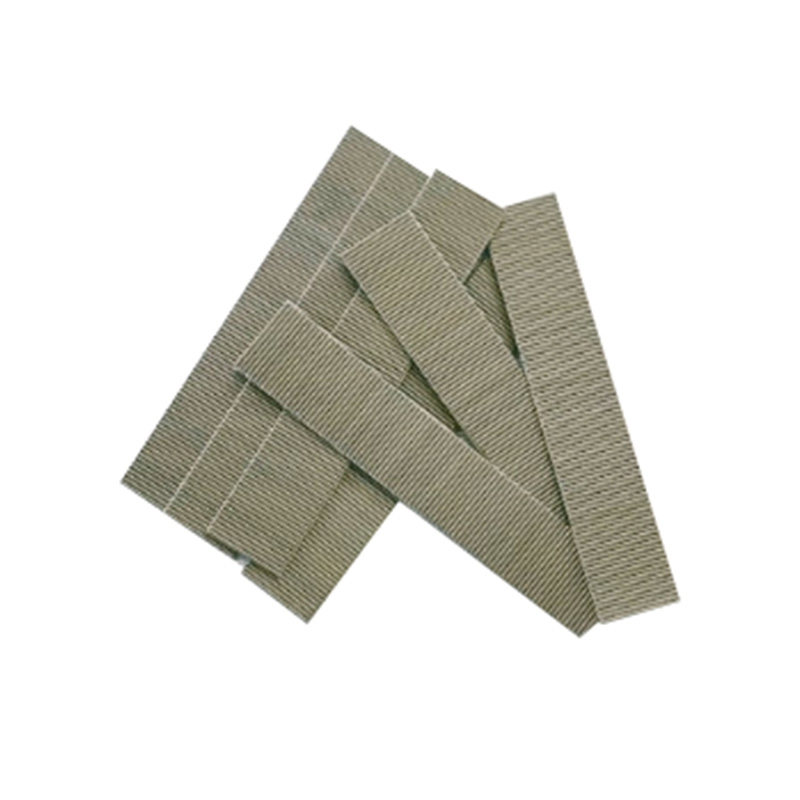
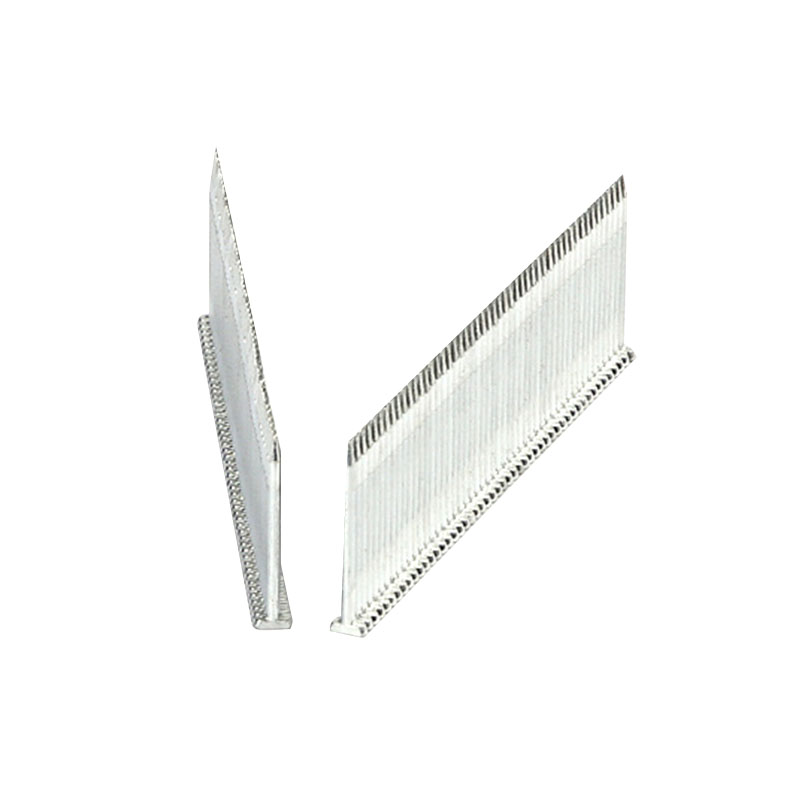
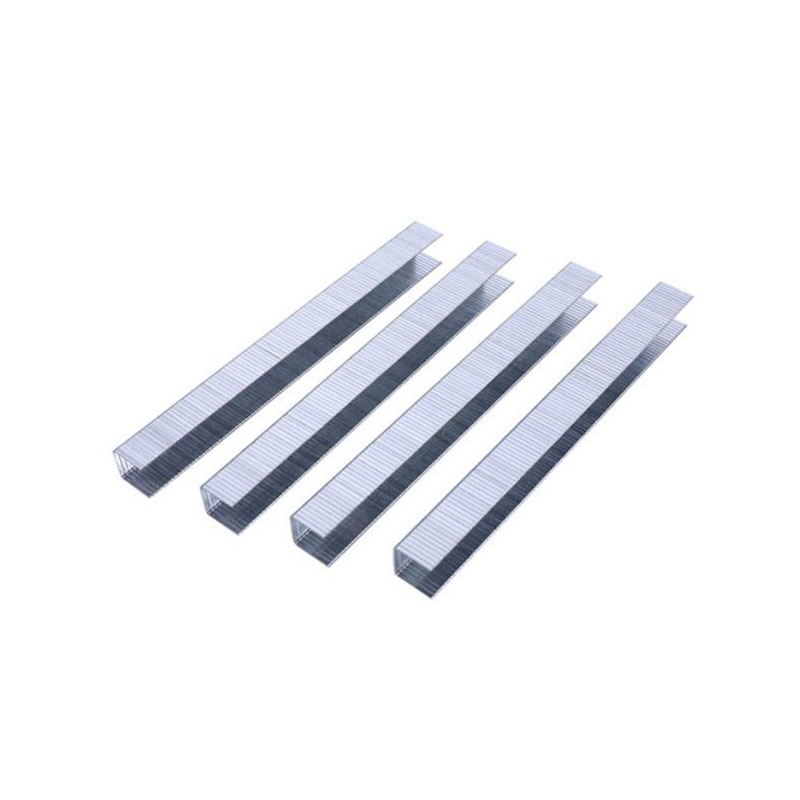
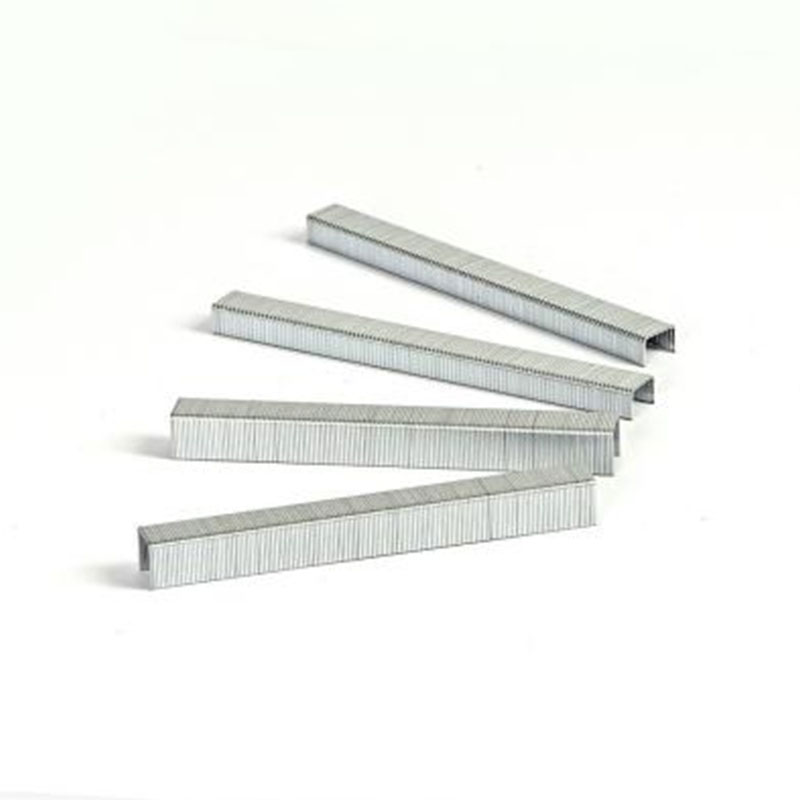
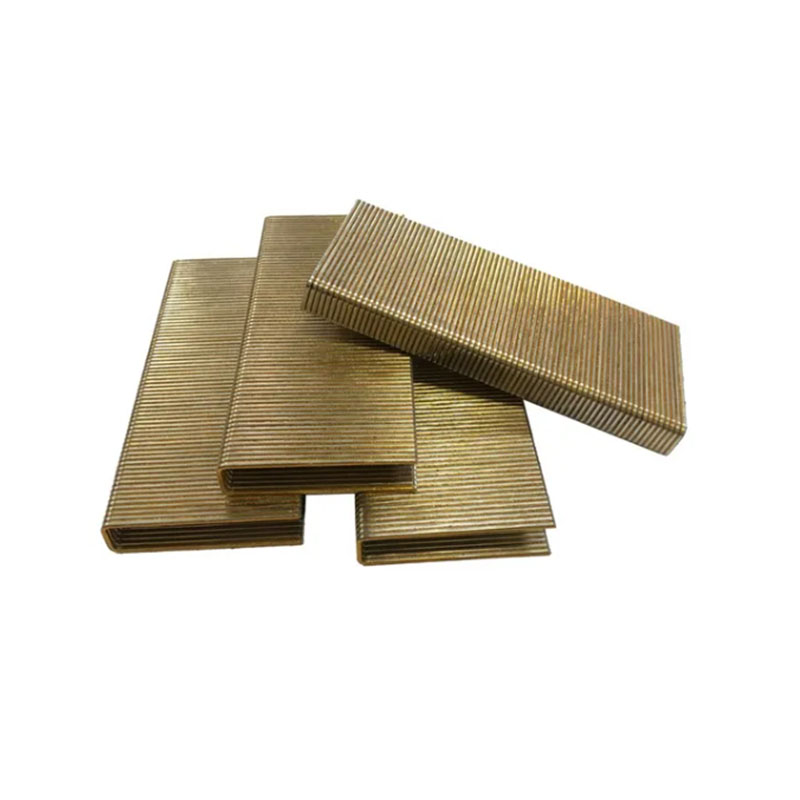
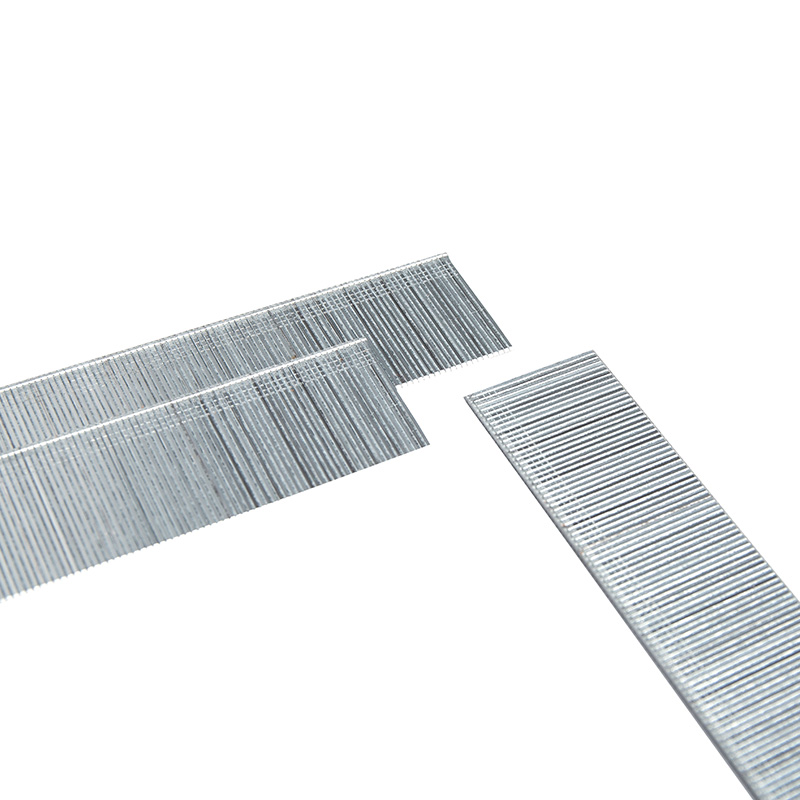
Furniture brad staples are narrow-crown fasteners, typically with a 22-gauge to 18-gauge wire thickness, used to join wood frames, secure webbing, attach trim, and hold fabric or padding in place during upholstery assembly. Their thin profile leaves a small, easily concealed entry point compared to standard staples, which makes them the preferred choice wherever visible fastener marks would compromise the finished look of a sofa, chair, or cabinet piece.
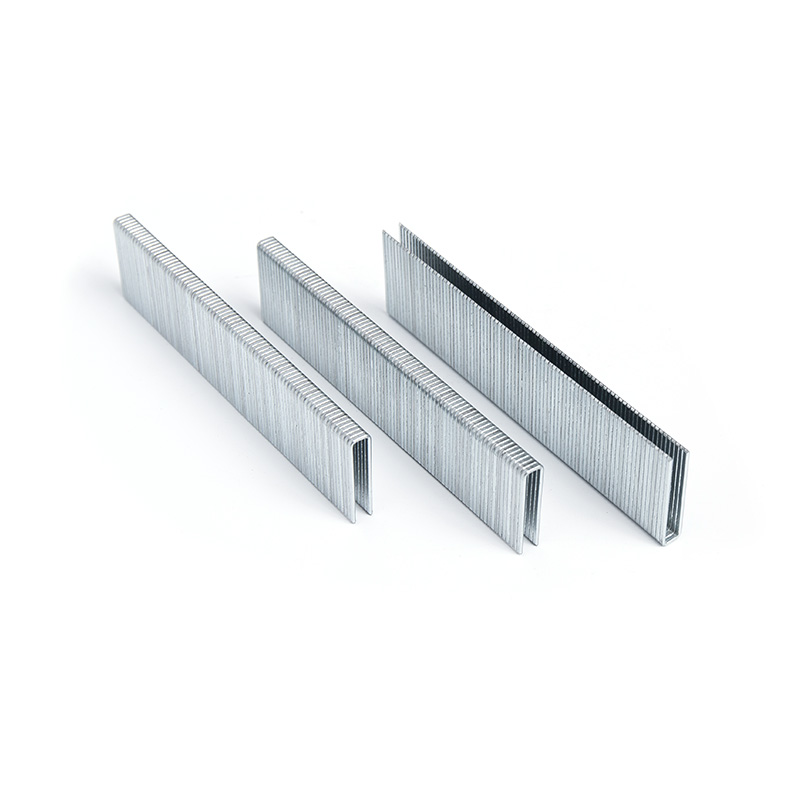
Gauge selection directly affects holding strength and material compatibility. An 18-gauge brad staple, for example, offers roughly 30-40% more shank strength than a 23-gauge equivalent, making it suitable for structural joins in hardwood frame components. Lighter 22- or 23-gauge staples are better suited to delicate trim work, thin plywood backing panels, and fabric attachment where excessive penetration force could split the substrate.
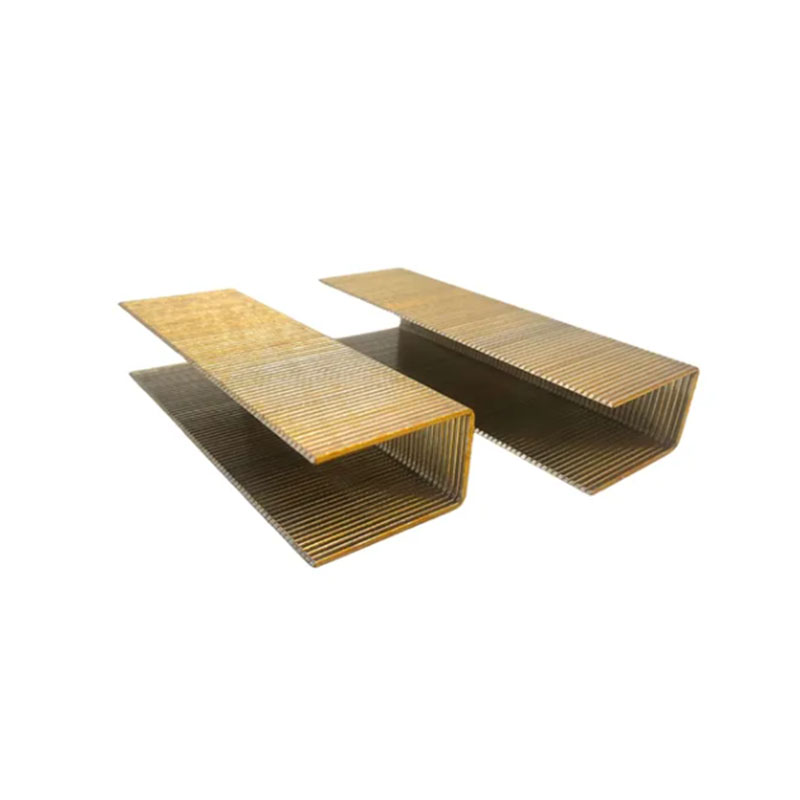
Crown width, usually ranging from 3/8 inch to 1/2 inch, determines how the staple distributes clamping pressure across a joint. A wider crown spreads load over more surface area and reduces the risk of the fastener pulling through soft materials like foam-backed fabric, while a narrower crown is better for precision work such as attaching decorative gimp or piping along a frame edge.
Matching Staple Length to Substrate Thickness
Staple length should generally equal roughly three times the thickness of the top material being fastened, a ratio that keeps enough shank embedded in the base material to resist pull-out without driving the crown so deep that it damages surface fibers. For a 1/4 inch plywood back panel, a 1/2 inch to 5/8 inch staple leg typically achieves this balance.
Undersized staples are one of the most common causes of joint failure in furniture returns, since a leg that only penetrates 3-4mm into a hardwood frame provides minimal resistance to lateral stress from repeated seating use. Oversized staples, on the other hand, risk blowing through thin veneers or splitting narrow rail stock, particularly in softwoods like pine or poplar that are common in mid-range furniture frames.
| Application | Typical Gauge | Leg Length |
|---|---|---|
| Fabric and upholstery attachment | 22-23 gauge | 3/8" - 1/2" |
| Webbing and spring support | 20-21 gauge | 1/2" - 5/8" |
| Frame and rail assembly | 18 gauge | 5/8" - 1" |
Coated vs. Uncoated Wire: Impact on Holding Power
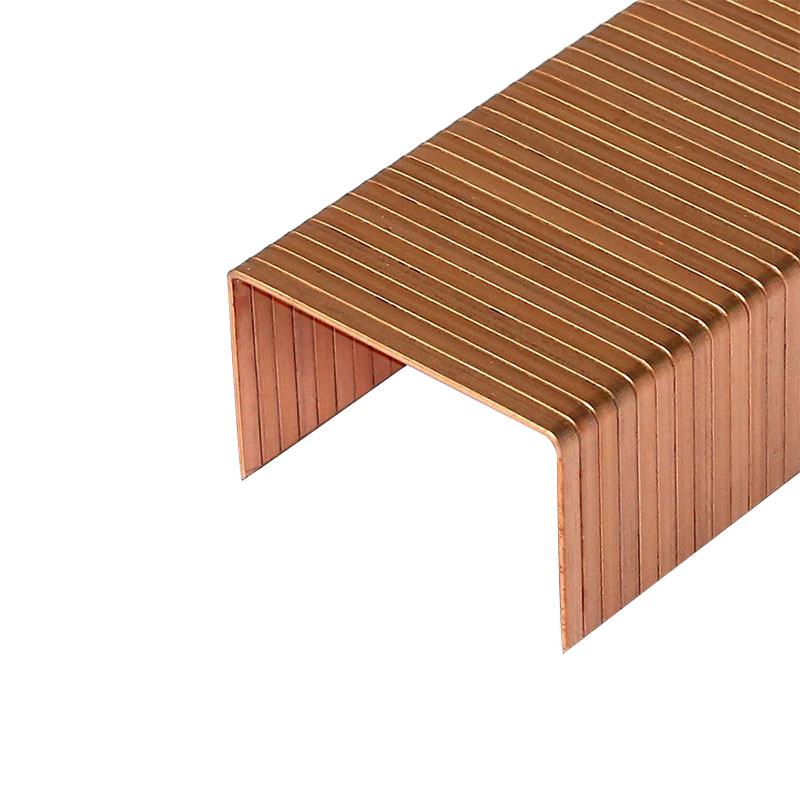
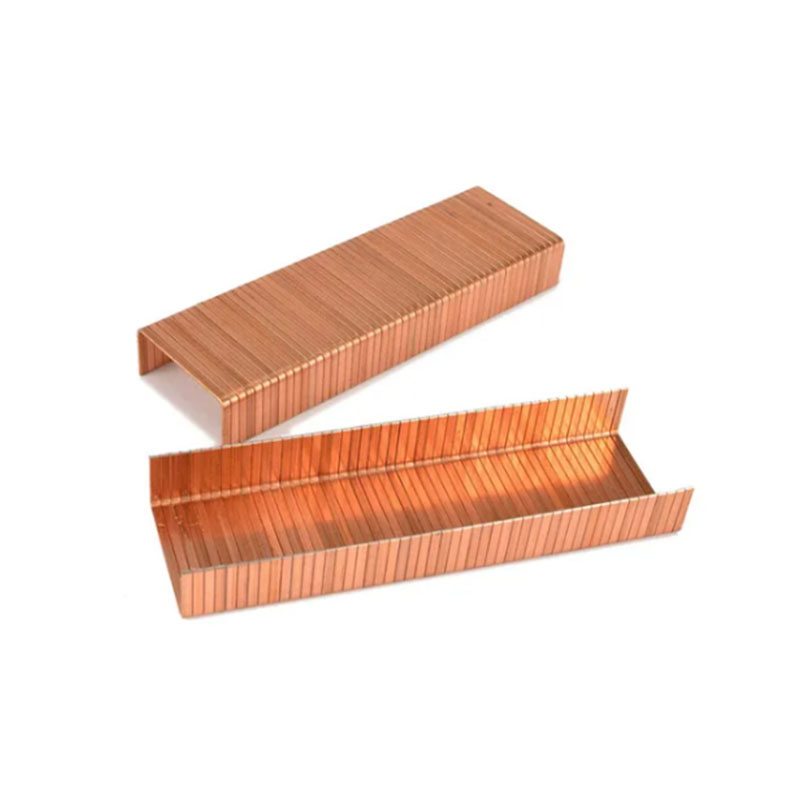
Galvanized and resin-coated brad staples resist corrosion and, in the case of resin coatings, generate friction heat on entry that partially melts the coating and re-hardens it once the staple cools, forming a bond that noticeably increases pull-out resistance. Manufacturers commonly report a 15-25% improvement in holding strength for resin-coated staples over plain steel equivalents in comparable wood substrates.
Uncoated staples remain a reasonable choice for indoor, low-humidity environments where corrosion risk is minimal and cost control is a priority, such as high-volume production of budget-tier seating frames. In coastal regions or facilities with high ambient humidity, however, uncoated staples can develop surface rust within weeks, which may bleed through light-colored fabrics and cause visible staining around the fastening point.
Stainless steel staples, while more expensive, are typically specified for outdoor furniture, marine upholstery, and healthcare seating that undergoes frequent cleaning with moisture or disinfectant solutions. Choosing the correct wire finish upfront avoids costly rework and warranty claims tied to corrosion-related fastener failure.
Pneumatic Tool Compatibility and Firing Pressure
Most furniture brad staples are designed for pneumatic staple guns operating in the 60-100 PSI range, with heavier gauge staples generally requiring pressure toward the upper end of that range to achieve full seating depth in hardwood components. Running pressure too low leaves staple crowns proud of the surface, creating a snag hazard for fabric and a visible defect on exposed wood joints.
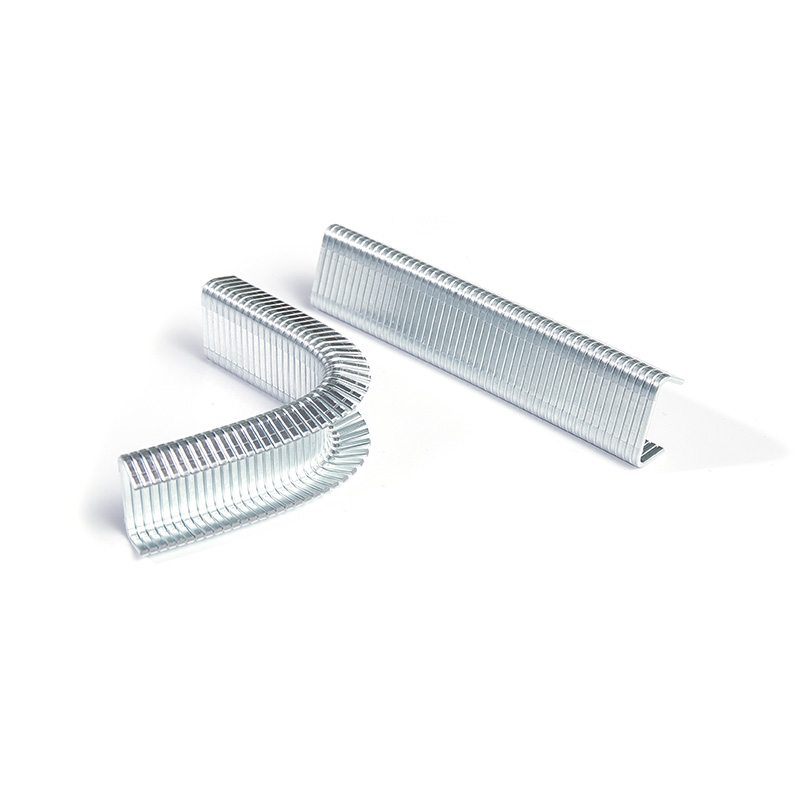
Magazine capacity and staple collation angle also affect production efficiency on assembly lines. Standard 90-degree collated strips are common for bench-mounted staplers used in fixed workstations, while some handheld models use slightly angled collation to improve magazine feed reliability during rapid, repetitive firing common in high-output upholstery shops.
- Confirm crown width matches the stapler's magazine specification before bulk ordering
- Test firing pressure on scrap material when switching between gauge sizes
- Inspect staple seating depth periodically during long production runs, as air pressure can drift
Quality Indicators When Sourcing Bulk Brad Staples
Consistent leg length and crown alignment across a production batch matter more than most buyers initially expect, since even a 0.2mm variance in leg length across a strip can cause uneven seating depth and intermittent jamming in automated staplers. Reputable suppliers typically provide batch tolerance data and can support this with third-party dimensional inspection reports on request.
Wire hardness is another factor worth verifying, particularly for staples intended for dense hardwood frames like oak or ash. Staples that are too soft tend to bend or "clinch" improperly on entry, which reduces holding strength and increases scrap rates on the production floor. A hardness spec in the range of 50-55 HRC is common for general-purpose furniture brad staples handling mixed hardwood and softwood assembly.
Packaging format also affects operational efficiency at scale. Staples supplied in properly glued, uniform strips reduce misfeeds compared to loosely bundled alternatives, and buyers running multi-shift production lines often find that the marginal cost difference is offset by reduced downtime and lower defect rates over a full production cycle.