English
 русский
 Español

Content
Few questions land in our inbox more often than this one: "I need an 18 gauge staple with a 1/4 inch crown — what exactly am I asking for, and will it hold?" It sounds like a small detail until a production line stops because a strip jams, or a sofa frame starts creaking three months after it ships. We have been making collated fasteners for a long time, and the honest answer is that this particular staple is one of the most versatile small fasteners in furniture and light assembly work — provided the specification is read correctly.
This guide walks through what the numbers mean, where the staple performs best, how leg length changes the job, and what to inspect before you commit to a container load.
Reading the Specification Correctly
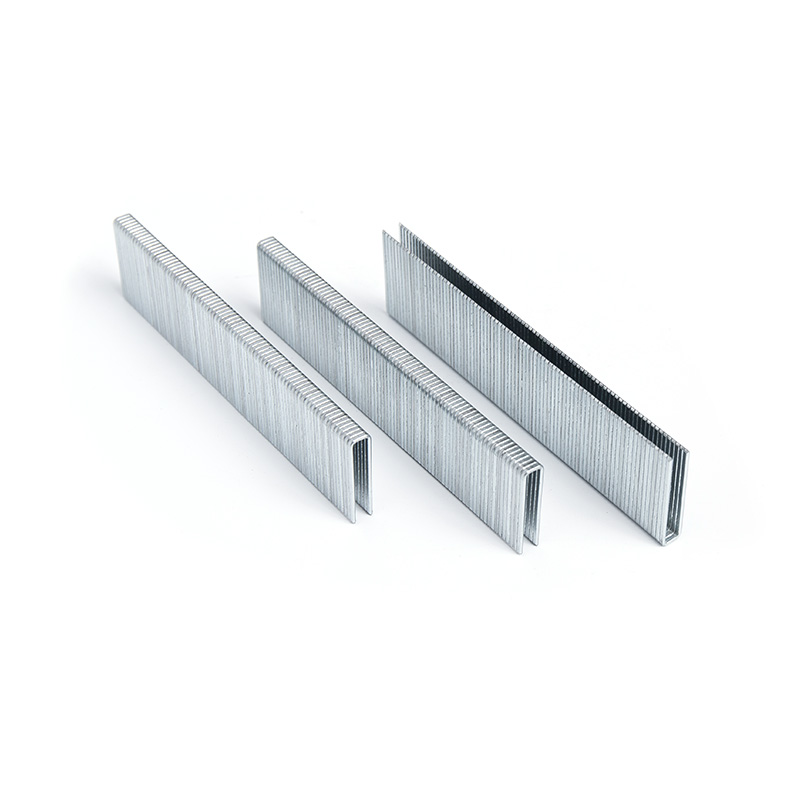
An 18 gauge 1/4 inch crown medium wire staple carries three separate pieces of information, and each one constrains the others.
18 gauge describes the wire diameter, not the length. In staple terms, 18 gauge wire sits at roughly 1.25 mm (about 0.050 inch). That places it firmly in the medium wire family: heavier than the 20 to 22 gauge fine wire used on delicate trim and thin veneer, lighter than the 15 to 17 gauge heavy wire that holds pallets and roof decking together. Medium wire is the working middle ground — enough stiffness to drive into hardwood without bending, fine enough to avoid splitting a 12 mm panel.
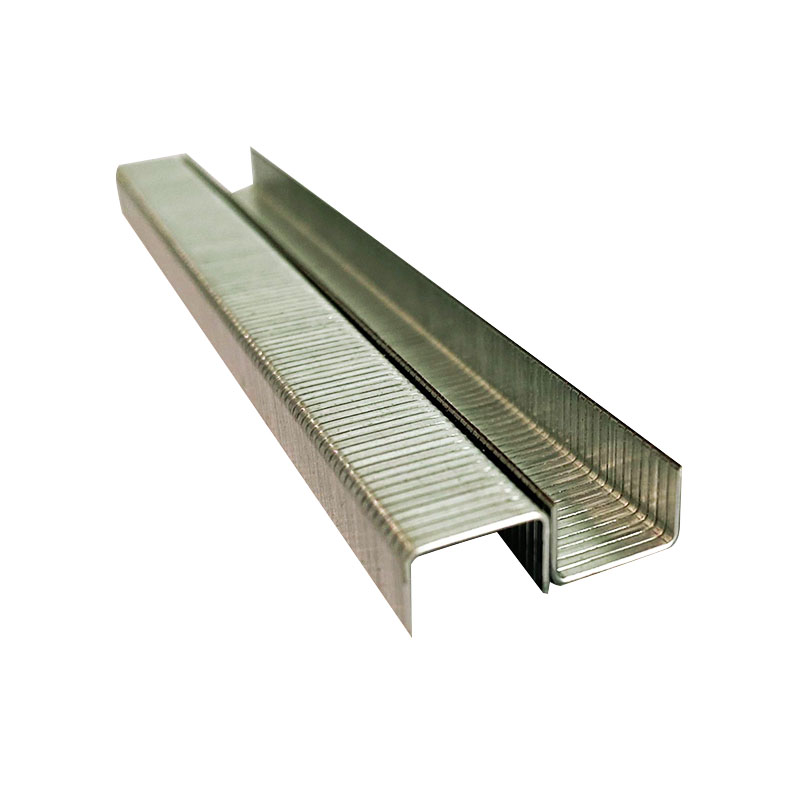
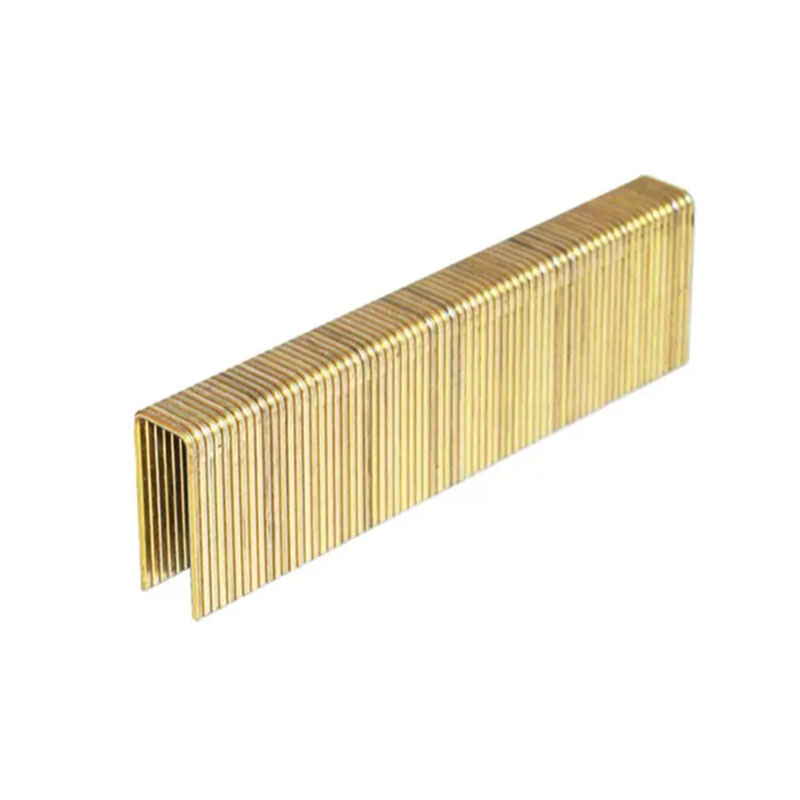
1/4 inch crown is the width of the bridge connecting the two legs, roughly 6.35 mm. A narrow crown concentrates holding force into a small footprint, which is exactly what you want for frames, corner blocks and narrow mouldings. It also means the staple needs a narrow-nose tool, so crown width and tool choice travel together.
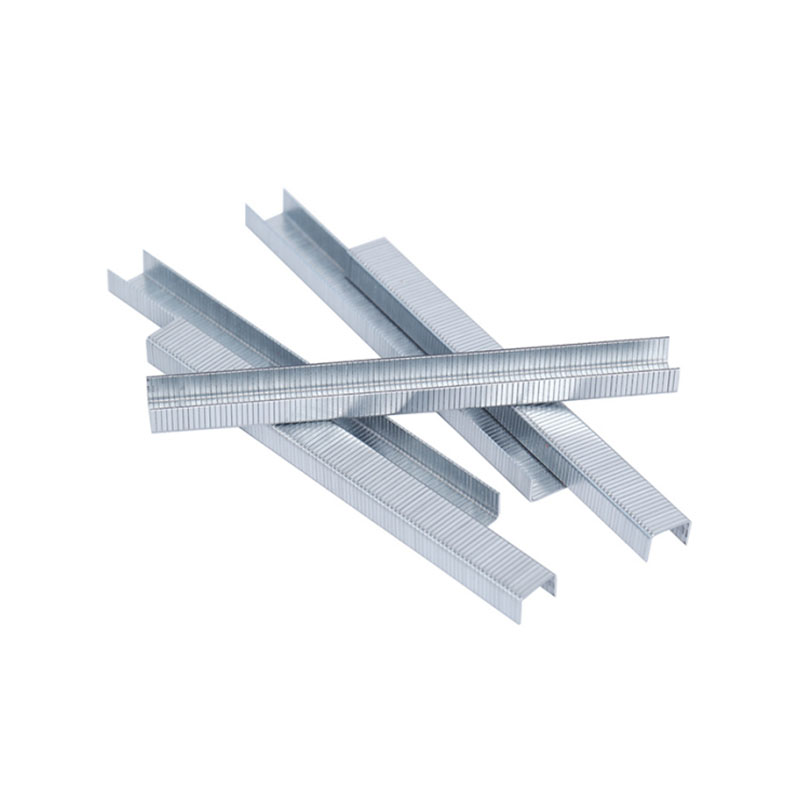
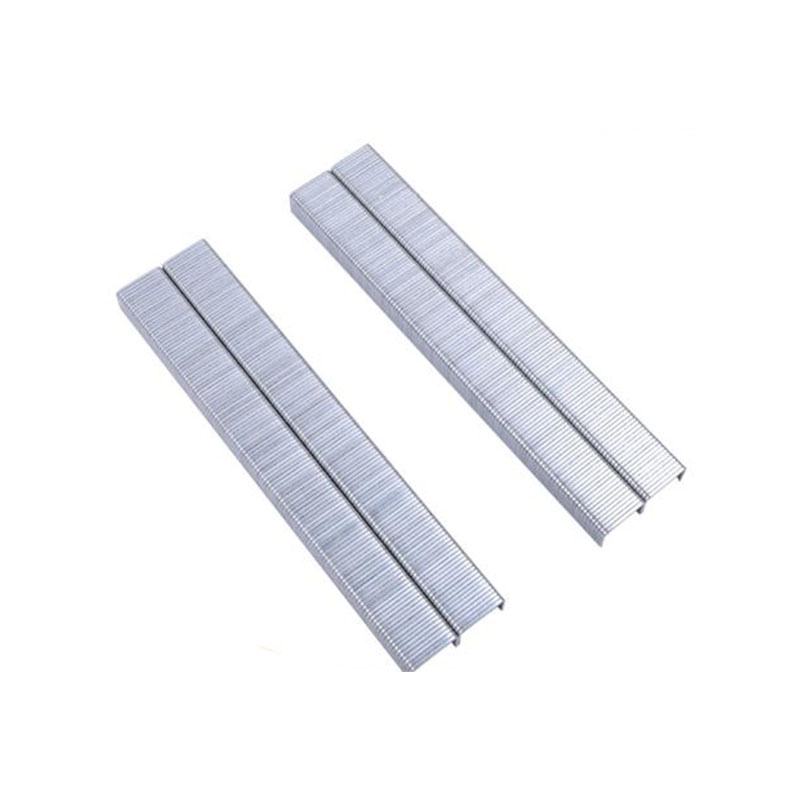
Medium wire additionally signals the collation format. These staples are typically supplied in adhesive-coated strips for pneumatic tools, with a fixed leg length per strip.
| Attribute | Typical value | Why it matters |
|---|---|---|
| Wire gauge | 18 GA | Controls drive force and split risk |
| Wire diameter | approx. 1.25 mm | Affects holding power and tool pressure |
| Crown width | approx. 6.35 mm (1/4 inch) | Must match the tool nose and the joint width |
| Leg length range | 6 mm to 16 mm | Determines penetration depth |
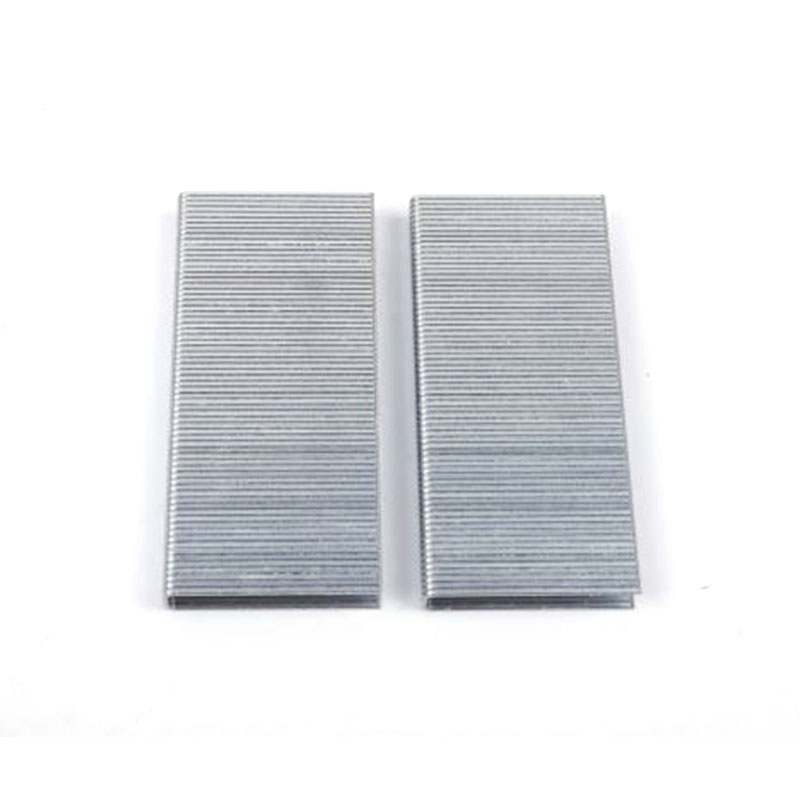
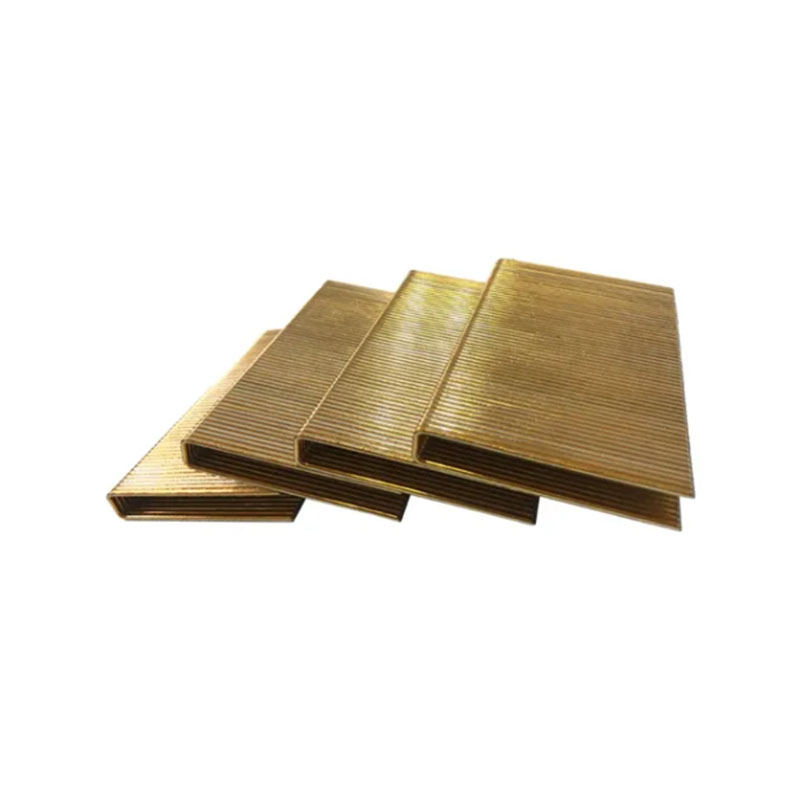
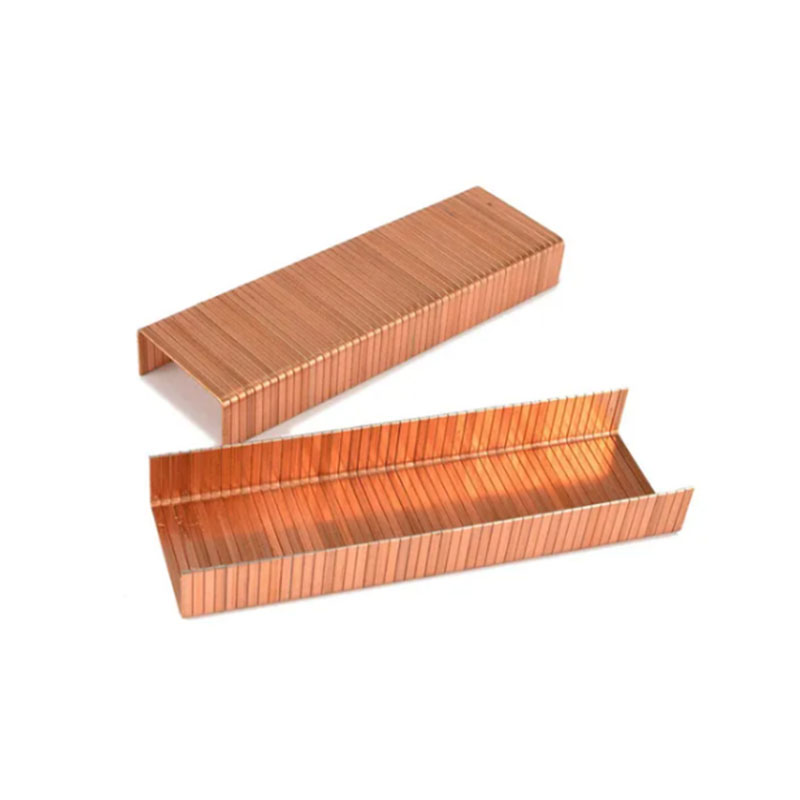
| Common materials | Galvanized steel, stainless, copper | Drives corrosion resistance and cost |
Where This Staple Earns Its Keep
Over the years we have watched the same 18 gauge, 1/4 inch crown specification show up across a surprisingly wide spread of workshops. The pattern is consistent: narrow joints, medium-density materials, and jobs where a nail would split the workpiece or a screw would be overkill.
- Upholstered furniture frames: attaching webbing, spring clips and corner blocks where a 1/4 inch crown sits neatly inside the joint.
- Sofa and bedding assemblies: securing fabric to frame rails, fixing decking cloth and reinforcing spring units.
- Cabinet backs and drawer bottoms: fastening thin hardboard or plywood panels without puncturing the visible face.
- Picture frames and mouldings: small corner joints where crown width must stay invisible.
- Panel and case assembly: light-duty joining of MDF, particleboard and plywood where fine wire would pull through.
- Packaging and crating: light carton and crate assembly, especially where a wider crown staple would tear the board.
What ties these together is material thickness. Once you move past roughly 20 mm of hardwood, you are usually better served by a heavier wire or a different fastener entirely. The 1/4 inch crown, 18 gauge combination rewards discipline in matching fastener to joint.
Leg Length Is the Decision That Changes Everything
Most buyers lock onto crown width and gauge, then pick leg length almost as an afterthought. In practice, leg length decides whether the staple holds or tears out. The rule of thumb we share with customers: the leg should penetrate the second piece by roughly two-thirds of its length, without breaking through the far face.
| Leg length | Typical use |
|---|---|
| 6 mm (1/4 inch) | Thin panels, cabinet backs, fabric to frame |
| 8 mm (5/16 inch) | Drawer bottoms, thin plywood, decorative trim |
| 10 mm (3/8 inch) | General furniture assembly, upholstery webbing |
| 13 mm (1/2 inch) | Frame joints, spring units, thicker MDF |
| 16 mm (5/8 inch) | Heavier frame work and structural joints |
Matching Staple to Tool
Crown width is where mismatches happen. A 1/4 inch crown staple will not feed reliably through a tool built for 3/8 inch or 1/2 inch crowns, no matter how similar the strip looks. Before ordering, confirm three things: the tool's stated crown range, the recommended wire gauge, and the strip format the magazine accepts.
Air pressure deserves equal attention. Too much pressure drives the crown below the surface and crushes the material around it; too little leaves proud staples that catch on sandpaper and cloth. Start at the lower end of the tool's range, test on offcuts of the actual production material, then adjust. A ten-minute trial with a scrap stack is cheaper than a rework shift.
What Separates a Reliable Box From a Frustrating One
Two cartons can carry identical printed specifications and behave completely differently on the line. The differences live in the details.
- Wire consistency: gauge variation within a strip causes crooked driving and jammed magazines.
- Coating coverage: galvanizing should be even across legs and crown. Patchy zinc shows up as rust in humid warehouses long before the staples reach a customer.
- Adhesive bond: strips must hold together in the magazine and release cleanly at the nose. Weak glue scatters staples; excess glue leaves residue in the tool.
- Point geometry: chisel points cut through grain and reduce splitting on hardwood.
- Crown flatness: a slightly bowed crown sits proud of the surface and refuses to countersink.
Our own quality policy is short: survive on quality, develop on quality, profit on quality. In practical terms that means checking wire diameter, crown width and leg length at the start of each run rather than at the end.
Buying Wholesale: Questions Worth Asking
Whether you are a furniture factory restocking a line or a distributor building a catalogue, a short conversation before the order prevents most problems.
- Which series and leg lengths do you stock, and what is the minimum order per size?
- What surface treatments are available — galvanized, copper, stainless — and which suits your climate?
- Can you supply a sample strip set for tool trials before mass production?
- How are cartons packed, and are inner boxes labelled by size for warehouse picking?
- What is the lead time for repeat orders versus first orders?
We keep our medium wire staple range organised by series and leg length precisely so that repeat buyers can reorder the same item without re-explaining the specification each time.
Frequently Asked Questions
Can I use 18 gauge staples in a tool rated for 20 gauge?
No. Medium wire requires a tool built for medium wire. Forcing a heavier staple through a fine wire tool damages the driver blade and produces unreliable results.
Is galvanized enough for humid climates?
Galvanized staples handle normal indoor humidity well. For coastal air, green timber or repeated condensation, stainless steel is the safer choice even at higher cost.
How many staples should I expect per strip?
Strip counts vary by series and leg length. Confirm the count when you order so your consumption calculations and packaging plans stay accurate.
A staple is a small, inexpensive component that carries a disproportionate share of the blame when a finished product fails. Getting the specification right — 18 gauge wire, 1/4 inch crown, the leg length that matches your material — is the least glamorous and most effective quality control step available to any furniture or assembly operation. If you are unsure which series fits your tooling, send us the tool details and a sample of the joint; we would rather spend a day confirming the match than have you discover it on the line.